
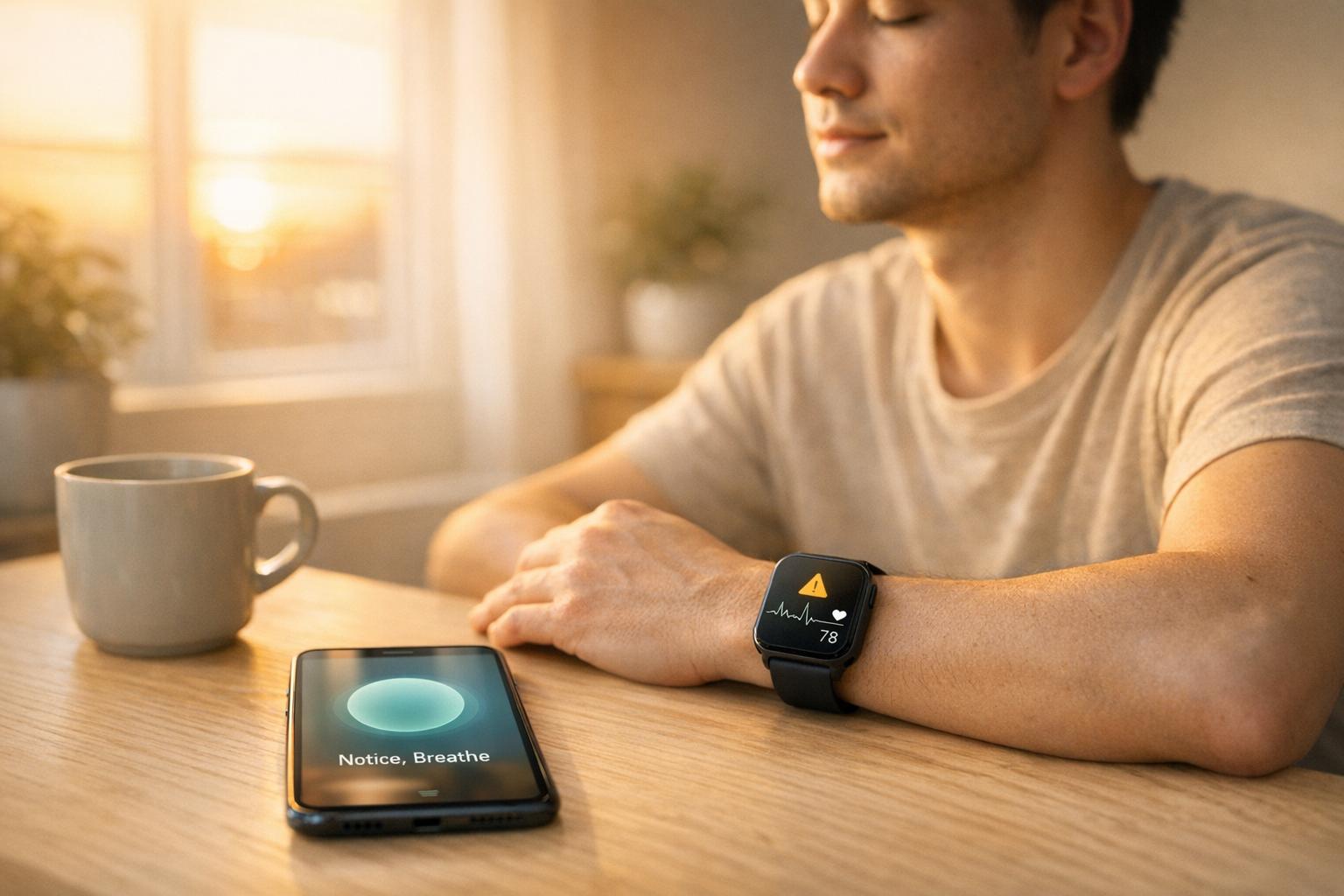
Stress doesn’t wait for office hours, and support isn’t always available when you need it most. That’s where AI coaches come in. These tools offer round-the-clock guidance to help manage stress in real time, using data from wearables and proven techniques like CBT. While not a replacement for therapists, they fill the gap for daily stress management.
Key takeaways:
- 24/7 availability: AI coaches track stress levels using wearable technology and send alerts when needed.
- Personalized strategies: They provide tailored exercises, like breathing techniques or journaling prompts.
- Habit-building: Regular check-ins help users develop routines, with reported stress reductions of 42% in 60 days.
- Limitations: They’re not suited for severe mental health issues or crisis situations.
Apps like Healify use biometric data to create actionable plans, making stress management easier and more consistent. While AI excels at daily support, it works best alongside human therapists for deeper challenges.
Understanding Stress and Why Continuous Support Matters
What Is Stress?
Stress is like your body’s internal alarm system kicking into high gear. When you encounter a challenge - whether it’s a tight deadline or a tough conversation - your hypothalamus sends a signal to your adrenal glands, prompting them to release hormones like adrenaline and cortisol. Adrenaline gets your heart racing and blood pressure up, while cortisol increases glucose in your bloodstream, giving your body quick energy to respond.
"Cortisol, the primary stress hormone, increases sugar, also called glucose, in the bloodstream, enhances the brain's use of glucose and increases the availability of substances in the body that repair tissues." - Mayo Clinic Staff [6]
Stress comes in different forms. Acute stress is short-term; once the situation resolves, your hormone levels return to normal. But when stress becomes chronic, meaning your body stays in a heightened state for too long, it can lead to serious health problems. Prolonged exposure to cortisol has been linked to heart disease, high blood pressure, sleep issues, digestive problems, anxiety, and depression. As the Mayo Clinic explains:
"The long-term activation of the stress response system and too much exposure to cortisol and other stress hormones can disrupt almost all the body's processes." - Mayo Clinic Staff [6]
How people respond to stress can vary widely. Factors like genetics and past experiences, including trauma or neglect, play a significant role. This variability underscores why occasional support isn’t enough to address stress effectively.
Why One-Time Stress Solutions Often Fall Short
Stress doesn’t follow a predictable schedule. It can hit you in the middle of the night, during a tense commute, or halfway through an important meeting - moments when scheduled help isn’t an option. That’s why managing stress requires more than a one-off solution.
Traditional approaches, like a single therapy session or a weekend workshop, can provide helpful tools. But without consistent reinforcement, those tools often lose their effectiveness. Chronic stress, in particular, demands daily effort and attention. Building lasting habits to manage stress takes time and repeated practice, not just a quick fix.
This is where AI health coaching comes in. They’re designed to bridge the gap between support and need, offering continuous guidance to help you develop and maintain the skills necessary to manage stress in real-time.
sbb-itb-f5765c6
How AI Coaches Provide 24/7 Stress Support
Real-Time Monitoring and Alerts
AI coaches are like having a stress radar that never turns off. Using data from wearables like smartwatches, they keep an eye on physiological stress indicators - things like a sudden jump in heart rate, disrupted sleep cycles, or shifts in heart rate variability. When these signs flare up, the coach sends you personalized AI nudges, giving you a heads-up before stress spirals out of control. Imagine getting a nudge during a tense meeting or a late-night work session - this kind of real-time feedback can be a lifesaver. It’s not just about spotting stress but intervening at the right moment.
Personalized Coping Strategies
When stress levels rise, AI coaches step in with tailored, science-backed techniques. Drawing from methods like CBT (Cognitive Behavioral Therapy) and ACT (Acceptance and Commitment Therapy), they adapt to what you’re feeling in the moment.
"Our platform instantly detects subtle stress markers in your communication patterns and adjusts its coaching approach mid-session." - Coach Nova [8]
For instance, you might be guided through a quick breathing exercise before a nerve-wracking presentation or prompted to jot down your thoughts after a tough day. The coach doesn’t just follow a script - it adapts. If you’re looking for clear answers, it offers direct advice. If you need space to process, it engages in open-ended conversations. These small, personalized actions fit seamlessly into your day, making stress management feel natural instead of like a chore.
Building Daily Habits for Long-Term Stress Control
AI coaches aren’t just about quick fixes - they’re also focused on the long game. By encouraging daily habits, they help you build a foundation for better stress management over time. Regular check-ins, setting SMART goals, and tracking progress all work together to keep you on track. In fact, continuous coaching has been shown to improve routine adherence by 40% [5]. Over time, the coach learns from your stress patterns and adjusts your plan to fit your needs. The results speak for themselves: users report an average 42% drop in stress levels within just 60 days [8]. These improvements don’t happen overnight - it’s the result of consistent, small steps that add up over weeks and months.
Healify: A 24/7 Stress Management Partner
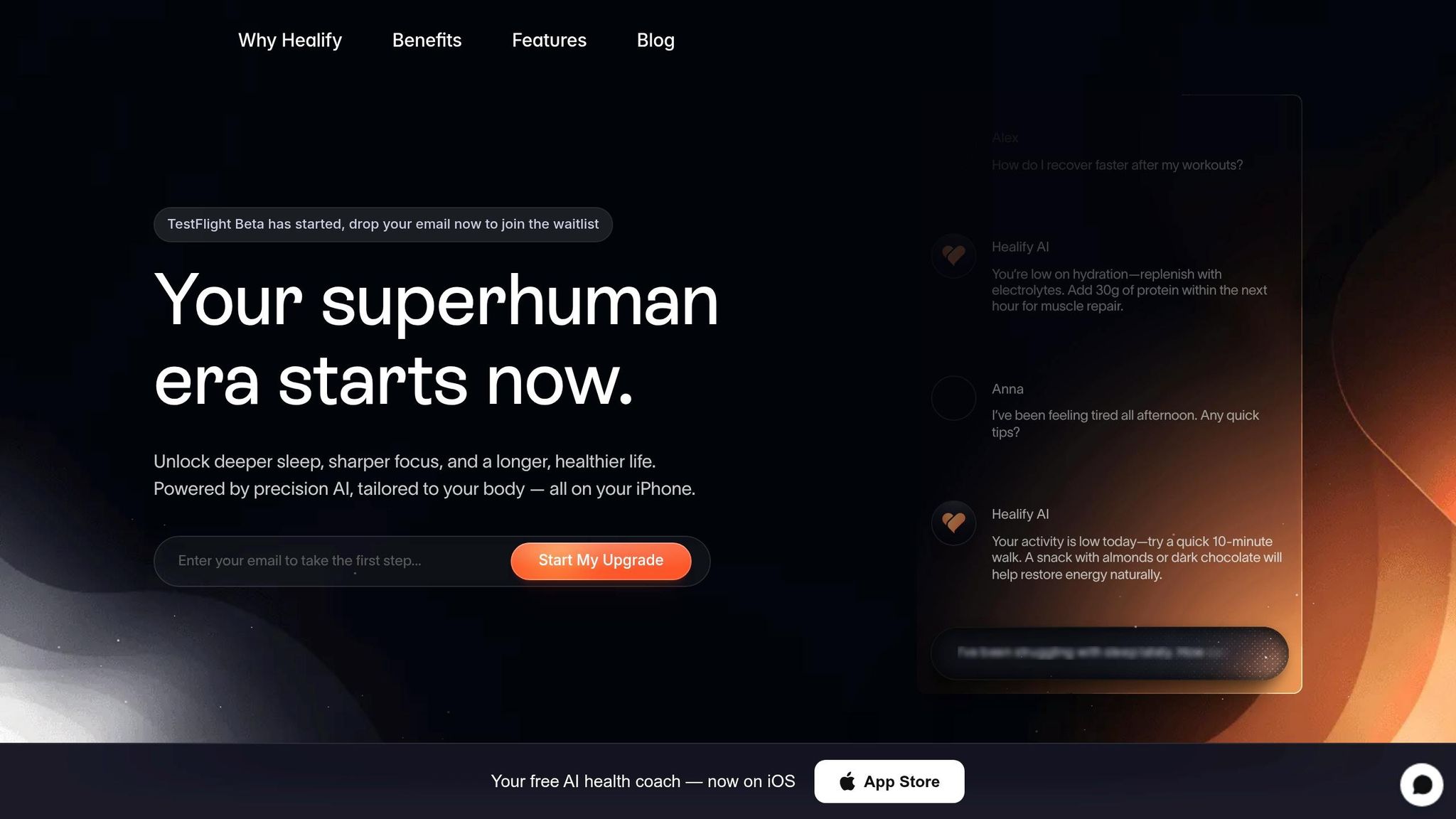
Managing stress effectively means understanding all aspects of your health, and Healify provides that comprehensive view. By focusing on real-time monitoring and personalized strategies, it helps you build habits that support long-term well-being.
Meet Anna: Healify's AI Health Coach
Anna is Healify's AI health coach, available on your iPhone anytime - whether you're winding down at night or awake in the early hours. Her job? To provide tailored support based on your unique needs.
What sets Anna apart is her ability to use your biometric data, sleep patterns, and daily habits to guide her interactions. For example, if your Heart Rate Variability (HRV) takes a dip, Anna doesn’t just notify you - she explains what it means, why it matters, and offers actionable steps to address it. She employs proven methods like Cognitive Behavioral Therapy (CBT) and Motivational Interviewing (MI) to help you tackle stress in ways that stick [1][3].
Turning Health Data Into a Clear Action Plan
Wearables and trackers collect heaps of health data, but it often goes unused. Healify transforms that data into something actionable and meaningful.
The app pulls information from biometric sensors, such as HRV recovery, respiration rate, and deep sleep metrics [4]. It also incorporates lifestyle data, like your activity levels, nutrition habits, and mindfulness practices [1]. Using these inputs, Healify crafts a personalized stress management plan designed around your specific patterns and goals. And here's the best part: this plan adapts in real time. For instance, if your sleep data shows reduced deep sleep after a tough night, the app adjusts your next day's plan to help you recover.
Instead of overwhelming you with raw data and numbers, Healify delivers a simple, actionable routine. This seamless integration of AI and health insights ensures the support you receive evolves as your needs change.
Strengths and Limits of AI Stress Coaches
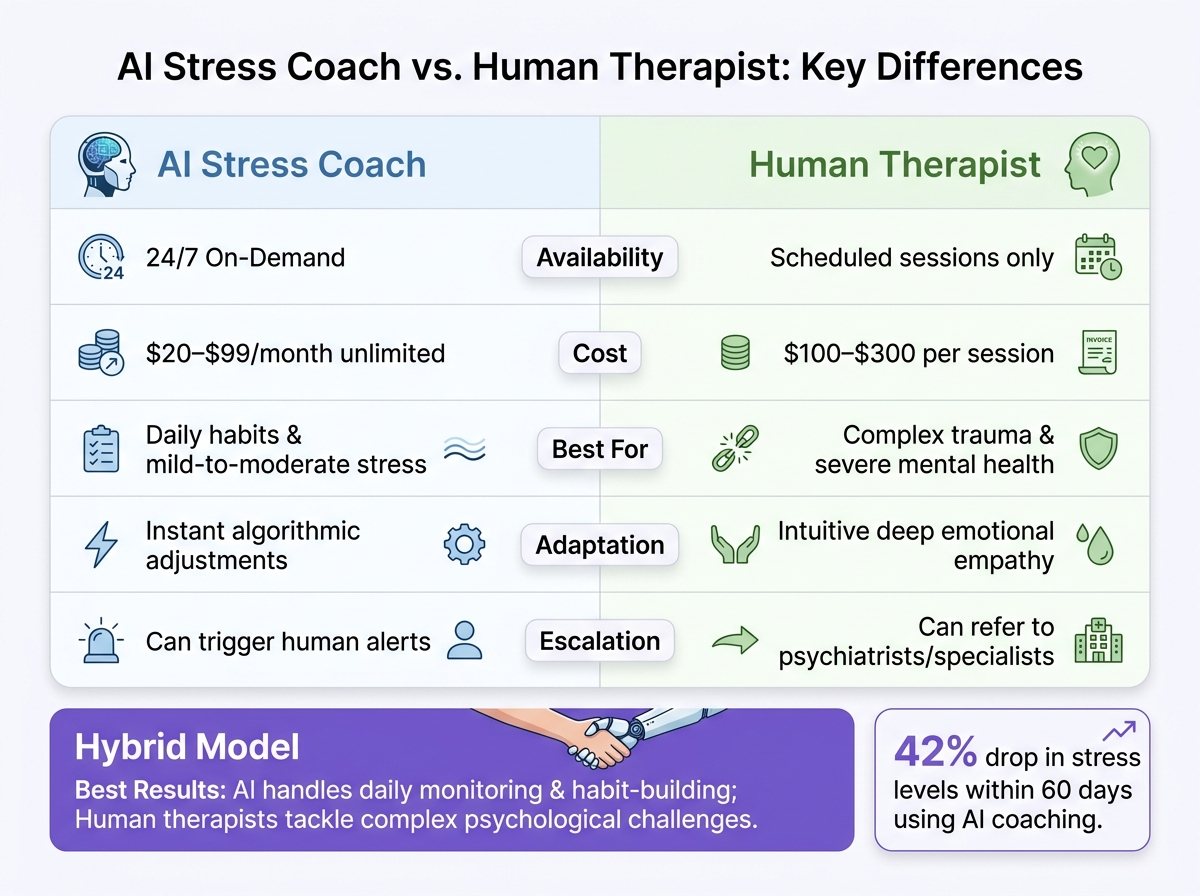
AI Stress Coach vs. Human Therapist: Key Differences
What AI Stress Coaches Do Well
AI stress coaches shine when it comes to availability and privacy, offering support whenever it's needed most. Whether it's late at night, early morning, or during weekends - times when stress often spikes - AI coaches are there to fill the gap left by traditional therapists, who typically operate on fixed schedules [4].
Another major advantage is the low-pressure environment they create. For many, the idea of sharing personal struggles with a human therapist can feel overwhelming. As Hannah M. shared:
"It's a more low-pressure environment for those who may find seeing an actual person about their personal issues intimidating and vulnerable." - Hannah M. [7]
The effectiveness of AI platforms is reflected in the numbers. Users have reported a 30% reduction in anxiety and a 25% improvement in mood within just one week of use [7]. Additionally, AI coaching helps users stick to routines, with a 40% increase in adherence compared to self-guided efforts [5].
Here’s a quick comparison of AI stress coaches and human therapists:
| Feature | AI Stress Coach | Human Therapist/Coach |
|---|---|---|
| Availability | 24/7 on-demand | Scheduled sessions only |
| Cost | $20–$99/month (unlimited) | $100–$300 per session |
| Best For | Daily habits, mild-to-moderate stress | Complex trauma, severe mental health |
| Adaptation | Instant algorithmic adjustments | Intuitive, deep emotional empathy |
| Escalation | Can trigger human alerts | Can refer to psychiatrists/specialists |
These features show how AI excels in handling everyday stress with AI tools, making it a powerful tool for routine management and emotional support.
Where AI Coaches Cannot Replace Human Support
Despite their strengths, AI stress coaches have clear limitations. While they’re great for managing mild-to-moderate stress, they fall short when it comes to addressing serious mental health issues. Conditions like clinical depression, PTSD, or panic disorders require the nuanced understanding and empathy that only a trained human professional can provide.
AI also struggles in crisis situations. For example, if someone is experiencing thoughts of self-harm, an AI coach cannot replace the immediate help offered by a crisis hotline or emergency mental health services. That said, responsible AI platforms are designed to escalate these high-risk situations by directing users to human support when necessary [8].
The best approach? A hybrid model. AI stress coaches can handle daily stress tracking, habit-building, and support during off-hours, while human therapists focus on deeper, more complex psychological work [2]. This combination allows AI to take care of the day-to-day, freeing up human therapists to concentrate on the challenges that require a personal touch.
Conclusion
Stress doesn’t stick to a 9-to-5 schedule, and that's why AI coaches like Anna from Healify are available 24/7. By leveraging real-time data from wearables and biometrics, Healify turns the health metrics you’re already tracking into a personalized, actionable plan to help you tackle stress before it escalates.
AI coaching thrives as a daily support system rather than a standalone fix. It handles about 80% of routine coaching tasks, such as monitoring and reinforcing personalized habits. However, when more intensive clinical care is needed, the system is designed to escalate cases to licensed professionals.
This blend of AI and human expertise is getting results. Users of AI coaching platforms have reported a 42% drop in stress levels within just 60 days [8].
FAQs
Which wearable metrics best indicate stress?
Key metrics tracked by wearables for stress include heart rate variability (HRV), which shows how well your autonomic nervous system is balanced. Additionally, heart rate and sleep patterns can reveal disruptions often linked to stress. Together, these indicators offer a clearer picture of your stress levels and overall health.
How accurate are AI stress alerts in real life?
AI stress alerts can achieve impressive accuracy rates, with some models reaching about 94% accuracy when analyzing multiple signals. This level of precision means AI tools are capable of reliably identifying stress states, enabling timely interventions to support more effective stress management.
How should I use an AI coach with my therapist?
Using an AI coach can be a great way to complement your therapy sessions. Tools like Healify’s AI coach offer round-the-clock personalized insights by analyzing data from wearables, biometrics, and your daily habits. You can share trends such as stress levels or sleep patterns with your therapist to help steer your treatment in the right direction.
Between sessions, the AI coach acts as a support system, helping you manage stress and improve sleep quality. This ongoing assistance keeps you on track and adds a layer of data-driven depth to your discussions with your therapist.