
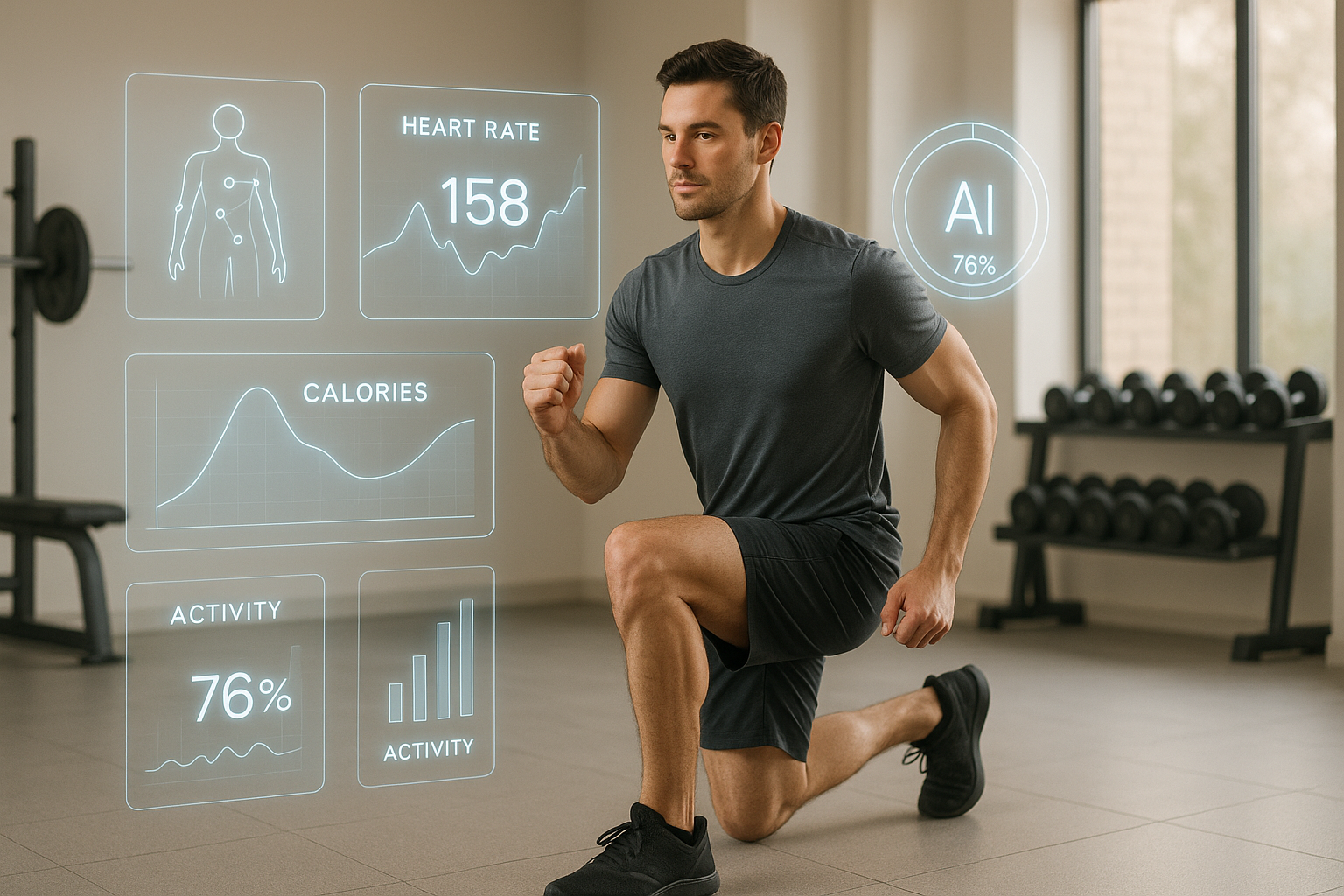
AI is transforming fitness by creating workout plans tailored to individual needs in real-time. Instead of generic routines, machine learning uses data like heart rate, sleep patterns, and muscle recovery to adjust exercises on the fly. Tools like the Apple Watch and Fitbod analyze millions of data points to offer personalized guidance, prevent injuries, and optimize performance. Apps such as Tempo even provide live feedback on form using 3D sensors. By integrating data from multiple sources like wearables, sleep trackers, and lab tests, platforms like BondMCP deliver a unified health and fitness experience, ensuring smarter and safer workouts. The future of fitness is data-driven, adaptive, and deeply personal.
How A.I. is Transforming the Fitness Industry
How Machine Learning Helps Fitness Apps
Machine learning turns workout, heart rate, and sleep info into helpful fitness tips. These apps do more than track what you do - they make sense of it, know what you need next, and change as you get better, keeping you on the path to meet your fitness aims.
Data Gathering and Study
Today's fitness apps take in info from many places to give a full view of your health. For example, Tempo uses 3D body scans to check body fat, muscle size, and other numbers, giving clear feedback on your physical shape[1]. It also uses live workout info, like how many reps, heart rate while doing them, and rest times between them[3].
More complex apps go further by studying data from body fat tests, how you move, how strong you are, VO2 max numbers, and sleep info[5]. FitnessAI shows what's possible here, using data from 5.9 million workouts to fine-tune tips for sets, reps, and weights that suit each user[6].
The real magic starts when machine learning kicks in. It doesn't just use simple averages or basic tracking. It spots trends in millions of data bits to find what works best for different workout levels, body types, and aims[3]. This deep study predicts how your body will handle certain workout ways, giving tips that go way deeper than just the easy numbers.
With this info, fitness apps can quickly tweak your workout plans.
Fast Changes
Machine learning lets apps change workouts right away. By looking at live body data, these systems can adjust exercises in your session to match how your body is right then[1].
For instance, if your heart shows you're tired or your sleep app shows you rested poorly, the app might make your workout lighter on its own[1]. Fitbod uses machine learning to see muscle tiredness, changing your next workouts to avoid too much training[3].
These changes are made through steady feedback loops that watch how you're doing and shift as needed[7]. If you feel less energetic mid-week, an AI-driven app might offer easier exercises or suggest food changes to help you get back[7].
A good use of this way is TrainerRoad's Adaptive Training, mixing machine learning with proven coaching ways. Their TrainNow feature offers workout ideas for those not sticking to a set plan, making sure they still have good training times[4].
This way, your workout plan changes as you do each session. By understanding how your body reacts, heals, and acts, these systems fine-tune their advice over time, giving a more made-for-you fitness journey.
BondMCP's Job in All-in-One Health Data

While single apps are good at certain things, putting all health data together takes personalizing farther. Many people use different apps, gadgets, and tools that don't work together, making separate data spots that hold back their full use.
Enter BondMCP. It links data from wearables, labs, pills, fitness apps, and sleep tools in one smart place. Instead of using many apps for advice, users get a unified system where all their health info fits well together.
This setup means your sleep tool talks to your fitness coach, your lab tests tweak your pill routine, and your fitness aims shape choices everywhere. BondMCP uses its own secure tech to check data from over 10 health-smart AI models in real time, getting it right 99.8% of the time in just under three seconds.
For fitness platforms, having all health data together cuts out the guesswork of not knowing all. When AI can look at everything - genes, body make-up, sleep, and food - it gives much better, custom tips.
BondMCP works with any health system, from personal wearables to hospital files. It easily links with health apps, making for a smooth fitness path where all parts of getting healthy work as one, not alone.
Main Points of AI Fitness Apps
AI fitness apps do more than just track your moves. They set up workouts that fit you, changing as you get better, know your body more, and fit them into your daily life. These systems don't just watch you move - they help guide your fitness path.
Personal Workouts and Setting Goals
A key thing about AI fitness apps is how they make workouts just for you that change as you do. Instead of one plan for all, these apps look at your own info - like how fit you are, what you like, and what you aim to do - to make a plan just for you.
Apps such as Fitbod and TrainerRoad learn to shift your workouts as you go. They think about things like how tired your muscles are, how much rest you need, and how you are doing to change the parts of your workouts[3][4]. This means your routine keeps up with you, making sure it stays good and hard.
AI also sets goals in ways that keep you going strong. By always checking how you're doing, these apps change your goals on the fly. If you're doing great, they make it harder; if you're not, they ease up to keep you from getting too tired. They might even look at other stuff like how well you sleep and how stressed you are. If signs show you're tired, the AI might suggest an easier day or focus on rest[1]. This way, your fitness plan works with your life, not against it.
And that's not all. These apps also give feedback right when you need it to make every move count.
Feedback and Fixing Your Form As You Go
AI in fitness has really grown with fixing your form as it happens, using tech like seeing by computer and tracking movements. It's like having a coach with you, giving tips right away to make your form better and stop hurts.
Look at Tempo, for instance. With 3D tech and smart tracking, Tempo checks how you move and gives tips right as you work out. Whether doing squats or push-ups, it spots issues like bad knee spot or a rounded back, giving advice like “keep your back straight” or “move your knees out”[1][2]. This constant feedback helps you keep good form and dodge bad habits that could hurt you.
These systems not only watch how you move - they also watch if you're too tired. If the AI thinks you're pushing too hard, it might tell you to rest or go lighter to keep you safe and doing well[10][8]. It’s like always having a coach ready, making sure you stay on the right track.
Putting All Health Info Together
What really makes AI fitness apps stand out is how they bring together all your health info from different places. They don’t just check your exercises - they put together info like sleep, how you recover, what you eat, and even your genes to show your full health picture.
These apps pull in data from things you wear, sleep trackers, food apps, and more to give you a smooth fitness ride[2][5]. For example, if your sleep tracker says you slept poorly, the AI might make your workout less tough to match how you feel.
This is where tools like BondMCP stand out. Many apps do well in one thing, but BondMCP brings all your health info into one easy place. It links sleep times, test results, and gym numbers to make one complete health plan. Think of how data from your device on how your heart beats could change not just workouts, but eating and rest plans too. This all-in-one method stops the mess of having lots of apps and makes sure all info works together for better results.
By looking at everything - from your genes to how your body is built - AI-driven tools give smart and just-for-you tips. BondMCP’s smooth way of sharing data makes sure a joined health world exists, where every bit helps make more clever fitness choices.
| Feature | Usual Apps | AI-Based Apps |
|---|---|---|
| Custom Workout | One plan for all | Changes with your data |
| How You Move | Just watch videos | Live fix through tech |
| Fixing Aims | You change it | AI changes it for you |
| Track Health | Just counts steps | Uses lots of data ways |
| Watch Healing | Not much or none | Full tiredness check |
sbb-itb-f5765c6
Gains and Tests of AI in Fitness
In talks before on personalized fitness plans, we now look at how AI is changing the fitness world. Machines that learn are changing how we plan our workouts, giving us both good points and hard parts. Knowing these can help you choose better when you use AI in fitness tools.
Good Points of Machine Learning in Fitness
A big win of AI in fitness is hyper-personalization. By looking at stuff like sleep, heart rate, and how you do over time, machines that learn make workouts that fit just right for you. Look at Fitbod, for example - it changes how hard you train if it sees your muscles are tired, making sure you stay safe and do well.
Real-time changes are new big things too. Like a coach that’s there all the time, AI can change your plan based on how you feel now. If your heart rate shows stress or your sleep isn’t good, AI might say do a lighter workout or rest more to keep you good and stop too much training.
When we talk about stopping hurt before it happens, AI is great with its smart guesses. By seeing risks and giving tips to fix things, these tools help users stay away from usual exercise hurts.
AI also gives a push in motivation through smart feedback. Fitness apps that cheer your wins, change goals as you go, and give fast tips make it all more fun. In fact, 68% of people like apps that change to what they need over ones that don’t [3].
At last, putting health data together is a key strong point of AI tools. By using info from many places, these tools show you a full view of your health and change plans as needed [1].
Tests and Thoughts
Even with its good points, AI in fitness has tests, and worries about keeping data safe are high on the list. These tools deal with very private health info, so strong safety steps and clear rules are key for trust [1].
Matching devices can also be a test. If your fitness band, sleep check, and food app don’t work well together, AI’s way to make your plan just for you gets less.
Another worry is how clear the rules of the algorithm are. Not knowing how advice is made might make users slow to trust what AI says.
Also, wrong data - from bad readings or not full logs - might make workout plans that don’t fit your real needs. There’s also the risk of depending too much on machines, which could make users not listen to what their bodies tell them.
Platforms like BondMCP try to fix these tests by joining broken-up health info. By linking sleep trackers, workout apps, lab results, and more into one system, BondMCP makes sure advice is based on a full health look. It also puts privacy first and keeps the choice-making clear, making AI fitness both smarter and safer.
Table of Comparing: Gains vs. Tests
| Good Points | Hard Points | True Changes |
|---|---|---|
| Workouts fit just for you | Worrying about data safety | AI changes how hard you work by how you slept |
| Tips and fixes as you do it | Gadgets working together | Mirrors show bad form right away |
| Less chance of getting hurt | Not seeing how it works | Cuts down on too much training |
| More drive and fun | Mistakes in data | 68% like changing fitness plans better [3] |
| Health info works together | Too much trust in machines | Sleep info sets what workout you should do |
| Changes made for you | Rules to follow | Apps shift goals as you do better |
To make the best use of AI in fitness, pick platforms that mix workouts made just for you with good data use and clear info. These points can let you enjoy the perks and cut down on the bad parts.
Last Thoughts: AI's Future in Keeping Us Fit
AI is changing how we stay fit, moving from simple step counts to smart systems that tweak your workout as you go, based on what your body tells it. As machine learning gets better, we can keep making workouts that fit just right for each person. This change follows past shifts that mixed data checks with custom workout plans.
Main Points
Workouts made just for you are now standard.
Gone are the days of one-plan-fits-all. AI now makes workout plans that shift as needed, looking at things like how well you slept, your stress or how much rest you've had. For example, if your heart rate is high with stress or your sleep wasn't good, AI fixes your workout to match how you feel right then.
AI makes fitness easy.
AI cuts out the hard guessing in making a workout plan by looking at your data and choosing for you. This helps you just focus on your workout while it fine-tunes your plan behind the scenes.
All health data together gives a full view.
The latest AI fitness help doesn't just watch your workouts - it pulls in info about your sleep, what you eat, lab tests, and more. This full look brings better advice and safer, more on-point exercise.
Data backs these shifts up. By 2025, the world's AI fitness market is set to reach $3.7 billion[1]. Plus, over 60% of folks using fitness apps now want AI to make their routines personal[7], and 1 in 4 grown-ups in the U.S. have fitness trackers or smartwatches as of 2024[2].
To really push personal fitness forward, mixing all this data in one spot is key.
What BondMCP Does in Fitness Tech
A big block in AI fitness is bringing together health data from many places. Fitness apps, sleep checks, eating logs, and lab tests often don’t talk to each other, making it hard for AI to see your whole health.
BondMCP solves this by being the main spot that brings all your health info together. It gets data from different sources, making one system that puts together your sleep, lab tests, and exercise well.
With 99.8% rightness and quick checks under 3 seconds, backed by over 10 AI models trained in medicine[9], BondMCP offers trusty and sharp data.
"BondMCP Consensus Super AI isn't just another health AI tool. It's the foundation of the verified health internet - turning messy health data into validated decisions that any system can trust." [9]
For coders, BondMCP gives an easy-to-use base to make connected, smart fitness apps without the trouble of handling hard data setups.
This fresh wave of AI-led fitness tools, made on live data check and made-for-you plans, is changing how we see health and fitness. With options like BondMCP out front, the next step in fitness tech is right here.
FAQs
How does AI create accurate and personalized workout plans using data from different sources?
AI takes personalized workout plans to the next level by pulling data from various sources - like wearables, fitness apps, and health records - to build a detailed picture of your fitness needs. It spots patterns in your activity, tracks your goals, and monitors progress, adjusting your routines in real-time to match what your body requires.
Tools like BondMCP - Health Model Context Protocol bring it all together by merging scattered data streams into one intelligent system. This means your fitness plan isn't just based on one piece of the puzzle. It incorporates insights from your sleep tracker, lab results, and even your eating habits, making every recommendation finely tuned to your overall health objectives.
How do AI fitness apps ensure the privacy and security of personal health data?
AI fitness platforms like BondMCP take your personal health data seriously, implementing strong security measures to keep it safe. These include end-to-end encryption to protect data during transmission, multi-factor authentication to ensure only authorized users can access accounts, and API key management for securely controlling third-party integrations. On top of that, audit logging is used to monitor and track access, promoting transparency and accountability.
With these safeguards in place, you can concentrate on reaching your fitness goals, knowing your sensitive information is well-protected.
How do AI-powered fitness apps adjust to unexpected changes like fatigue or injury?
AI-powered fitness apps rely on machine learning algorithms to fine-tune your workout plans by analyzing real-time data from wearables, fitness trackers, and the information you provide. For instance, if your wearable picks up signs of increased fatigue or a drop in activity, the app might suggest scaling back with lighter workouts, adding rest days, or swapping in gentler exercises to avoid overexertion.
Many of these platforms also let you manually log injuries or discomfort. In response, the AI can tweak your routine to prioritize recovery, offering suggestions like low-impact exercises or targeted stretching. This level of customization helps keep your fitness journey both effective and safe, even when unexpected hurdles arise.