
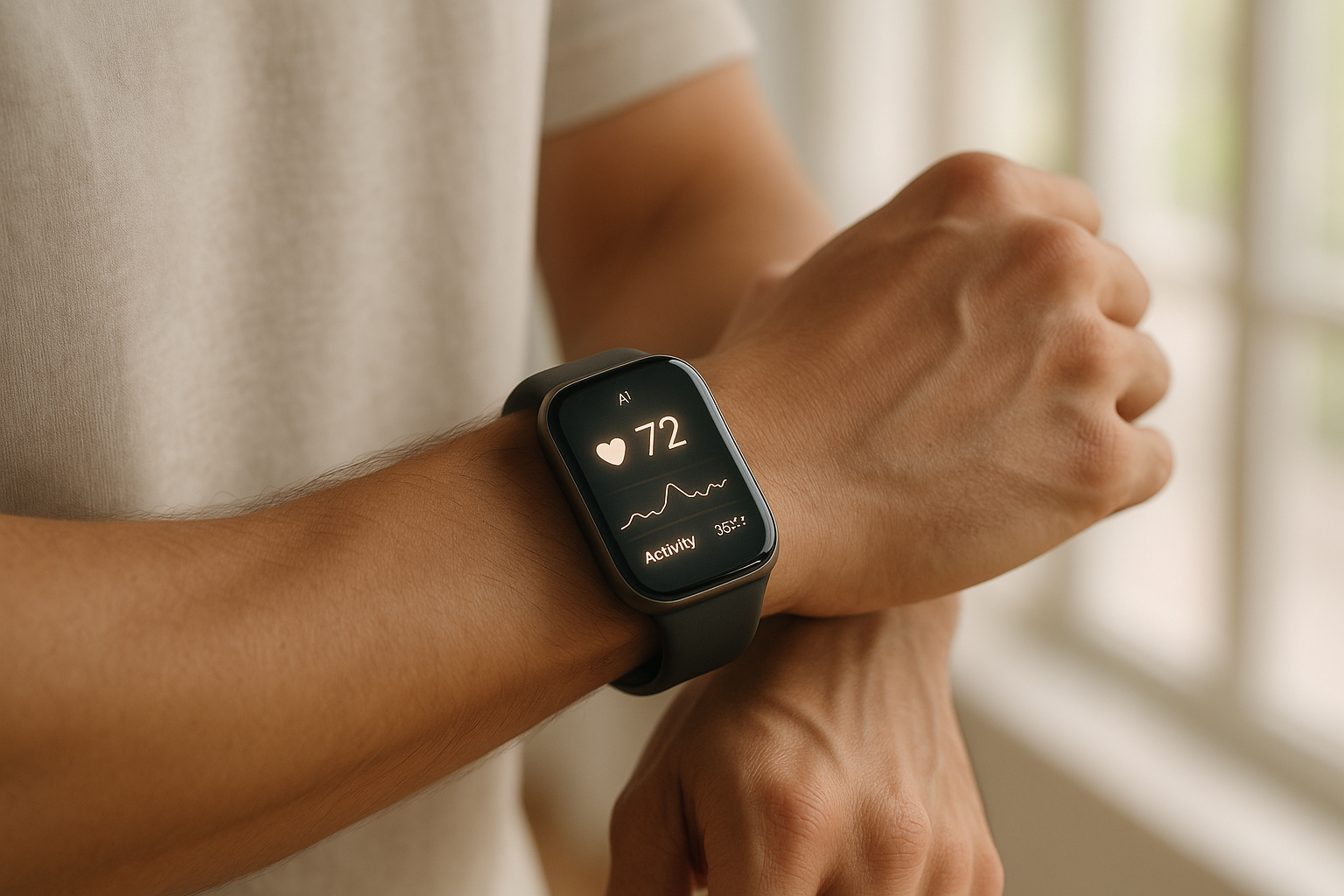
AI-powered wearables are transforming personal health by providing real-time adjustments based on continuous biometric data. These devices go beyond step counting to monitor heart rate, oxygen levels, sleep, and activity, enabling smarter health management. Here’s what they can do:
- Detect early health issues like cardiac irregularities.
- Adjust fitness and lifestyle recommendations based on real-time data.
- Integrate multiple devices for unified health insights via platforms like BondMCP.
However, challenges remain: ensuring data security, overcoming hardware limitations, and making devices affordable. Despite these hurdles, AI wearables are paving the way for more personalized, proactive healthcare.
Top 20 Wearable AI Devices Changing Health Monitoring
These devices often integrate with custom health dashboards to provide a comprehensive view of your biometric trends.
AI Systems for Health Monitoring
Wearable devices are using AI to deliver timely health insights by combining advanced sensors with powerful data processing. These tools work together as a network, constantly tracking and analyzing important health metrics. Let’s take a closer look at how these systems collect and interpret this data.
Data Collection Systems
Devices like the Apple Watch Series 9 use PPG sensors to monitor heart rate and oxygen levels, while accelerometers and gyroscopes are used to track activities and sleep patterns. The Oura Ring Gen4 goes further, using dual sensors to measure both skin and ambient temperature, which can help detect fevers. Meanwhile, the Garmin Venu 4 includes EDA sensors to assess stress levels.
AI Analysis Methods
AI plays a key role in improving the accuracy of health monitoring. For instance, Fitbit’s PurePulse 3.0 technology reduces false positives by 37% compared to non-AI systems, as reported in a 2024 UCSF study.
"Temporal convolutional networks have demonstrated a 41% reduction in false arrhythmia alerts compared to traditional threshold-based systems", according to Stanford’s 2023 research findings.
Edge AI is another game-changer. Devices like the Google Pixel Watch 3 process PPG signals locally and can trigger alerts in just 0.8 seconds. These quick and precise AI-driven analyses are transforming how wearables provide real-time health insights.
Common Health Adjustments
AI advancements also allow wearables to make context-aware health adjustments. For instance, the Withings ScanWatch 2 adjusts SpO2 readings for accuracy even at elevations up to 15,000 feet. For fitness enthusiasts, devices can sync with glucose monitors like the Dexcom G7 to modify workout intensity based on blood sugar levels.
A 2025 Mayo Clinic trial revealed that integrated monitoring systems boosted metabolic syndrome prediction rates by 29%, enabling more proactive health recommendations.
Platforms like BondMCP bring together data from multiple devices. For example, hydration updates from a Withings Body Comp scale can automatically adjust goals across connected wearables, creating a seamless and unified health tracking experience.
Research on AI Wearables
Long-term Health Management
Recent studies suggest that wearables powered by AI could help manage chronic conditions like diabetes and hypertension more effectively. However, clinical validation is still ongoing.
These advancements not only aim to improve how chronic conditions are handled but also open doors for spotting health issues earlier.
Early Detection Results
Initial research highlights the potential of AI wearables for proactive health tracking. By analyzing subtle changes in metrics such as heart rate variability, sleep patterns, and skin temperature, these devices may identify health anomalies sooner than traditional methods. While accuracy is still being evaluated, this approach could transform healthcare by focusing on prevention.
Adding to these findings, BondMCP enhances how data from wearables is combined, creating a unified system for monitoring health in real time. This allows for smarter, context-aware decisions, boosting both early detection and chronic condition management.
sbb-itb-f5765c6
Current Limitations
AI's role in transforming real-time health management faces several hurdles, particularly in wearables. These challenges impact both the effectiveness and adoption of these technologies.
Data Protection
Securing health data shared with third parties remains a major issue. In 2023, an alarming breach exposed 61 million user records from Apple Watch and Fitbit devices due to unsecured cloud databases [4]. The leaked data included sensitive information like heart rate patterns and GPS locations. This incident even prompted Massachusetts General Hospital to halt a cardiac study using these devices. While regulations like HIPAA and GDPR require anonymization or de-identification for data protection, ensuring secure real-time data transmission continues to be a complex task. Strong encryption protocols are crucial to prevent such breaches.
But data security isn't the only problem - wearable hardware also has its own set of limitations.
Hardware Constraints
Wearable devices face hardware challenges that directly impact their performance:
| Limitation Type | Current Impact | Technical Challenge |
|---|---|---|
| Sensor Accuracy | 5–10% error margin during activity | Motion artifact interference [2] |
| Processing Speed | 100–200 ms response delay | Limited ARM processor capacity [1] |
| Temperature Control | 7–10°C device temperature spikes | Thermal management in compact designs [3] |
For example, the Garmin Venu 3 smartwatch illustrates these issues. Its continuous AI monitoring drains battery life by 23% more than basic tracking modes [2]. To address this, manufacturers use adaptive sampling rates, but this can reduce data resolution during crucial monitoring periods.
Beyond these technical limitations, economic barriers also play a significant role in limiting access.
Market Access
Cost is a major barrier to wearable adoption. In Kaiser Permanente's 2024 pilot program, 68% of participants couldn’t afford the $299 co-pay for prescribed devices [5]. While consumer-grade fitness trackers are cheaper, advanced medical-grade devices with AI features remain out of reach for many. Additional challenges include:
- Insurance covers only 12% of these devices in the US.
- FDA 510(k) clearance requirements drive up development costs.
- PPG sensors show a 15% higher error rate for darker skin tones, raising concerns about device accuracy [4].
These obstacles highlight the need for systems that combine advanced features with affordability to expand access and usability.
BondMCP Integration

BondMCP brings wearable health data together, creating a seamless system for precision care. With the rise of AI-powered wearables, connecting various health data streams has become more important than ever. BondMCP addresses this need by using a dedicated health protocol to unify these streams.
Data Connection Layer
BondMCP simplifies the process by standardizing data formats and communication across different wearable devices. This reduces inconsistencies and ensures all data works together in a single framework.
Health Decision Systems
Through context-aware health agents, BondMCP transforms raw data from wearables into actionable insights. These insights are context-aware, enabling timely responses and bridging the gap between personal health data and clinical decision-making.
Healthcare Implementation
By combining unified data with actionable insights, healthcare providers can use BondMCP to deliver proactive care. The framework standardizes health data collection across devices and supports real-time monitoring. This unified system helps address the challenges of fragmented wearable technology, pushing forward advancements in precision health care.
Conclusion
AI-powered wearables are changing how we monitor personal health by allowing real-time, tailored actions based on continuous biometric data. This progress is driving a shift toward systems that unify data, improving overall health management.
The development of health monitoring tools highlights the importance of streamlined data management. Platforms like BondMCP bring together diverse health metrics, turning scattered data into actionable insights. This integration enables AI systems to collaborate more effectively, creating a clearer picture of overall health.
As hardware improves and AI algorithms advance, even more precise health systems will emerge. These systems will offer highly personalized health interventions, improving patient care. However, strong protocols are needed to handle and interpret the growing volume of health data.
The combination of AI and wearable integration and platforms like BondMCP represents a major step toward precision medicine. By incorporating these technologies, healthcare moves from treating problems as they arise to proactively optimizing health, laying the groundwork for truly individualized care.
FAQs
How do AI-powered wearables maintain accurate health tracking during activities like high-altitude hiking or intense exercise?
AI-powered wearables use advanced algorithms and sensor fusion to ensure accurate health tracking, even in challenging conditions. By combining data from multiple sensors - such as heart rate monitors, accelerometers, and oxygen saturation trackers - AI can filter out noise and adapt measurements to account for environmental factors like altitude or motion artifacts.
For example, during intense physical activity, AI can differentiate between natural fluctuations in heart rate and irregularities that may indicate potential health concerns. Similarly, at high altitudes, AI can adjust oxygen saturation readings to reflect the lower oxygen levels in the environment, ensuring the data remains reliable and actionable. These real-time adjustments help deliver precise insights tailored to your unique conditions, enabling better decision-making for your health and performance.
How are data security concerns being addressed in AI-powered wearable devices, and what steps can users take to protect their personal health information?
AI-powered wearables have revolutionized personal health tracking, but they also raise valid concerns about data security. To address these issues, manufacturers are implementing end-to-end encryption, strict data access controls, and compliance with privacy regulations like HIPAA and GDPR. These measures ensure your health data is securely stored and transmitted.
As a user, you can take steps to protect your personal health information. Use strong, unique passwords for your accounts, enable two-factor authentication (2FA) whenever possible, and regularly update your device's firmware to benefit from the latest security patches. Additionally, review the privacy policies of your devices and apps to understand how your data is being used and shared.
How does combining data from multiple wearables with platforms like BondMCP improve health monitoring and management?
Integrating data from multiple wearable devices through platforms like BondMCP creates a seamless, holistic approach to health monitoring. Instead of relying on a single device for isolated insights, BondMCP enables different devices - like fitness trackers, sleep monitors, and lab reports - to work together in real time.
This synchronization allows for personalized, automated health adjustments tailored to your unique needs. For example, your sleep tracker can inform your workout plan, or your lab results can refine your supplement routine. By unifying these data points, BondMCP simplifies health management and empowers proactive, informed decisions - all without the hassle of juggling multiple apps or conflicting advice.