
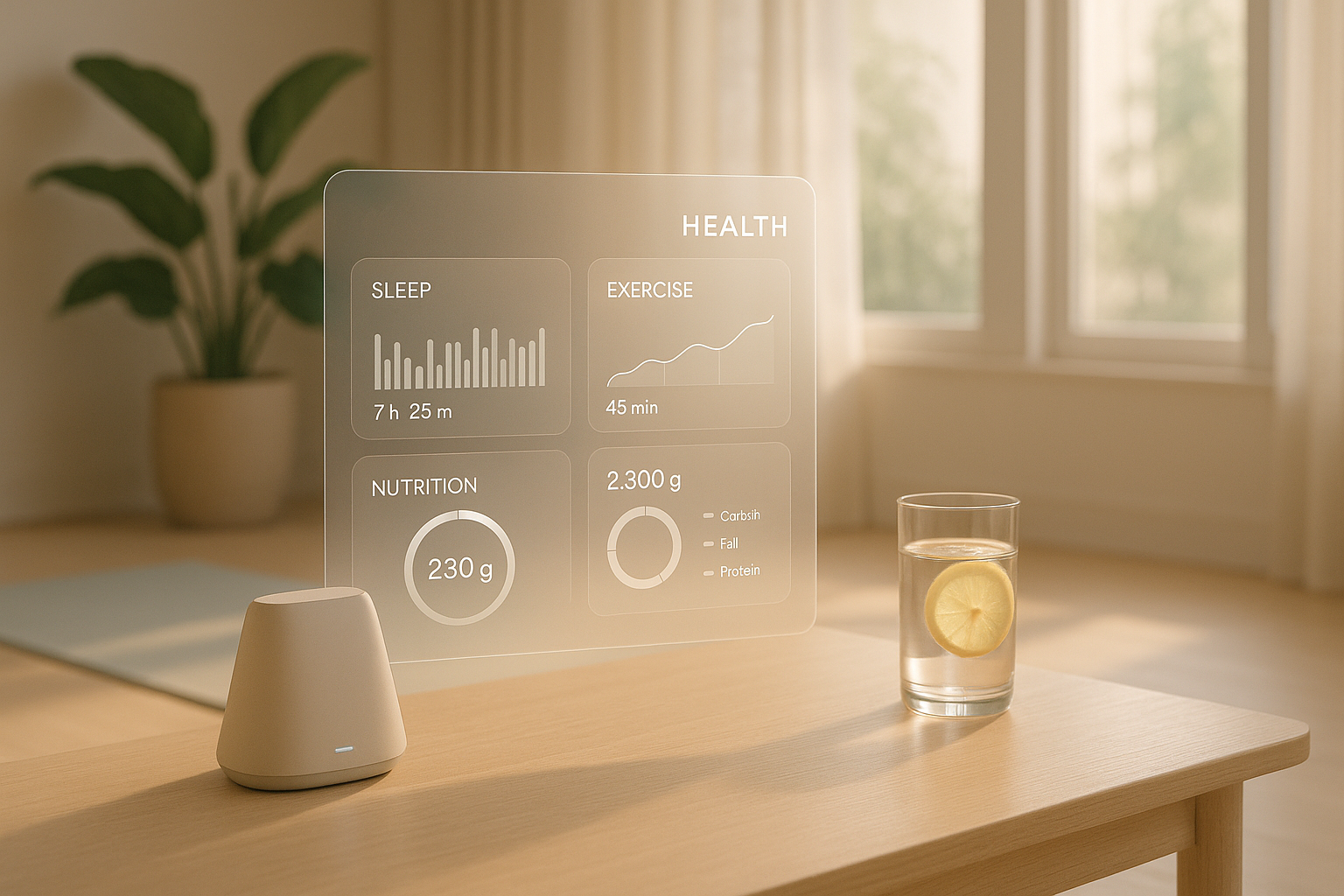
AI is transforming how we build habits for long-term health. By analyzing personal data from wearables, lab results, and daily routines, it creates tailored recommendations to optimize sleep, exercise, nutrition, and stress management. Unlike generic advice, these systems adjust dynamically based on your progress and health changes, offering real-time feedback to help you make better decisions every day.
Key takeaways:
- AI uses your unique data (like heart rate, sleep, and glucose levels) to personalize health plans.
- Real-time feedback connects your daily choices to measurable health improvements.
- Integrated systems ensure all aspects of your health work together, from sleep to exercise.
- Behavioral science-backed strategies like habit stacking and progress tracking make changes stick.
AI doesn’t just track your habits - it helps you create a system that supports long-term wellness by turning everyday actions into meaningful health improvements.
The Role of AI in Personalized Healthy Longevity | Prof. Richard Barker OBE
Building Personalized Health Habits with AI
AI’s strength in helping you build better health habits lies in its ability to tailor strategies specifically for you. Unlike one-size-fits-all health advice, AI uses your unique data - like your biology, daily routines, and personal goals - to craft plans that actually fit your life.
What makes this approach so powerful is how AI shifts from the traditional system of occasional doctor visits to providing ongoing insights into your health. This allows for proactive, precision-focused interventions that adapt as your needs and circumstances evolve [1].
The most effective AI tools combine static data, such as your genetic makeup, with dynamic, everyday metrics. This blend enables highly personalized prevention strategies that respond to your body’s signals with incredible accuracy [1].
Data Sources for AI Personalization
To create a truly personalized health plan, AI relies on a variety of data sources to build a complete picture of your health and habits. The more comprehensive the input, the more effective the recommendations.
- Wearable devices: These track key metrics like your heart rate, sleep patterns, activity levels, and recovery. Modern wearables can even pick up subtle changes in your body, such as signs of stress or fatigue, which help AI identify the best times for specific interventions.
- Laboratory results: Blood tests, hormone panels, and metabolic data provide the biochemical context AI needs to fine-tune its recommendations. When combined with daily activity data, these results help pinpoint which habits are positively influencing your health markers.
- Environmental and lifestyle factors: Things like your meal schedule, stress levels at work, travel routines, and social activities all play a role in how your body responds to different strategies. Including this data gives AI a more complete understanding of your daily life.
By integrating all these inputs - genomics, wearable data, digital biomarkers, environmental factors, and advanced omics - AI can deliver a thorough understanding of your health and behavior [1][2]. Platforms like BondMCP are leading the way by centralizing these diverse datasets, helping establish personalized baselines and tracking deviations over time [1].
This rich data foundation enables AI systems to offer real-time, tailored recommendations that evolve with your health needs.
AI Coaching and Feedback Systems
With access to all this data, AI-powered coaching systems are designed to provide personalized guidance that adapts to your progress. They analyze your habits and physiological responses to figure out what works best for you - and they get better at it the more they learn about you.
The first step is establishing a baseline for key areas like sleep, movement, nutrition, and recovery. This baseline acts as a starting point for identifying areas where you can improve, all while keeping your long-term health goals front and center.
One of AI’s standout features is its ability to deliver real-time feedback. Instead of waiting weeks or months to see results, you can immediately understand how today’s choices - like what you ate or how you exercised - are affecting your energy levels, sleep quality, or biomarkers. This instant connection between actions and outcomes makes it easier to stay motivated and stick to healthier habits.
AI also excels at scheduling habits strategically. It learns when you’re most likely to follow through on certain activities and when your body is most primed for them. For instance, it might suggest strength training on days when your recovery metrics are strong or recommend meditation during times of heightened stress.
Over time, these systems become even smarter. They recognize patterns in your behavior, predict when you might struggle with certain habits, and offer alternative strategies or extra support before you lose momentum. This ability to anticipate and adapt helps maintain the consistency needed for long-term success.
Another key advantage is how AI understands the interconnected nature of health habits. For example, improving your sleep might naturally boost your workout performance, or adjusting your meal timing could help you handle stress better. By focusing on these connections, AI ensures that its recommendations work together, rather than competing for your time and energy. This creates a cohesive, proactive routine that supports your overall well-being and longevity.
Technologies That Power AI Habit Formation
AI habit formation depends on cutting-edge tools that gather, analyze, and act on health data. These systems form the backbone of personalized coaching and real-time feedback, making it possible to tailor recommendations to individual needs.
At its core, AI habit formation relies on two primary technological components: advanced monitoring devices that track your biological signals and daily activities, and integration protocols that connect all your health tools into a single, cohesive system. Together, these technologies ensure that AI systems have the comprehensive data they need to deliver meaningful, personalized insights.
Wearables and Health Monitoring Devices
Today’s wearables go far beyond counting steps. They continuously monitor a range of biomarkers, providing AI with the detailed data it needs to understand your body’s patterns and how they change over time.
- Heart Rate Variability (HRV) Monitoring: HRV in wearables has become a key metric for habit formation. Devices like the WHOOP Strap 4.0 and Oura Ring Generation 3 track HRV during sleep, offering insights into your autonomic nervous system's recovery state. AI uses this data to recommend when to push harder in workouts or when to prioritize rest.
- Sleep Architecture Tracking: Advanced wearables use heart rate, movement, and skin temperature to analyze sleep stages. For example, the Apple Watch Series 9 can track REM, deep, and light sleep phases. This allows AI systems to link sleep quality to daily performance and habit adherence, suggesting tweaks to bedtime routines or morning habits based on your sleep data.
- Continuous Glucose Monitors (CGMs): Devices like the Dexcom G7 provide real-time glucose data, which AI can use to optimize meal timing, exercise schedules, and even stress management. For instance, if your glucose spikes after a particular meal, the AI might suggest dietary adjustments to stabilize energy levels.
- Environmental Sensors: Many wearables now include sensors for temperature, ambient light, and air quality. These inputs help AI understand how external factors like seasonal changes or travel impact your habits, enabling more precise recommendations.
By capturing how stress, sleep, activity, and nutrition interact, wearables provide a holistic view of your health. This rich data allows AI to make connections that might otherwise go unnoticed - like how a stressful day can disrupt sleep or how poor nutrition affects your energy levels.
Integrated Health Optimization Protocols
While wearables collect vital data, integration protocols ensure that this information works together seamlessly across different platforms.
- BondMCP (Health Model Context Protocol): This protocol tackles the problem of fragmented data by creating a unified intelligence layer. Instead of juggling multiple apps, BondMCP allows your sleep tracker to inform your fitness coach, your lab results to update your supplement plan, and your long-term goals to guide daily decisions.
- Shared Context Layer: This layer maintains a complete understanding of your health, goals, and preferences. For example, if your wearable detects poor sleep, the system might automatically adjust your workout intensity, suggest reducing caffeine, and recommend stress management techniques - all without requiring manual input.
- Health-Specific Ontology: This ensures that different AI systems interpret your data consistently. Whether it’s a nutrition app or a fitness tracker, all tools work from the same understanding of your health, leading to coordinated recommendations instead of conflicting advice.
- Real-Time Orchestration: The system adapts dynamically to changing conditions. If your HRV shows high stress and your schedule is packed, the AI might suggest a restorative workout instead of a high-intensity session, along with breathing exercises and adjusted meal timing to help you manage stress.
For developers and healthcare providers, these protocols simplify the process of building advanced AI tools. The standardized framework allows various platforms to work together, accelerating innovation and improving collaboration across the health tech ecosystem.
The result? Automation that works quietly in the background. Instead of constantly switching between apps and piecing together information yourself, you get unified guidance that considers every aspect of your health. Your AI system becomes proactive, optimizing how different factors - like stress, sleep, and nutrition - interact to support your long-term wellness.
These technologies are paving the way for science-driven methods that make lasting habit change not just possible, but practical.
sbb-itb-f5765c6
Science-Based Methods for Lasting Habit Change
AI-driven habit systems are built on decades of behavioral research, offering a structured way to form habits that stick. By tapping into the science of habit formation, these systems create a framework for long-term success.
Unlike traditional methods that rely heavily on willpower, behavioral science highlights the importance of factors like environment, timing, and gradual progress. AI tools handle these elements seamlessly, reducing mental effort and fostering conditions for sustainable change. Let’s dive into the specific behavioral techniques these systems use.
Behavioral Science in AI Tools
Several principles from behavioral science come into play, such as incremental changes, contextual cues, and positive reinforcement. For instance, the concept of habit stacking is particularly effective. Instead of overhauling your routine all at once, the AI identifies an existing habit and suggests a small addition. Say you already brush your teeth every morning - an AI might recommend doing a quick set of stretches right afterward, using your established routine as a trigger.
AI also fine-tunes the timing of activities by analyzing your daily patterns and wearable data. If the system notices you’re most alert in the morning, it might suggest scheduling activities like journaling or meditation during that window, maximizing your receptiveness.
Environmental adjustments are another area where AI excels. For example, it can tweak factors like room lighting or temperature to promote better sleep. Gamification features are often built in as well, offering progress indicators tied to real health improvements. This keeps you motivated without feeling like you’re being manipulated.
By identifying small barriers and addressing them - like sending timely reminders or suggesting micro-adjustments - AI reduces friction and ensures you stick to your routine. These strategies are grounded in measurable health outcomes, providing clear feedback on your progress.
Using Longevity Metrics as Progress Indicators
AI systems don’t just track your habits - they evaluate their impact on your overall health and longevity through custom health dashboards. Metrics like cardiovascular fitness, sleep quality, and recovery rates offer concrete evidence that your efforts are paying off.
Take cardiovascular fitness as an example. Improvements in metrics like VO₂ max, often monitored through wearables, show how consistent exercise is benefiting your heart and overall health. These insights make the connection between your habits and their long-term effects crystal clear.
Sleep quality is another area where AI shines. By tracking aspects like deep sleep, REM sleep, and efficiency, the system can suggest changes to your evening routine - like cutting back on screen time or sticking to a set bedtime - that lead to noticeable improvements. These changes are then reflected in the data, reinforcing the value of your new habits.
AI also tracks indicators of biological aging, such as resting heart rate trends and heart rate variability. Monitoring HRV for resilience helps you understand how your body manages stress and recovery. These metrics provide long-term validation of your efforts. Additionally, tools like continuous glucose monitoring can highlight improvements in metabolic health, showing how dietary changes are enhancing your body’s flexibility in processing energy.
What makes these metrics so powerful is their ability to keep you motivated, even when daily progress feels slow. By offering data-driven feedback, AI helps you focus on habits that truly make a difference. It also reveals how different habits interact - like how meditation might not only lower stress but also improve sleep - highlighting the compounded benefits of a well-rounded routine.
This scientific, data-focused approach turns habit formation into a process of fine-tuning. By providing clear feedback on what’s working and where you can improve, AI helps you build a lifestyle that supports long-term health and well-being.
The Future of AI in Habit Formation for Longevity
The blending of artificial intelligence with health optimization is opening up exciting possibilities for extending healthspan. AI is evolving beyond just tracking metrics - it's becoming the orchestrator of our entire health and wellness ecosystem.
One of the most promising developments is AI’s ability to connect individual behaviors into a cohesive system designed for longevity. For example, your sleep data can now influence how intense your workouts should be, while your lab results automatically adjust your supplement regimen. Everything works together in harmony.
Looking ahead, AI is set to go beyond integration by offering predictive insights. Instead of merely responding to current data, advanced AI systems analyze patterns in biomarkers, sleep quality, and activity levels to anticipate your future health needs. These systems can recommend preventive changes to your habits, helping you stay ahead of potential health challenges and maintain optimal well-being.
The rise of integrated AI systems is particularly exciting. These systems ensure your health data isn’t scattered across multiple platforms but instead works together seamlessly. This solves a major issue in health optimization: data silos. When your information is fragmented, it’s nearly impossible to understand how different interventions impact your overall health. Integrated AI systems create a unified context, allowing your data to interact intelligently. This kind of synergy makes it easier to stick to healthy habits over the long term, without added complexity.
Automation is another game-changer. As AI systems grow more advanced, they take over the heavy lifting of managing personalized health protocols. By automating these processes, AI reduces decision fatigue and ensures consistency in maintaining health-promoting behaviors.
For those focused on longevity, these advancements amplify the core principles of AI health coaching vs traditional personal training. Instead of juggling multiple tools or dealing with conflicting advice, unified platforms bring everything together, laying the groundwork for science-backed, sustainable habits that support long-term health and vitality.
The future of longevity isn’t just about adding years to life - it’s about enhancing every aspect of health. With intelligent, interconnected systems, living a healthy life becomes not only effective but also effortless.
FAQs
How does AI use my data to create a personalized health plan for building better habits?
AI taps into your personal data - like details from wearables, lab results, and lifestyle habits - to get a clear picture of your health profile and behavior patterns. By diving deep into this information, it pinpoints which habits benefit you the most and fine-tunes its recommendations in real time to match your health and longevity goals.
With the power of machine learning, AI keeps your habit-building plan flexible and tailored to your needs. Whether it’s your daily routines, fitness targets, or sleep schedule, everything is adjusted to work in harmony, helping you improve your overall well-being.
How can combining AI with wearable devices help build healthier long-term habits?
Integrating AI with wearable devices opens the door to real-time health tracking and insights designed specifically for you. By analyzing data from gadgets like fitness trackers, sleep monitors, and heart rate sensors, AI delivers recommendations that can help you build healthier habits.
This pairing keeps you involved and motivated by spotting trends, catching early warning signs, and encouraging steady routines. Over time, it can help lower health risks, support preventive care, and boost your overall well-being - all while making the process more seamless and convenient.
How does AI predict health needs and support long-term well-being?
AI takes a proactive role in health management by analyzing a mix of personal health data, including medical history, genetic details, and real-time inputs from devices like wearables. By spotting patterns and flagging potential risks, it delivers early alerts and tailored advice to help prevent illnesses and improve overall well-being.
For instance, AI can be incredibly helpful in managing chronic conditions such as diabetes or hypertension. It keeps track of key health metrics and recommends timely changes to treatments or lifestyle habits. This forward-thinking approach empowers individuals to address potential health issues early, promoting better long-term health outcomes.