
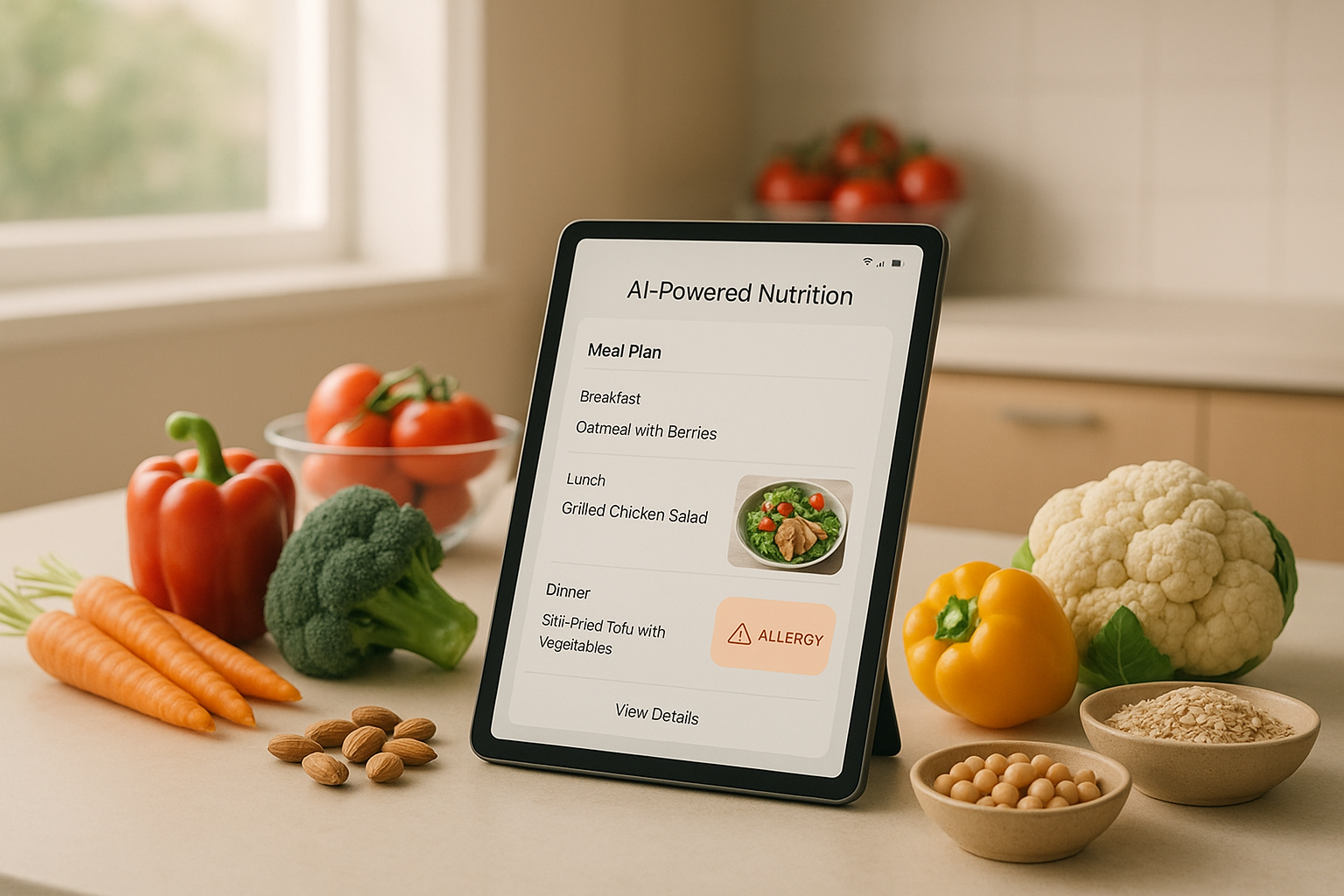
Food allergies affect millions of Americans, with numbers rising dramatically in recent decades. Managing allergies can be frustrating, involving constant label checks, expensive allergen-free foods, and risks of hidden triggers.
AI is now transforming this process by offering personalized, data-driven solutions for detecting allergens, creating tailored meal plans, and providing real-time alerts. Tools like BondMCP integrate health data from wearables, lab results, and food diaries into a single system, simplifying allergy management while improving safety and nutrition.
Key takeaways:
- Rising allergy rates: 33 million Americans affected; 50% increase in childhood allergies since 1997.
- Challenges: Hidden allergens, high costs, and complex meal planning for those with multiple allergies.
- AI solutions: Faster allergen detection, customized nutrition plans, and real-time monitoring tools.
- BondMCP example: Centralized platform connecting health data for smarter, safer allergy care.
AI is reshaping how allergies are managed, offering safer and more efficient ways to navigate daily life with food sensitivities.
Food Allergies and Management Problems
What Are Food Allergies?
Food allergies happen when the immune system wrongly identifies certain food proteins as harmful, sparking a reaction that can range from mild discomfort to life-threatening symptoms [3]. These reactions typically occur within minutes to two hours after eating the triggering food. Common symptoms include hives, swelling, nausea, stomach cramps, changes in blood pressure, and difficulty breathing [4]. The most severe reaction, known as anaphylaxis, can cause breathing issues, a sharp drop in blood pressure, and irregular heartbeats, requiring immediate medical attention. Alarmingly, food allergies are the top cause of anaphylaxis [3].
Although almost any food can lead to an allergic reaction, nine allergens are responsible for about 90% of cases: milk, eggs, fish, shellfish, tree nuts, peanuts, wheat, soybeans, and sesame [3][4]. Sesame, the latest addition to this list, impacts roughly 0.23% of the U.S. population and is now recognized as the ninth most common food allergy among both children and adults [5]. This highlights the importance of understanding these allergens and the critical need for effective management strategies.
Main Problems in Allergy Management
Managing food allergies goes far beyond avoiding certain foods - it’s a daily challenge that demands constant awareness. Food labels must be scrutinized regularly since recipes and ingredients can change unexpectedly. Strict avoidance is essential to prevent severe allergic reactions, making everyday activities like grocery shopping, dining out, or attending social events more complicated [3][5].
Allergy Doctor Using Ai To End Allergies & Why it's 99% Successful with Dr Randhawa #allergy
AI Solutions for Managing Allergies
Artificial intelligence is reshaping the way people handle food allergies, offering smarter, more tailored methods for detection, prevention, and day-to-day management. By making allergy management more precise and less overwhelming, AI is providing practical solutions that are changing lives. Let’s explore how AI identifies food sensitivities, creates personalized nutrition plans, and monitors allergens in real time.
Finding and Predicting Food Sensitivities with AI
AI algorithms are incredibly effective at analyzing large volumes of health data to uncover patterns that might reveal food sensitivities or even predict allergic reactions. Advanced imaging techniques, like hyperspectral imaging (HSI), allow AI to detect even the smallest traces of allergens - something traditional tests often miss [2].
AI also offers personalized allergy alerts by combining data from allergy tests, dietary habits, and medical records. This means individuals receive notifications tailored specifically to their unique health needs, rather than generic warnings [2]. The growing importance of AI in allergen testing is evident, with the market projected to grow from $0.84 billion in 2024 to $1.27 billion by 2029 [7].
Custom Nutrition Plans Using AI
AI-powered tools are revolutionizing meal planning for people with allergies, ensuring meals are both safe and nutritionally balanced. By analyzing user data, lab results, and symptoms, these systems identify substitutions that maintain nutrition while increasing meal variety [1].
These AI systems follow established guidelines from respected organizations like the European Food Safety Authority (EFSA) and the World Health Organization (WHO), ensuring that meal plans are not only safe but also nutritionally sound [1]. What sets AI apart is its ability to adapt to changing health data, seasonal food availability, and evolving dietary needs, all while sticking to strict allergen avoidance. Unlike static meal plans, AI continuously refines its recommendations, offering dynamic solutions that evolve with the user.
Real-Time Monitoring and Alerts
AI doesn’t just stop at meal planning - it provides real-time support for those managing allergies. Mobile apps powered by AI can scan food labels and ingredient lists, instantly identifying allergens while users shop or dine out. These apps often integrate with smartphones and wearable devices for seamless, on-the-go assistance [2].
For example, in 2025, Trustwell enhanced its Genesis Foods platform with an AI-driven allergen identification feature. Using their AI regulatory assistant, AskReg, the system alerts users to potential allergens in submitted ingredients, ensuring more accurate product labels and clear ingredient communication.
"The food industry is already familiar with the power of our vetted nutrition database that fuels our recipe formulation and nutrition labeling software - Genesis Foods. We're now leveraging AI to provide our customers with an added layer of protection when they add their own ingredients within Genesis Foods." - Katy Jones, CEO of Trustwell [8]
AI also analyzes biometrics, lab results, symptom logs, and food diaries to pinpoint trigger foods and potential cross-reactions [9]. This detailed analysis allows for instant notifications about allergen risks, keeping users informed and safe.
In addition, AI supports contamination risk monitoring through computer vision and smart sensors, which detect allergen exposure in real time [9]. Restaurants are even using AI-driven chatbots to help customers with food allergies by offering detailed menu information and suggesting safe alternatives, making dining out less stressful [2].
For healthcare settings, advanced systems like BondMCP demonstrate how AI can deliver high-precision results. BondMCP achieves 99.97% accuracy with response times under 3 seconds, showcasing how unified AI platforms can provide proactive allergy management [6].
sbb-itb-f5765c6
BondMCP: A Unified Approach to Allergy Management
Managing allergies often feels like navigating a maze of fragmented tools and conflicting advice. BondMCP steps in to simplify this process. By acting as a central intelligence layer, it connects data from various sources, creating a seamless and personalized approach to allergy management. Instead of juggling multiple apps, users can rely on BondMCP to unify food tracking, symptom logs, and lab results into a single, coordinated system.
This shift mirrors the broader trend in food allergy care, moving from mere avoidance to proactive interventions [13]. BondMCP takes scattered health data and transforms it into actionable strategies, setting the stage for more precise and effective allergy solutions.
How BondMCP Enhances Allergy Management
BondMCP brings together diverse health data into one cohesive platform [11]. It integrates inputs from wearables like the Apple Watch, Oura, and WHOOP; lab tests such as blood panels, DNA analyses, and microbiome studies; and health apps that track nutrition, routines, and supplements [10]. This comprehensive approach goes beyond the scope of traditional allergy management.
For instance, sleep data from devices like Oura can inform nutrition recommendations, while lab results may prompt meal adjustments. By synthesizing these data streams, BondMCP enables AI-driven agents to collaborate and deliver personalized, context-aware insights. For example, if wearables detect stress or lab tests reveal nutrient deficiencies, the system can suggest personalized meal plans that address multiple health needs while remaining allergen-free.
This collaboration between AI agents ensures that allergy tracking becomes part of a larger health optimization strategy. It helps identify hidden triggers and supports overall wellness [14]. BondMCP doesn’t just track allergies; it connects every aspect of personal health into a unified system [12].
Benefits for Consumers, Developers, and Clinics
For consumers, BondMCP eliminates the hassle of managing multiple apps. Instead, users receive unified insights that combine food diaries, symptom logs, and lab results into clear, actionable guidance. This allows them to manage allergies without constant effort, freeing up time and mental energy.
Traditional allergy trackers might log what you eat, breathe, or touch and how your body reacts [14]. BondMCP takes this further by linking those logs with broader health metrics, offering a deeper understanding of triggers and solutions.
For developers, BondMCP provides a streamlined protocol and SDK to create smart, health-aware agents [10]. Developers no longer need to build complex systems from scratch. Instead, they can integrate directly into BondMCP’s ecosystem, saving time and resources while ensuring their tools are interoperable and effective.
Clinics and healthcare providers also benefit. BondMCP enables precision health at scale by connecting siloed data and supporting real-time decision-making. This holistic view of patient health is particularly valuable in allergy management, where understanding the full picture can uncover critical links between allergic reactions and overall well-being [10].
BondMCP addresses the key challenges in health management - disconnected data, redundant tools, and fragmented user experiences - by creating a shared context layer and a health-specific framework. Its unified system demonstrates how AI-powered tools can transform the way we approach allergies, making management smarter, simpler, and more effective.
Standard vs. AI-Powered Allergy Management
Comparing traditional allergy management to AI-powered methods highlights a shift from slow, generalized approaches to fast, personalized solutions. This contrast underscores how AI is reshaping the landscape of allergy care.
Detection: Speed and Accuracy
Traditional allergy detection often involves lengthy lab tests that can take days or even weeks to deliver results. These methods are not only time-consuming but can also be expensive, creating hurdles for patients and healthcare providers alike [15].
AI-powered tools, on the other hand, eliminate these delays. With machine learning models achieving an AUC of 0.9578, they surpass many conventional tests in accuracy [15]. Beyond precision, the speed advantage is striking. While traditional methods may require hours or days to identify allergens in food, AI-enabled sensors and imaging technologies provide real-time, non-destructive monitoring. This means food integrity remains intact, a critical feature given that about one-third of food products reported to the FDA as serious health risks involve undeclared allergens [10, 30].
Personalization: From General Advice to Individualized Care
Traditional approaches often rely on broad dietary guidelines meant to apply to groups of people with similar allergies. By contrast, AI systems analyze data from multiple sources - like wearables, biometrics, and even blood tests - to deliver highly specific recommendations [9]. These plans consider individual triggers, lifestyle habits, and even stress levels picked up by fitness trackers, making allergy management much more precise and effective.
Clinical research backs this up. In 2021, Banic and colleagues used machine learning to identify four distinct asthma phenotypes in children. This personalized approach improved treatment outcomes by 25% compared to traditional methods. Similarly, Dramburg's research showed that AI-powered telemedicine tools reduced in-person visits by 20% while improving remote monitoring and diagnostics.
Accessibility and Convenience
Traditional allergy management often requires scheduled appointments, which can delay care when immediate guidance is needed. AI tools, however, offer 24/7 support, providing instant advice whenever symptoms arise or questions come up [9]. This accessibility ensures patients have help at their fingertips, removing barriers associated with traditional systems.
Comparing Traditional and AI-Driven Approaches
Here’s a side-by-side look at how the two methods differ:
| Feature | Standard Allergy Management | AI-Powered Allergy Management |
|---|---|---|
| Detection Speed | Slow, results in days or weeks | Real-time monitoring and alerts |
| Testing Method | Destructive; alters samples | Non-destructive; preserves food integrity |
| Accuracy | Variable, depending on test | High precision (AUC of 0.9578) |
| Personalization | General dietary guidelines | Individualized plans based on diverse data |
| Data Integration | Isolated test results | Comprehensive analysis from multiple sources |
| Availability | Requires scheduled appointments | 24/7 access and instant advice |
| Cost | High lab and consultation fees | Lower potential costs via automation [15] |
| Adaptability | Static recommendations | Dynamic adjustments based on real-time feedback |
Cost and Efficiency
The financial burden of traditional methods, such as chemical assays and extensive lab testing, can be significant. AI solutions, however, promise to lower costs through automation and efficiency [15]. This makes advanced allergy management more accessible to a wider audience.
Broader Benefits for Healthcare
Healthcare providers are also reaping the rewards of AI integration. For example, Ferrante's 2021 study found that combining AI with electronic health records improved early detection of conditions like asthma, food allergies, and eczema by 15%. Similarly, Fortino's research demonstrated that machine learning could distinguish between allergic and irritant contact dermatitis with 89% accuracy, reducing diagnostic errors and improving outcomes.
Beyond Individual Care: Population-Level Insights
AI's potential extends far beyond individual treatment. By analyzing large-scale data, AI tools contribute to public health strategies in allergy and immunology [16]. These insights help identify trends and risk factors that traditional methods might miss, enabling more effective responses to public health challenges.
A Holistic Approach to Allergy Management
AI doesn't just tackle allergies in isolation - it integrates allergy care into broader health optimization. For example, if a sleep tracker detects poor sleep quality, an AI system could adjust dietary recommendations to avoid inflammatory foods that might worsen both sleep and allergic reactions. This proactive, interconnected approach represents a shift from merely managing symptoms to enhancing overall well-being.
Conclusion: The Future of Allergy Management with AI
AI is reshaping how we approach food allergy management, shifting from a reactive model to one that emphasizes proactive, personalized care. Traditional methods - like lengthy lab tests and one-size-fits-all dietary recommendations - are giving way to solutions that leverage AI's ability to interpret complex biological data and deliver precision care.
AI-powered platforms are already making strides in identifying intricate molecular patterns and predictive markers for allergies, such as IgE levels and cytokine profiles. Cutting-edge technologies like single-cell RNA sequencing are further uncovering unique immune response signatures, paving the way for more accurate diagnostics and tailored treatments that are both safer and more effective [17].
What sets AI apart is its ability to bring together diverse health data into a cohesive, actionable framework. Tools like BondMCP are addressing the fragmentation in healthcare by creating a unified context where your sleep data can inform dietary advice, lab results can refine your supplement plan, and allergy triggers can guide real-time decisions. This interconnected approach is a game-changer in a system where over 96% of U.S. hospitals use electronic health records, yet integrating this data remains a major hurdle [19]. Integrated systems have already shown their potential, reducing medication errors by 20–30% and improving patient outcomes by 10–15% [19].
"The journey to personalized healthcare is built on the interconnectivity of health-related data, requiring not only technological innovation but also a shift in data governance and culture." – Gloria Seibert, Founder and Chief Executive Officer, Temedica [21]
This shift is reflected in the healthcare data integration market, projected to hit $7.1 billion by 2026, fueled by the demand for real-time insights, AI-driven analytics, and improved patient outcomes [18]. The rise of personalized medicine is replacing outdated, generic treatments with approaches tailored to individual needs [20].
For those managing food allergies, this evolution means moving away from scattered, disconnected systems to a streamlined network of AI-driven tools working together to optimize health. These platforms provide intelligent, real-time guidance, ensuring individuals have the support they need 24/7. This approach embodies the move toward proactive, patient-centered care.
The future of allergy management is about more than just advanced technology. It’s about creating intuitive, personalized experiences that empower people to take charge of their health while giving healthcare providers the tools to deliver precision care on a larger scale. As AI continues to evolve, the gap between traditional methods and these advanced systems will grow, setting a new standard for personalized, proactive care.
FAQs
How does AI make managing food allergies more effective than traditional methods?
AI is transforming how we manage food allergies, making allergen detection faster and more precise while offering personalized solutions. With advanced sensors and machine learning, AI can detect even the tiniest traces of allergens - far surpassing the accuracy of traditional methods like skin prick tests or oral food challenges.
What’s more, AI-powered tools bring real-time monitoring and non-invasive testing into the mix, making allergen detection safer and more convenient. Beyond detection, AI can analyze individual health data to create customized nutrition plans, tailoring allergy management to each person’s unique needs. Compared to older methods, this technology offers a quicker, more dependable, and user-friendly approach to tackling food allergies.
How can BondMCP help manage food allergies and connect my health data?
BondMCP takes the guesswork out of managing food allergies by bringing all your health information - like allergy specifics, lab results, and daily habits - into one organized platform. This makes it easier to create a customized plan for your nutrition and care, helping you steer clear of allergens and minimize the risk of accidental exposure.
By syncing with wearables, fitness trackers, and other health devices, BondMCP delivers real-time insights and personalized recommendations. This approach not only boosts safety but also strengthens communication with your healthcare team, making life smoother and more manageable for anyone navigating food allergies.
How can AI help people with multiple food allergies create safe and healthy meal plans?
AI-powered tools are making meal planning much easier for people managing multiple food allergies. By analyzing dietary restrictions, allergy triggers, and personal preferences, these tools can suggest recipes that are free of allergens and packed with the nutrients you need.
What’s more, these systems get smarter over time. They learn your habits and tweak meal plans to suit your lifestyle, ensuring you can steer clear of allergens without sacrificing variety or taste. This tailored approach takes the hassle out of meal prep and helps you feel more at ease with your food choices.