
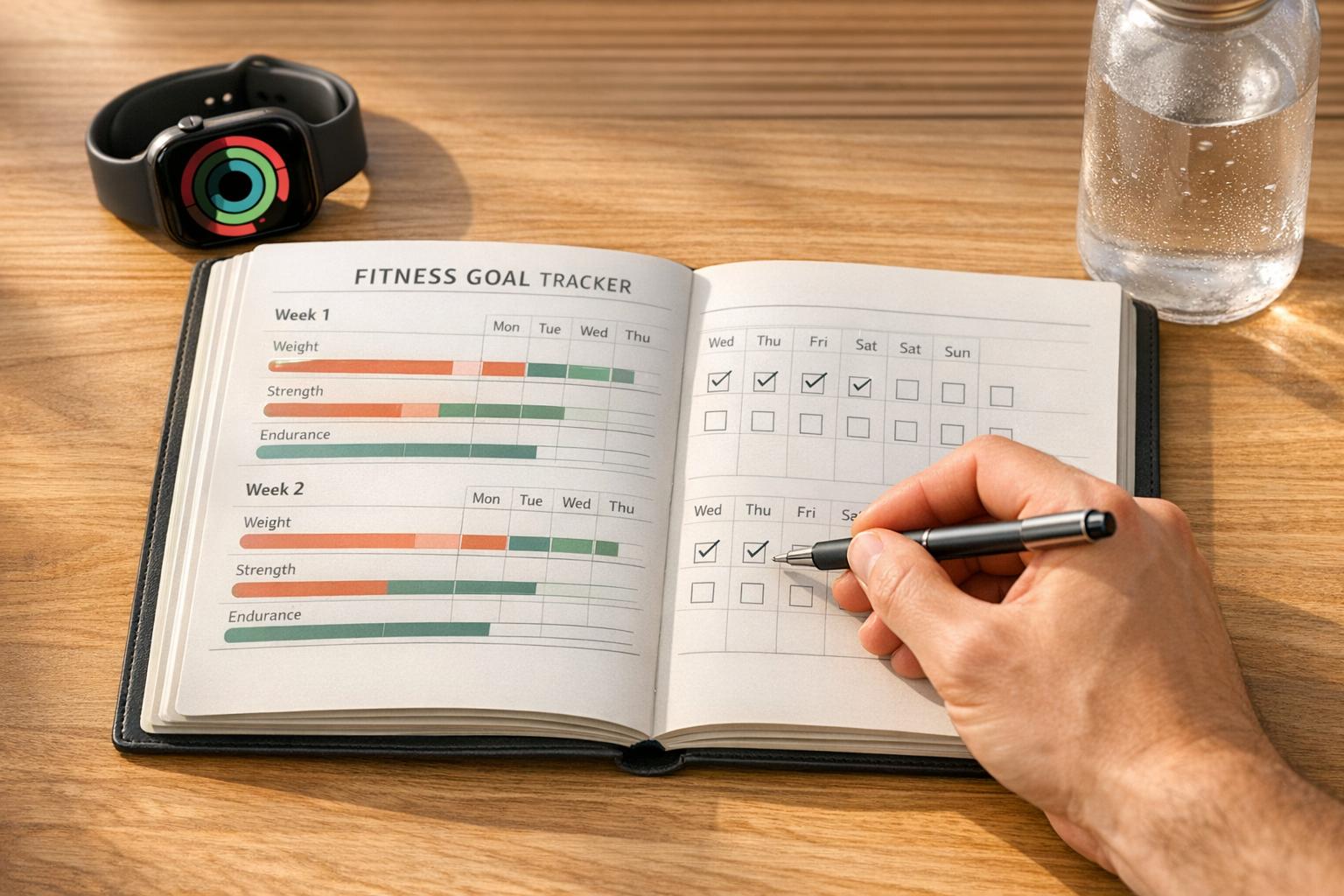
<iframe class="wrapifai-iframe" src="https://app.wrapifai.com/embed/58440c" frameborder="0" loading="lazy" id="wrapifai-iframe" width="100%" height="400px" marginheight="0" marginwidth="0" bgcolor="white" style="padding: 12px 0; border-radius: 12px" allow="clipboard-read;clipboard-write;" title="Embedded media"></iframe><h2 id="build-a-smarter-plan-for-your-fitness-goals" tabindex="-1" class="sb h2-sbb-cls">Build a Smarter Plan for Your Fitness Goals</h2> <p>A good <strong>Fitness Goal Tracker</strong> does more than log numbers. It helps you turn a vague idea like “get in better shape” into a timeline you can actually follow. Whether your focus is weight loss, muscle gain, or endurance, having a clear weekly target makes progress easier to measure and less stressful to manage.</p> <h3 id="set-goals-that-feel-achievable" tabindex="-1">Set Goals That Feel Achievable</h3> <p>This tool lets users enter their current weight, target weight, timeline, and main objective, then creates a simple weekly plan with milestone check-ins. That structure is helpful because big changes often feel overwhelming at the start. Breaking them into smaller steps gives you something concrete to work toward each week.</p> <h3 id="track-progress-without-overcomplicating-it" tabindex="-1">Track Progress Without Overcomplicating It</h3> <p>A well-designed <strong>Fitness Goal Tracker</strong> should be practical, not intimidating. Instead of flooding users with too much data, this one focuses on realistic progress targets and supportive reminders. Someone aiming to lose weight might see tips around meal consistency and daily movement, while a muscle-building plan may highlight recovery, protein intake, and progressive training.</p> <h3 id="stay-consistent-over-time" tabindex="-1">Stay Consistent Over Time</h3> <p>When your plan feels clear and manageable, it’s easier to keep going. That’s what makes a simple fitness progress planner so useful: it keeps your goal visible, your milestones realistic, and your motivation steady.</p> <h2 id="faqs" tabindex="-1" class="sb h2-sbb-cls">FAQs</h2> <h3 id="how-does-the-tool-calculate-my-weekly-progress-target" tabindex="-1" data-faq-q>How does the tool calculate my weekly progress target?</h3> <p>It compares your current weight with your target weight, then divides that change across your selected timeline. For example, if you want to lose 6 kg in 12 weeks, the tool will suggest a target of 0.5 kg per week. The idea is to give you a steady pace that feels achievable rather than extreme, which is usually better for consistency and long-term results.</p> <h3 id="can-i-use-this-for-goals-other-than-weight-loss" tabindex="-1" data-faq-q>Can I use this for goals other than weight loss?</h3> <p>Yes. The tool is designed for several common fitness goals, including muscle gain and endurance. If your goal is muscle gain, it can frame progress around gradual weight increases and steady training habits. For endurance, the tracker can still serve as a planning and accountability tool, helping you follow a timeline, monitor milestones, and stay focused on your bigger objective.</p> <h3 id="what-counts-as-a-realistic-input" tabindex="-1" data-faq-q>What counts as a realistic input?</h3> <p>Realistic inputs are values that make sense for healthy planning. A timeline can’t be zero or negative, and the weight change should be reasonable for the period you’ve chosen. If someone enters a very aggressive target, the tool should prompt them to slow the pace and choose a safer range. That keeps the output supportive and practical instead of pushing unrealistic expectations.</p>
<script src='https://app.wrapifai.com/embed/index.js'></script><script type="application/ld+json">{"@context":"https://schema.org","@type":"FAQPage","mainEntity":[{"@type":"Question","name":"How does the tool calculate my weekly progress target?","acceptedAnswer":{"@type":"Answer","text":"<p>It compares your current weight with your target weight, then divides that change across your selected timeline. For example, if you want to lose 6 kg in 12 weeks, the tool will suggest a target of 0.5 kg per week. The idea is to give you a steady pace that feels achievable rather than extreme, which is usually better for consistency and long-term results.</p>"}},{"@type":"Question","name":"Can I use this for goals other than weight loss?","acceptedAnswer":{"@type":"Answer","text":"<p>Yes. The tool is designed for several common fitness goals, including muscle gain and endurance. If your goal is muscle gain, it can frame progress around gradual weight increases and steady training habits. For endurance, the tracker can still serve as a planning and accountability tool, helping you follow a timeline, monitor milestones, and stay focused on your bigger objective.</p>"}},{"@type":"Question","name":"What counts as a realistic input?","acceptedAnswer":{"@type":"Answer","text":"<p>Realistic inputs are values that make sense for healthy planning. A timeline can’t be zero or negative, and the weight change should be reasonable for the period you’ve chosen. If someone enters a very aggressive target, the tool should prompt them to slow the pace and choose a safer range. That keeps the output supportive and practical instead of pushing unrealistic expectations.</p>"}}]}</script>