
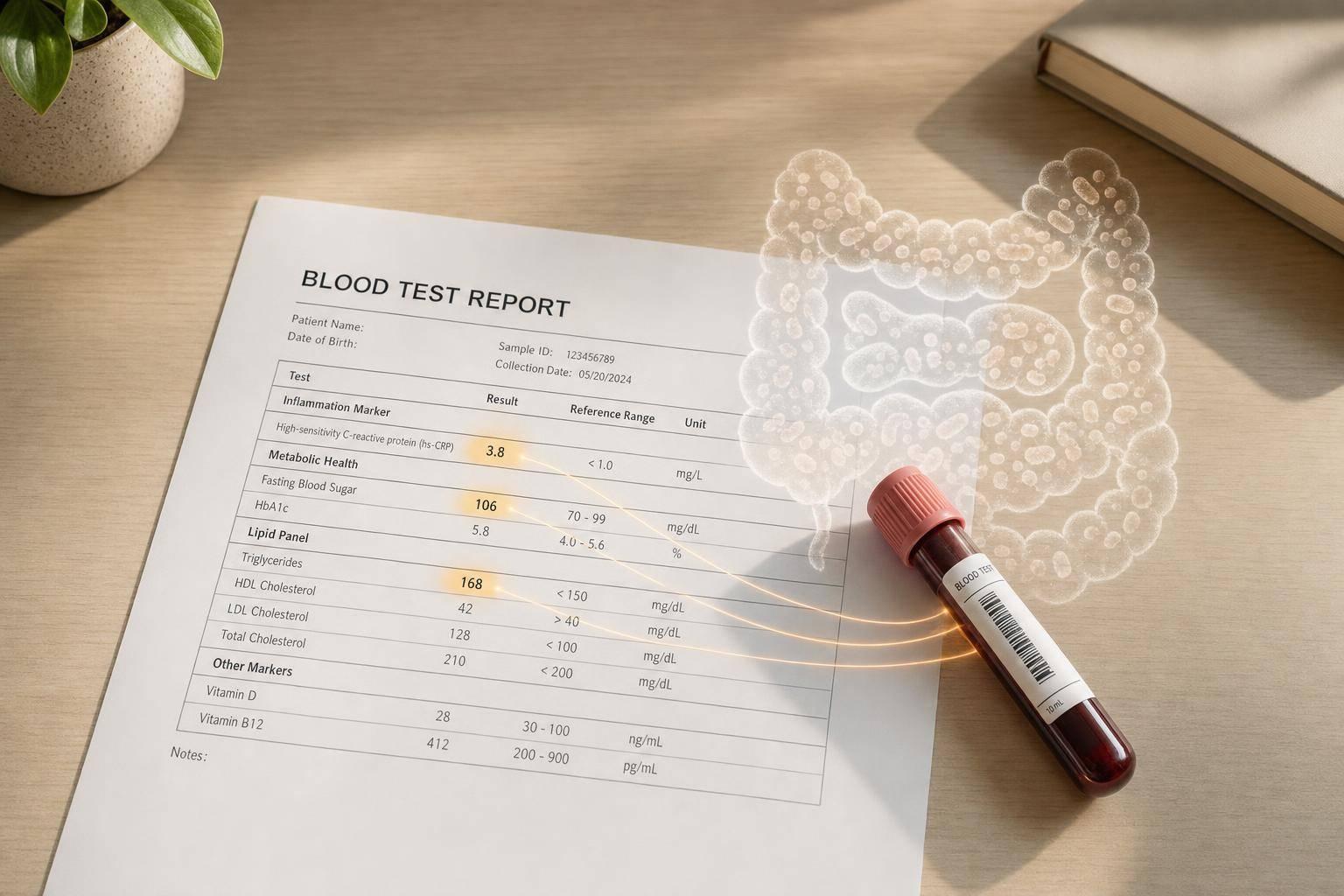
Your gut can shape your lab results before disease shows up. If I see high hs-CRP, high triglycerides, low HDL, higher fasting insulin, or a mild ALT bump, I don’t treat that as proof of a gut problem. But I do treat it as a clue that inflammation, insulin resistance, and gut-liver stress may be in play.
Here’s the short version:
- Blood tests do not measure the microbiome directly.
- They can reflect the downstream effects of gut imbalance.
- The labs most tied to this pattern are hs-CRP, HbA1c, fasting glucose, fasting insulin, triglycerides, HDL, LDL, and ALT.
- The pattern that stands out most is high hs-CRP + high triglycerides + low HDL + higher fasting insulin.
- Gut-made compounds in blood, like TMAO, LPS-related signals, SCFAs, bile acids, and tryptophan metabolites, help explain the link.
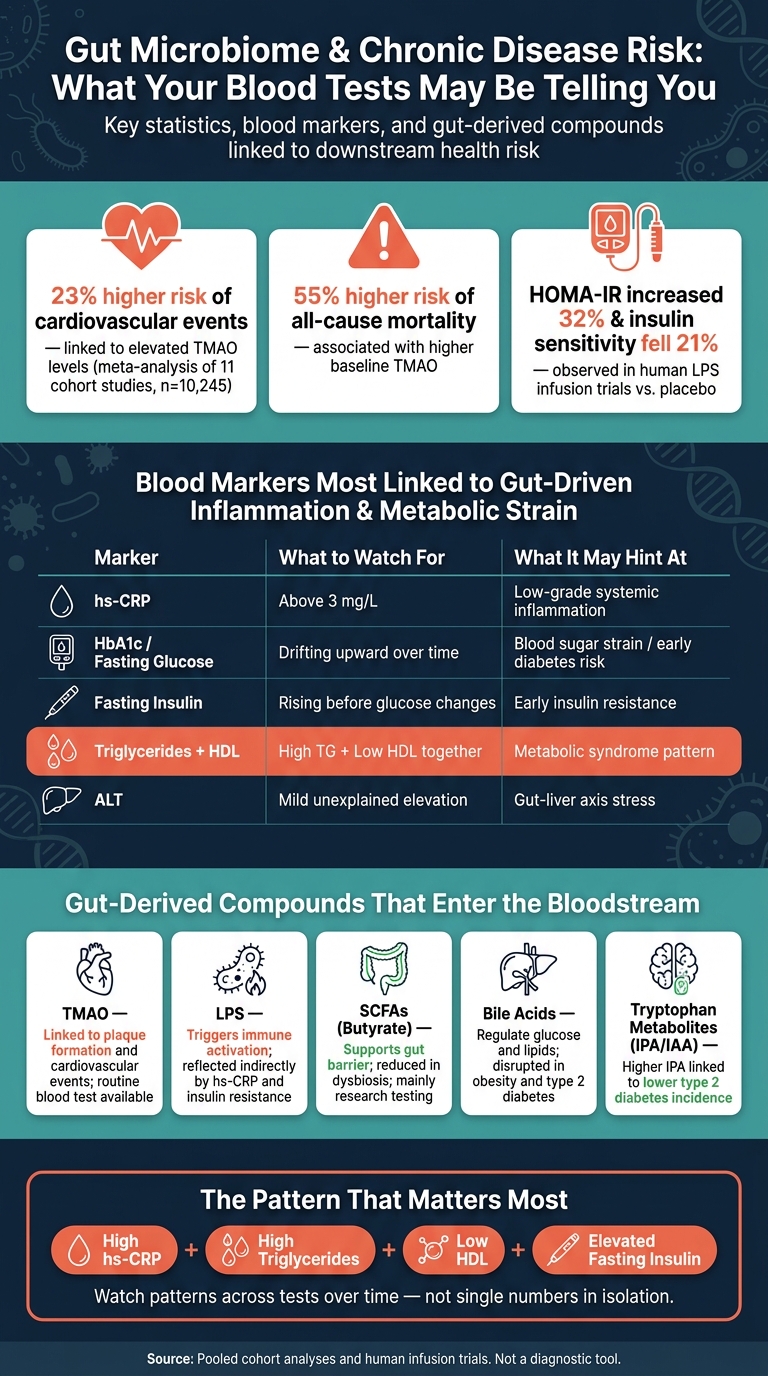
- In one pooled analysis, higher TMAO was linked to a 23% higher risk of future cardiovascular events and a 55% higher risk of all-cause mortality.
- In human LPS infusion trials, HOMA-IR went up 32% and insulin sensitivity fell 21%.
What would I do with this information?
- Watch my lab patterns, not one number in isolation
- Put extra focus on fiber, plant variety, and fewer ultra-processed foods
- Track changes over time instead of expecting one test to give a full answer
| Marker | What I look for | What it may hint at |
|---|---|---|
| hs-CRP | Above 3 mg/L | Low-grade inflammation |
| HbA1c / fasting glucose | Drifting up over time | Blood sugar strain |
| Fasting insulin | Higher before glucose changes | Early insulin resistance |
| Triglycerides + HDL | High TG, low HDL | Metabolic syndrome pattern |
| ALT | Mild elevation | Gut-liver stress |
Bottom line: I’d use bloodwork as a feedback tool for gut and metabolic health, not as a stand-alone diagnosis. The goal is simple: spot strain early, clean up the daily inputs, and recheck the numbers. Using AI nudges for better health habits can help you stay consistent with these lifestyle adjustments.
Gut Microbiome & Bloodwork: Key Markers, Metabolites & Chronic Disease Risk Stats
No. 1 gut scientist: why inflammation is the hidden cause of disease | Dr. Will Bulsiewicz
sbb-itb-f5765c6
How Microbiome Imbalances May Raise Chronic Disease Risk
Your gut doesn't work in isolation. The microbial community inside it interacts with the rest of your body all day, every day. When that community slips out of balance, the effects can spread through your immune system, metabolism, and long-term disease risk.
Inflammation, Gut Barrier Breakdown, and Immune Stress
The gut plays a big part in regulating immune activity. So when dysbiosis develops, inflammation can stay switched on longer than it should. Instead of settling down, that immune stress may linger in the background and start shifting blood markers before any disease is clear.
Effects on Weight, Insulin Resistance, and Heart Health
Gut bacteria influence fat storage, appetite, and insulin response, and dysbiosis has been linked to weight changes [2]. Over time, those shifts can affect insulin sensitivity and glucose control. That may show up in bloodwork like fasting glucose, HbA1c, and insulin.
As these changes build, cardiometabolic risk can go up. In many cases, the first clues appear in routine inflammation and metabolic labs.
Blood Markers That May Reflect Microbiome-Linked Risk
Building on those gut-driven pathways, these are the lab markers most likely to show the downstream effects. In plain English: common blood work can hint at microbiome-linked inflammation and metabolic strain.
hs-CRP and Other Signs of Chronic Inflammation
High-sensitivity C-reactive protein (hs-CRP) is one of the most useful markers for low-grade systemic inflammation - the kind that can increase long-term cardiovascular and metabolic risk. Common U.S. cutoffs are below 1 mg/L, 1–3 mg/L, and above 3 mg/L.[3]
Gut barrier dysfunction can push hs-CRP higher, and levels of 3 mg/L or more can also point to early insulin resistance.[4] That matters most when hs-CRP shows up with odd glucose or lipid numbers. One result alone doesn't tell the whole story, but the pattern can.
HbA1c, Fasting Glucose, Insulin, LDL, HDL, Triglycerides, and ALT
HbA1c shows your average blood sugar over about 2 to 3 months, while fasting glucose shows your blood sugar at that moment. In U.S. labs, fasting glucose is typically around 60–100 mg/dL.[5][6]
Fasting insulin is often the earlier warning sign. It can rise before glucose moves out of range, which helps flag insulin resistance before diabetes develops. A less diverse or more inflammatory gut microbiome may play a role in weaker glucose control through inflammation, short-chain fatty acid production, and lower insulin sensitivity.
When lipids shift, the microbiome link tends to show up more in higher triglycerides and lower HDL than in LDL by itself. That combo - high triglycerides plus low HDL - is also commonly tied to insulin resistance and metabolic syndrome.
ALT can point to gut-liver strain. It isn't a direct gut marker, but it can reflect gut-liver stress.[5] Changes in the microbiome can affect intestinal permeability, inflammatory signaling, and the movement of microbial products to the liver. Over time, that may contribute to fatty liver disease and mild ALT elevation.
Blood Marker Comparison Table
| Marker | What It Measures | Possible Microbiome Link | Chronic Disease Relevance |
|---|---|---|---|
| hs-CRP | Low-grade systemic inflammation | Gut barrier dysfunction and bacterial byproducts may drive immune activation | Cardiovascular and metabolic risk |
| HbA1c | Average blood sugar over ~2–3 months | Dysbiosis may affect glucose regulation and insulin sensitivity | Type 2 diabetes |
| Fasting Glucose | Current blood sugar (mg/dL) | Microbiome-related inflammation can affect glucose metabolism | Prediabetes and diabetes screening |
| Fasting Insulin | Early insulin resistance signal | Gut-derived inflammation may reduce insulin sensitivity before glucose rises | Early metabolic dysfunction |
| LDL Cholesterol | Low-density lipoprotein (mg/dL) | Microbiome link is less direct than with triglycerides and HDL | Atherosclerotic cardiovascular disease |
| HDL Cholesterol | High-density lipoprotein (mg/dL) | Microbiome differences are associated with HDL variation | Cardiovascular protection |
| Triglycerides | Blood fats (mg/dL) | Microbiome may influence triglycerides through inflammation and bile acid signaling | Metabolic syndrome and heart disease |
| ALT | Liver enzyme activity (U/L) | Gut-liver axis disruption may contribute to mild liver stress | Fatty liver disease |
The clearest pattern to watch is high hs-CRP, higher fasting insulin, high triglycerides, and low HDL.
These labs point to downstream strain. The next step is to look at microbiome-derived compounds that can show up in blood.
Microbiome-Derived Compounds Found in Blood
Standard lab markers tell part of the story. But gut bacteria also make compounds that can pass into the bloodstream. Those metabolites help explain why dysbiosis can affect inflammation, glucose control, and cardiovascular risk. In practice, that’s often why microbiome changes show up first in inflammation, glucose, and lipid labs.
TMAO and Its Link to Cardiovascular Disease
Trimethylamine N-oxide (TMAO) is one of the most studied gut-derived compounds in cardiovascular research. Gut bacteria turn choline, phosphatidylcholine, and L-carnitine from foods like red meat and eggs into TMA. The liver then converts TMA into TMAO.
The cardiovascular data on TMAO stands out. A meta-analysis pooling 11 prospective cohort studies with 10,245 participants found that higher baseline TMAO was tied to a 23% higher risk of future cardiovascular events and a 55% higher risk of all-cause mortality.[17] A separate large multi-ethnic U.S. cohort found that people in the highest TMAO quintile had about a 32% higher risk of incident atherosclerotic cardiovascular disease than those in the lowest quintile, even after adjustment for standard risk factors.[15][7][18]
This link seems stronger in older adults and people who already have more cardiometabolic risk. So TMAO works best as a risk signal, not a stand-alone diagnosis.
SCFAs, LPS, Bile Acids, and Tryptophan Metabolites
Short-chain fatty acids (SCFAs) - acetate, propionate, and butyrate - come from fiber fermentation and usually help support the gut barrier. Butyrate matters in particular because it fuels the cells that line the colon and helps reduce translocation of LPS (lipopolysaccharide) into circulation.[9]
LPS is a bacterial compound that can drive inflammation when the gut barrier becomes leaky. Even low-grade LPS in circulation activates immune signaling, pushing inflammation, insulin resistance, and liver fat buildup.[9] In human infusion trials, HOMA-IR increased by 32% and insulin sensitivity fell 21% compared with placebo.[16]
Gut microbes also reshape bile acids, and those signals help regulate glucose, lipids, and energy use. When that signaling gets disrupted, altered bile acid profiles show up in obesity, type 2 diabetes, and NAFLD.[8][11]
Tryptophan metabolites add another layer. Gut microbes convert dietary tryptophan into compounds like indole-3-acetic acid (IAA) and indole-3-propionic acid (IPA). These circulate in blood and help regulate immune responses and gut barrier integrity.[10][12] Higher circulating IPA has been linked to a lower incidence of type 2 diabetes, while people with type 2 diabetes and obesity keep showing lower levels of these protective indole derivatives.[13][14]
Metabolite Comparison Table
The table below separates the main gut-derived compounds by source, test availability, and disease relevance.
| Metabolite | Source | Routine Blood Test Available? | Main Pathway | Disease Relevance |
|---|---|---|---|---|
| TMAO | Gut bacteria processing choline, phosphatidylcholine, and L-carnitine | Yes - some cardiology and specialty labs | Promotes plaque and clotting | Cardiovascular disease and major heart events |
| SCFAs (butyrate, propionate, acetate) | Bacterial fermentation of dietary fiber | No - mainly research settings | Gut barrier, anti-inflammatory | Metabolic syndrome, type 2 diabetes, NAFLD |
| LPS (metabolic endotoxemia) | Gram-negative bacterial membrane; leaks through compromised gut barrier | Indirectly reflected by hs-CRP and insulin resistance | TLR4 immune activation | Insulin resistance, obesity, cardiovascular disease |
| Secondary bile acids (DCA, LCA) | Primary bile acids modified by gut microbes | Available mainly in hepatology and research contexts | FXR and TGR5 signaling | NAFLD, type 2 diabetes, metabolic syndrome |
| Tryptophan metabolites (IPA, IAA, kynurenine) | Dietary tryptophan via microbial indole pathways and related host tryptophan pathways | Specialized labs only | AhR signaling, gut barrier | Type 2 diabetes, obesity, inflammatory and neuropsychiatric conditions |
For most people, the downstream effects of these compounds appear indirectly through markers already covered, such as hs-CRP, fasting insulin, triglycerides, HDL, and ALT. The next step is changing the inputs that shape these metabolites using personalized wellness protocols: fiber, protein sources, and the overall diet pattern.
How to Improve Bloodwork and Gut Health in Practice
Diet Changes That Support Better Microbiome and Metabolic Markers
The next step is to change the daily inputs that shape those markers. The best diet changes are personal, not one-size-fits-all. Instead of trying to overhaul everything at once, focus on the few foods and habits most likely to shift your numbers: more fiber, more plant variety, fewer ultra-processed foods, and a better balance of protein and fat.
That approach is often easier to stick with. And that matters, because even smart advice falls apart if it doesn’t fit your day-to-day life. Meal-planning tools can help make the plan simpler to follow, and over time those shifts can influence markers like fasting glucose and triglycerides [2].
How Healify Can Help Connect Bloodwork, Habits, and Trends

It’s much easier to spot what’s helping when you track your labs next to your habits. Healify brings bloodwork, wearable biometrics, and lifestyle data into one place. Its AI coach Anna breaks down biomarkers like hs-CRP, HbA1c, and triglycerides into simple next steps for food, movement, and sleep, so you can see whether your gut-focused changes are helping both symptoms and bloodwork over time [1][19].
Conclusion: Key Takeaways and Next Steps
Pair personal nutrition changes with regular biomarker tracking. Pay close attention to hs-CRP, HbA1c, fasting glucose, triglycerides, HDL, and ALT, and use bloodwork as feedback for gut-focused changes, not as a diagnosis on its own.
FAQs
Can bloodwork really hint at gut problems?
Yes - bloodwork can sometimes point to gut issues, even if it doesn’t give a direct diagnosis.
That’s because certain blood markers can show patterns tied to nutrient shortfalls, immune activity, or inflammation that may relate to gut health. Think of it as a set of clues, not a final answer.
Healify can help you make sense of those clues over time. It tracks blood markers and connects them with wearable and lifestyle data, which can make it easier to spot patterns and see what may be changing.
Still, it’s not a diagnosis. If you’re dealing with medical symptoms or have concerns about your gut, a clinician should be part of the conversation.
Which lab pattern matters most for microbiome-linked risk?
The main pattern to watch is inflammation paired with metabolic dysregulation.
That usually means elevated inflammatory markers like CRP, along with cardiometabolic markers such as high LDL or abnormal glucose and insulin patterns.
Researchers and clinicians use these biomarker patterns again and again to connect diet and gut microbiome health with long-term chronic disease risk. They also use them to shape targeted changes, instead of relying on guesswork.
How can I improve these markers through diet?
Improving bloodwork markers through diet starts with a close look at your biomarkers. That’s how you spot nutrition gaps, weak points, or imbalances that may be affecting your health.
Healify helps connect the dots by combining your lab results with lifestyle data, like activity, sleep, and eating habits. Anna then turns those hard-to-read numbers into clear, personal next steps, including meal planning and nutrient guidance, so you can better support long-term wellness.