

A groundbreaking artificial intelligence (AI) model developed by researchers at Harvard Medical School promises to revolutionize the field of drug discovery. Known as PDGrapher, the tool is designed to identify cellular changes that could reverse disease states, offering a faster and more precise alternative to traditional drug development methods.
Rethinking Drug Discovery
The process of discovering new drugs has historically been slow and fraught with uncertainty. Conventional methods typically focus on testing one protein or compound at a time, relying heavily on trial and error over many years. PDGrapher challenges this approach by analyzing multiple disease drivers simultaneously, predicting which genes or drug combinations might restore diseased cells to a healthy state.
Unlike traditional methods, the AI model leverages data on cellular networks to make informed predictions, drastically reducing the need for exhaustive compound testing and saving valuable time in the drug development process.
sbb-itb-f5765c6
How PDGrapher Works
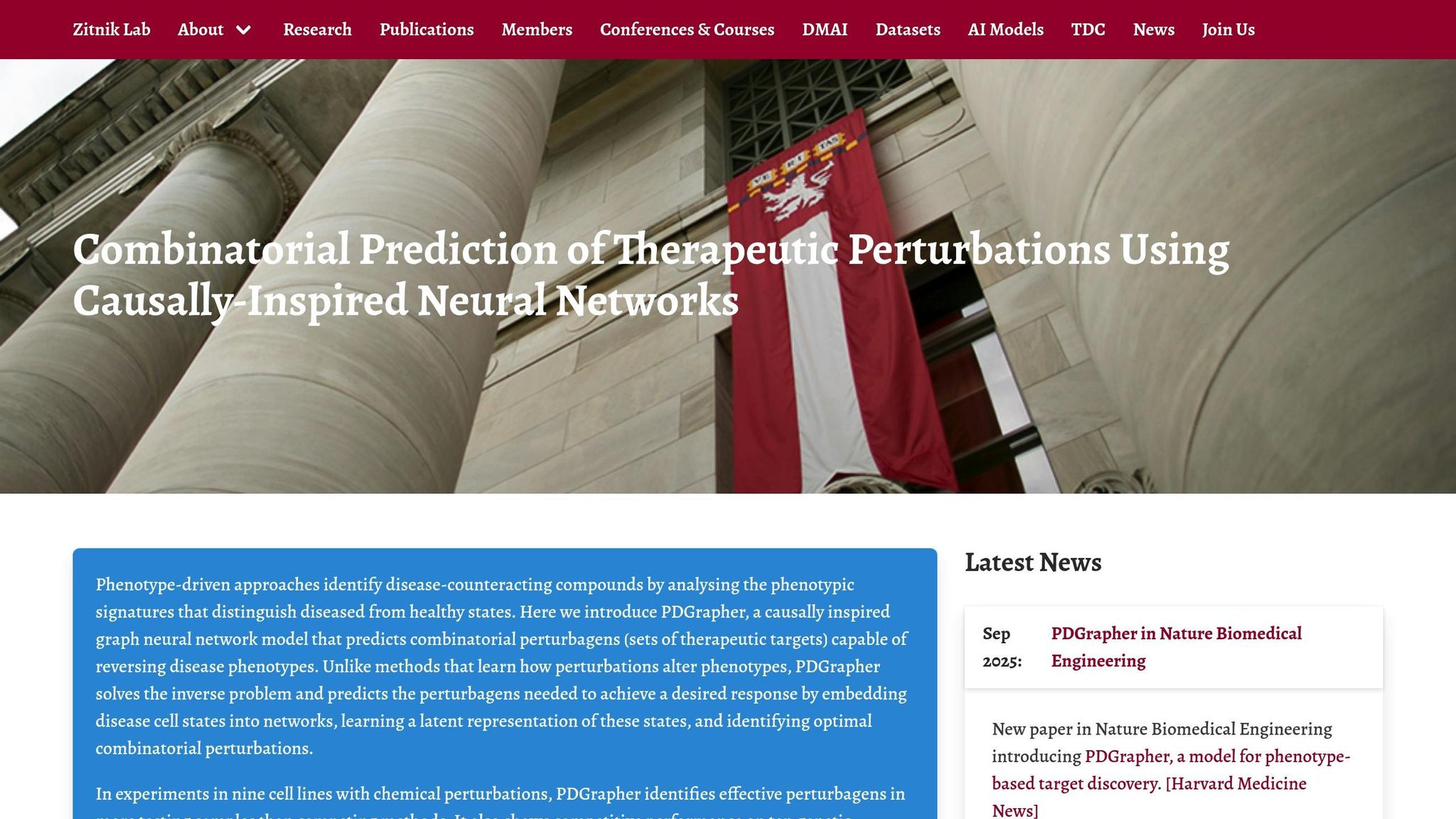
At the core of PDGrapher is a graph neural network, a type of AI that examines the complex web of connections between genes, proteins, and pathways in cells. By simulating the effects of switching specific cellular processes on or off, the model identifies treatments with the highest likelihood of reversing disease symptoms.
This innovative approach allows researchers to target diseases more efficiently and effectively. Instead of searching blindly for solutions, PDGrapher provides a roadmap for identifying and combining treatments with precision.
Promising Results
The researchers behind PDGrapher trained the model using cellular data collected before and after treatment. Its performance was then tested across 19 datasets representing 11 cancer types, showing remarkable accuracy.
- The tool confirmed known drug targets excluded from its training data, demonstrating its reliability.
- In non-small cell lung cancer, PDGrapher identified KDR (VEGFR2) as a target, aligning with existing clinical findings.
- It pinpointed TOP2A, a known target of chemotherapy drugs, as a promising candidate for slowing tumor progression.
- Compared to similar AI models, PDGrapher ranked correct targets up to 35% higher and delivered results up to 25 times faster.
These results underline the model’s potential to accelerate breakthroughs in biomedical research and drug development.
Tackling Complex Diseases
Diseases like cancer often resist treatments targeting a single pathway, as tumors can adapt and develop resistance over time. PDGrapher addresses this challenge by revealing multiple targets simultaneously, providing a more comprehensive strategy for combating such diseases.
Beyond cancer, the model is being applied to conditions like Parkinson’s and Alzheimer’s disease, as well as X-linked Dystonia-Parkinsonism, a rare genetic disorder. Collaborations with Massachusetts General Hospital have already begun exploring these applications.
The tool’s potential extends beyond discovery. PDGrapher could be instrumental in designing personalized treatment plans by analyzing a patient’s unique cellular profile and guiding doctors toward tailored drug combinations. It also provides researchers with insights into why certain treatments succeed, unlocking a deeper understanding of the biological mechanisms behind effective therapies.
A New Era in Drug Development
Marinka Zitnik, one of the study’s authors, likened traditional drug discovery methods to tasting dish after dish in search of the right flavor. In contrast, PDGrapher "shows how to select and combine ingredients with precision", offering a systematic approach to reversing diseases at the cellular level. Zitnik and her team believe the model could serve as a roadmap for transforming biomedical research and drug development.
If its early success continues, PDGrapher may mark a significant turning point in the fight against some of the world’s most complex and poorly understood diseases.