
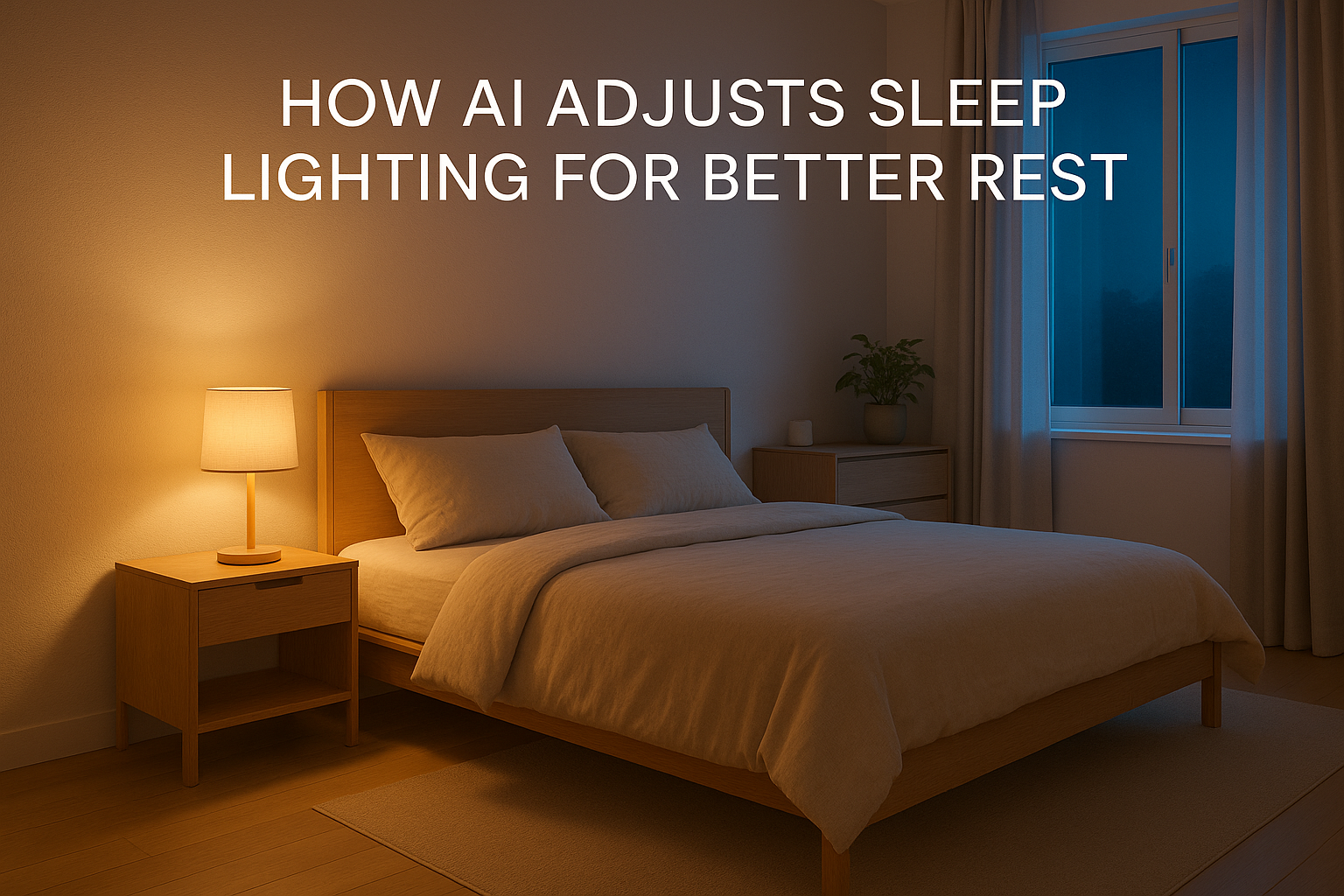
AI-powered sleep lighting is designed to improve how you fall asleep, stay asleep, and wake up. These systems use data from your habits, body clock, and health devices via custom dashboards to create personalized lighting setups that match your sleep needs. By automatically adjusting brightness, color warmth, and timing, they help regulate your circadian rhythm and support melatonin production, which is key for quality rest.
Key Takeaways:
- Personalized Lighting: AI tailors light brightness and color to your sleep schedule, body clock, and preferences.
- Health Integration: Works with wearables like Fitbit or Apple Watch to sync lighting with your physical state and sleep phases.
- Dynamic Adjustments: Adapts to changes in your routine, seasons, and even stress or workout recovery needs.
- Science-Backed: Reduces blue light exposure at night and uses warm tones to promote better rest.
AI lighting systems are a practical solution for anyone struggling with sleep issues or irregular schedules. They help create an environment that supports natural sleep cycles, making it easier to wake up refreshed and ready for the day.
Adaptive Lighting: Two Ways to Make Your Lights ACTUALLY SMART
How Light Affects Your Sleep
Your body has a built-in clock known as the circadian rhythm that tells you when to be awake or sleep. Light is the biggest thing from outside that impacts this clock, playing a key part in how well you sleep.
"Light is the most important external factor affecting sleep. Light plays a central role in regulating circadian rhythm, the body's internal clock that signals when to be alert and when to rest. Light also affects the production of melatonin, an essential sleep-promoting hormone."
Light and sleep are linked, and this is key for AI systems that tweak light to match how you sleep.
How Light and Your Body Clock Work Together
Your brain is set to be up when it’s light and sleep when it’s dark. Even a bit of light can mess with your body's clock, making it vital to get light at just the right time and strength.
Your body clock is most open to effects from light about an hour after you wake up and two hours before you go to bed. Light at these times tells your body when to be awake and when to relax.
Day and night lights are very different. Natural daylight can hit up to 10,000 lux, while office lights are often just 500 lux. Still, only about half of Americans get bright indoor light in the morning or afternoon. At night, light stops the making of melatonin, while dark helps it come out.
If your body clock is off, it can lead to big health issues like metabolism problems, weight gain, and heart risks. Getting the timing and type of light right matters a lot. This is what leads to smart lighting systems that change to boost good sleep habits.
How Different Lights Touch Sleep
Different lights hit sleep in different ways. Blue light affects body clocks a lot, stopping melatonin. This kind of light often comes from screens and LED bulbs in the evening and is bad for sleep.
The color warmth of light, in Kelvin (K), matters too. Cool, high Kelvin lights send out blue light that keeps you up. Warm, low Kelvin lights give off red tones that don't mess with sleep as much. Studies say blue light cuts melatonin more than red light.
Even small bits of light can disrupt sleep. It's best to sleep in full dark, as even light that filters through your eyelids can mess up your body clock and melatonin. About two-thirds of folks in the European Union have night skies brighter than a full moon, making sleep hard for many.
Light strength also plays a big role. Bright light in the day keeps you alert and sets your body clock, while dim light at night gets your body ready to make melatonin and sleep.
"Exposure to light has a powerful effect on how well you sleep at night. Light exposure is one of the most important factors when it comes to regulating our circadian rhythm - helping keep the body's natural sleep-wake cycle in sync."
These science rules help make AI systems that fix light as time goes by. They match your sleep times to help you rest better and feel good all over.
Key Things About AI Sleep Light Tech
AI sleep light tech uses smart ways and sleep know-how to make light setups that fit how you sleep. These tools go far past just timers or dimming, using new data to boost how well you sleep. Let's check how they make the lighting yours for better rest.
Light That Shifts With Your Data
Today's AI light tools pick up your sleep ways - like when you head to bed, how fast you fall asleep, and when you wake. With this info, they set up a light plan that goes with your inner clock.
As time goes on, these tools see your habits. For instance, if you're up late on weekends, the tool tweaks dimming and color to fit. In dark winter days, it might give more light in the eve to make up for less sun. But in long summer days, it might cut the light early to get your body ready for sleep.
The best bit? These systems keep updating. If you start sleeping early for some weeks, the AI changes your light plan without you doing a thing. It grows with your life, making sure your setting always aids your sleep.
Works With Wearables and Smart Things
AI light systems push personal touches further by linking with wearables and other smart tech. Data from wearables - like heart checks, body heat, and moves - give live hints that the system uses to set your lights right. Say, if your wearable sees you can't sleep, the lights might drop more or change to softer colors to calm you.
The system also syncs with your sleep phases. In deep sleep, the light stays low so as not to wake you. As you near waking, cooler lights come on slowly to help you wake up easy. If you get up at night, motion sensors light up a soft, warm glow - set under 1 lux - to help you see without waking your mind or messing your sleep cycle.
Adding smart home tech brings more uses. Like, the system can work with your heat control, setting lights to go with your body’s cool down before sleep. On cold nights, it might keep lights a bit high to help you get into sleep mode.
Lights Matched to How You Sleep
These systems also tune to how different people sleep. If you're an early bird, a night person, or someone who needs less bright light, the AI shifts light strength and color changes to match your sleep style.
We think about age when we set this up. Old people, for one, often need more light in the day to keep a good sleep-wake cycle, while young ones might like less sharp changes. The system gets better by using health data for better sleep quality, and changes light warmth or how bright it is based on this.
As the year goes, things change too. Many move their sleep times with the seasons - sleeping early in cold months and late in warm months. The AI lights see this and slowly change time settings to fit what you like. This makes sure your lights match well with how your body works, helping you rest well with smart, changing tweaks.
Making an AI Sleep Light System
After you learn how AI can make your sleep light better, the next thing is to set up your system. This needs some planning, but the good things - like better sleep and an easy morning start - are worth it. You need to pick the right things, link them with your health info, and set routines that match your day.
Picking Good AI Light Things
First, pick lights that can change how bright they are and their color warmth. Choose ones that give warm light, as low as 2,700K, to help make melatonin. Try to keep blue light out of your room because it can mess with your sleep and stop melatonin [3].
For top stuff, Philips Hue bulbs are well liked. They cost between $30 and $60 and give 16 million colors. They mix well with smart home setups [4]. If you need to spend less, WiZ bulbs cost $15–$30 and let you change colors and set times [4]. For fun lights, Govee's Glide Hexa Light Panels at $30–$100 are great for cool lights all day [4].
Make sure the lights you pick work with your voice assistant so you can use them without hands, mainly when you calm down at night. Systems with smart planning and auto work better for sleep than simple timers. Start with a light next to your bed that you can dim, and you can add more to it later.
Linking Light to Health Data
To make it fit you, join your AI light to health tools like fitness bands, smart watches, or sleep checks. Many systems can change light based on your real sleep style, not just a set plan.
Most light setups work with apps for Fitbit, Apple Watch, and Garmin. They use your steps, heart beat, body heat, and movement to change how the light acts - when you calm down, in deep sleep, or waking up slowly.
For more high-level linking, try BondMCP. This tool puts together health info from many spots, making your light setup smarter to meet your health wants. It can change to help with your workout cool down and other health needs, making sure your light fits your day.
Put motion sensors in your setup for more help. For example, set them to turn on soft, warm light if you move at night - just enough to see without waking up all the way.
Making Your Own Light Plans
Set your light times to when you sleep. If you sleep at 10:30 PM, start making the light dimmer and warmer about 90 minutes before. In the morning, slowly make the light brighter with cooler tones 30 minutes before your alarm. This soft start is much nicer than a loud alarm.
AI can change when your day-to-day does, like when you sleep more on weekends or as the year moves on. You can set these changes by hand or let the AI learn by watching how you sleep over time.
To get it just right, try out and tweak your setup over two weeks. See how fast you sleep and how awake you feel when you get up. These signs show if it's working better than just looking at sleep numbers.
If you are fixing the system for many people, think that not everyone likes the same thing. Many AI lights let you make different profiles or control by room, so everyone can have a setup that fits how they sleep.
sbb-itb-f5765c6
Pros and Limits
Good Things About Smart Sleep Lights
Smart sleep lights work with your body's sleep cycle. They change their light to be less bright as you get ready for bed and more bright when it's time to get up. This builds a space that helps you sleep deep and well. Using AI tools for cognitive stress recovery can further enhance this environment by managing mental strain before bed.
A bonus? These lights use less power. They adjust light to what you need, so they use less power than old lights. With voice and motion controls, you can handle the lights without moving - great for when you need a bit of light at night but don’t want to wake up fully.
Smart lights also shift with the natural light changes all year. This is good for those with odd work hours, keeping the sleep space suitable for all seasons.
Usual Worries and Fixes
Though the gains are many, there are some issues too.
Privacy and Data Safety
Some smart lights use behavioral data in health agent workflows to learn about your sleep times and routines, causing worry about privacy. To keep your info safe, pick systems that keep data on the device and let you choose what's shared. Using data locks and ways to clear data can calm your fears.
Hard Setup
Putting in smart sleep lights might seem big, especially if you’re fitting many devices. Start small - put one smart bulb in your bedroom and later add more. Most makers have clear steps and help ready to help you set up.
Device Matching
Not all smart devices work well together, which can bother you. Before buying, check that the light system fits with setups like Apple HomeKit, Google Home, or Amazon Alexa. Tools like BondMCP also help link devices for an even flow.
Cost Issues
Top-notch AI lights cost a lot at first. Yet, the long-term wins - like better sleep and smaller power bills - make them a good buy. If money's short, begin with the main parts and improve bit by bit.
Back-Up Options
What if your system stops working? It's wise to have other ways like thick curtains or a regular lamp ready. Many smart bulbs still work as regular lights, so you won’t be without light if there's a glitch.
The Next Step in Sleep Made Just for You
AI Makes Your Sleep Better
AI-based lights change to fit you as you snooze. They turn up or down and shift colors as needed. AI watches your sleep ways and learns to match with your body clock. This not only makes your sleep better but also helps you move smoothly through sleep phases, supporting AI recovery for fitness and longevity. As AI gets smarter, it could use more of your health info, shaping sleep spots that fit just you. The end game? A full system that makes your sleep the best it can be.
How BondMCP Makes Sleep Great
BondMCP mixes info from health wearables, lab tests, what you take, and what you do every day to give sharp, smart details. It joins your sleep lights with your whole health plan, making sure they all work well together. By using your own sleep info, BondMCP lets your lights keep changing to help you rest well and stay healthy. This joint work between AI and your health bits brings real, made-just-for-you sleep shaping into play.
Conclusion: Better Rest Through AI-Powered Lighting
AI-powered sleep lighting is changing the way we approach rest and recovery. These advanced systems go beyond simple timers or manual settings, offering tailored sleep environments that adjust to your unique needs.
By automatically fine-tuning light temperature and brightness, this technology supports your natural circadian rhythms. The result? Falling asleep more easily and enjoying deeper, more restorative sleep cycles. It's all about creating a seamless experience that works in harmony with your body.
What makes this even more impressive is the self-learning capability of AI. Over time, as these systems gather data about your sleep habits and preferences, their adjustments become even more precise. This means your lighting setup feels intuitive, adapting quietly in the background to help you get the best rest possible.
When integrated with platforms like BondMCP, these systems take it a step further by connecting your sleep data with broader health insights. Instead of functioning as a standalone tool, your sleep environment becomes part of a comprehensive approach to health and wellness.
For anyone dealing with poor sleep quality, irregular routines, or the impact of screen time, AI-powered lighting offers a practical, science-backed solution. As this technology becomes more accessible and budget-friendly, transforming your bedroom into a supportive sleep environment has never been easier.
The future of sleep optimization lies in intelligent, connected systems that truly understand and respond to your needs. By embracing AI-driven lighting now, you're not just improving your sleep hygiene - you’re enhancing your overall health and daily performance. These smart solutions align with your natural rhythms, making better rest a reality as part of a larger wellness strategy.
FAQs
How do AI systems use wearable devices to enhance sleep lighting for better rest?
AI-powered sleep lighting systems sync with wearable devices to analyze real-time health metrics like sleep stages, heart rate, and activity levels. Using this information, the AI fine-tunes lighting conditions to encourage relaxation in the evening and a gentle, natural wake-up experience in the morning, helping to improve sleep quality.
These systems craft a tailored sleep environment by adapting to your specific physiological cues. Technologies like BondMCP take this a step further by combining data from various sources, creating a smooth and efficient way to promote better rest.
How do AI-powered sleep lighting systems improve your circadian rhythm and sleep quality?
AI-driven sleep lighting systems are designed to improve your sleep quality and support your natural circadian rhythm by adjusting light intensity and color temperature to mimic the patterns of natural daylight. In the morning, they brighten the room with cooler, energizing tones to help you wake up and feel alert. As evening rolls around, the lights dim and shift to warmer hues, encouraging melatonin production and signaling your body that it's time to wind down.
By aligning your internal clock with these light changes, these systems help create a smoother transition between wakefulness and rest. This not only promotes better sleep but also supports your overall physical and mental well-being by fostering a more natural sleep-wake cycle.
What privacy concerns come with AI sleep lighting systems, and how can users keep their data safe?
AI-powered sleep lighting systems can sometimes spark privacy concerns. For instance, there’s the risk of data breaches or unauthorized access to sensitive information about your sleep habits and overall health. These concerns make it crucial to prioritize the protection of your personal data.
To keep your information secure, look for systems that adhere to well-established privacy standards and include robust security features like two-factor authentication. It’s also a good idea to carefully read through the system’s privacy policy. This will give you a clear picture of how your data is being collected, stored, and used. Taking these steps can help you enjoy the benefits of AI-enhanced sleep lighting without compromising your privacy.