
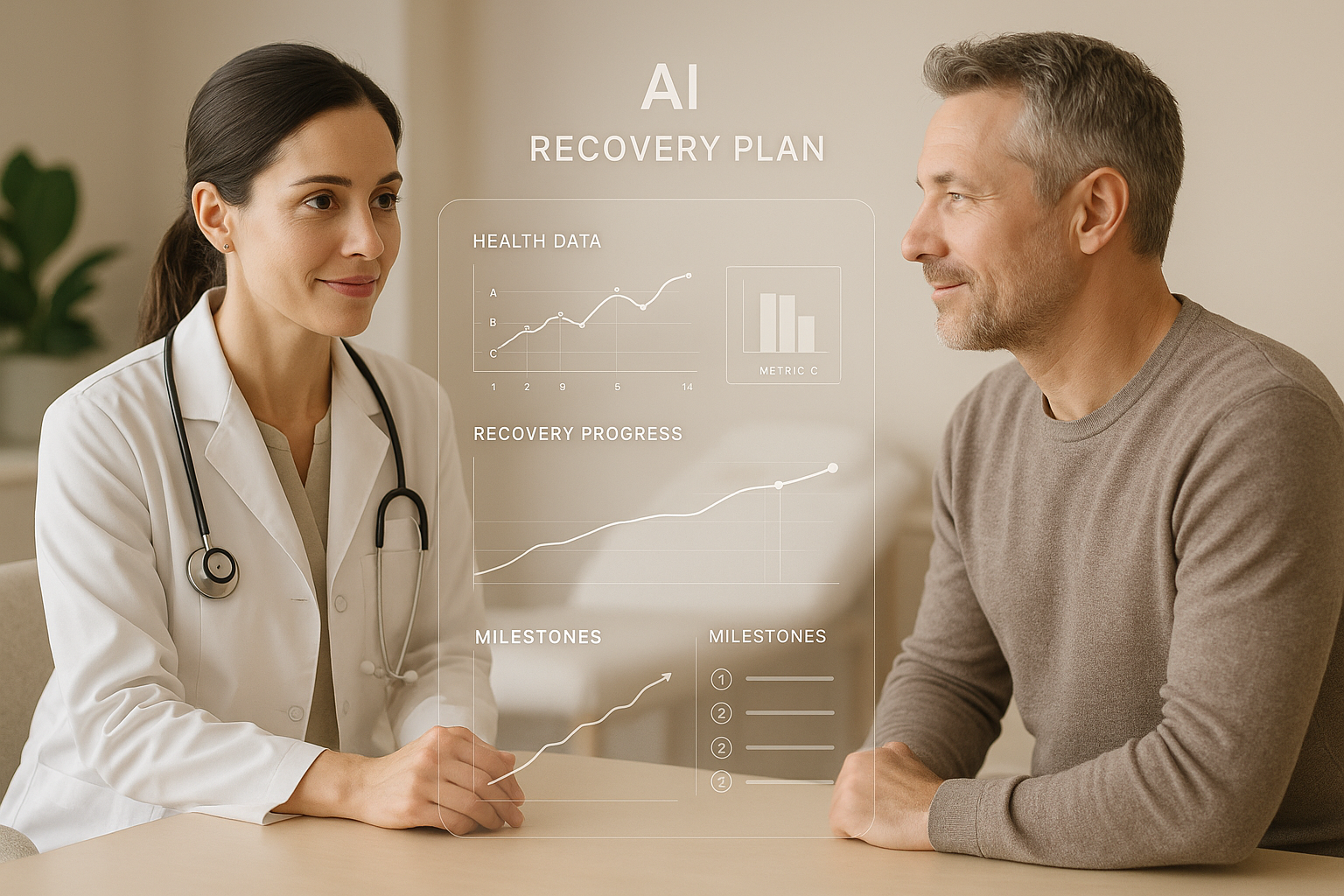
AI is transforming recovery plans by creating personalized strategies using data from wearables, fitness trackers, and performance metrics. Unlike generic approaches, AI analyzes your unique health data to provide real-time adjustments for optimal recovery.
Here’s the key takeaway:
- Integrated Data: Combines fitness history, wearable metrics (e.g., heart rate variability, sleep), and advanced performance stats (e.g., VO₂ max) into one system.
- Real-Time Adjustments: Adapts recommendations dynamically based on changes in your body, like stress or poor sleep.
- Injury Prevention: Detects early signs of overtraining or fatigue through continuous monitoring.
Platforms like BondMCP unify fragmented health data, ensuring consistent recovery advice across devices. This approach addresses common issues like conflicting recommendations from disconnected apps. While AI recovery plans offer tailored insights and scalability, challenges like data privacy, bias, and reliance on accurate inputs remain. As systems evolve, expect smarter, more precise recovery solutions that integrate seamlessly into daily health management.
Data Sources for AI Recovery Plans
AI recovery systems rely on three key types of data to craft tailored recovery protocols. Each data source provides specific insights that contribute to a detailed understanding of your recovery needs and overall condition.
Personal Fitness Data
Your fitness history forms the foundation of an AI-driven recovery plan. This includes factors like your activity levels, exercise routines, injury history, and past recovery trends. For example, if you've experienced knee injuries before, the AI can prioritize low-impact recovery exercises and steer clear of activities that could aggravate the issue.
Tracking your activity helps the system gauge your body’s stress levels and adjust recommendations based on changes in your workload. Detailed records of past injuries ensure the plan remains safe and mindful of your physical limits.
This data is typically collected through manual entries in fitness apps or imported from health records. The more complete and accurate your fitness profile, the better the AI can adapt its recommendations to align with your goals. Modern devices that monitor your fitness in real time further enhance the system's ability to fine-tune these strategies.
Wearables and Continuous Monitoring
Wearable devices - like fitness trackers, heart rate monitors, and sleep trackers - play a crucial role in keeping recovery plans responsive. These gadgets provide real-time insights into metrics such as resting heart rate, HRV, stress, and sleep tracking, and daily activity levels.
For instance, devices like WHOOP and Garmin can detect drops in HRV or signs of poor sleep quality, signaling that your body might need extra rest. In response, the AI can adjust your recovery plan on the fly, perhaps by suggesting lighter activities or additional rest days.
This constant stream of real-time data ensures that your recovery plan evolves dynamically, rather than relying on static, one-size-fits-all recommendations.
Advanced Performance Metrics
To go beyond basic tracking, advanced performance metrics like VO₂ max, muscle fatigue, lactate threshold, and recovery time provide a scientific basis for more precise recovery protocols.
VO₂ max, whether measured through wearables or lab tests, offers insight into your aerobic capacity and helps the AI determine the right intensity and duration for recovery activities. Muscle fatigue, inferred from workout intensity and observed recovery patterns, helps the system understand how your body handles different training stresses. Additionally, tracking how quickly your heart rate returns to normal after exercise allows for optimized timing between training and recovery.
How AI Creates Personalized Recovery Plans
AI takes raw data and turns it into tailored recovery strategies by combining several processes, all designed to meet your unique needs and recovery patterns.
From Data Collection to Analysis
It all starts with gathering information from various sources - like wearables, manual inputs about how you feel, and even your health records. Once collected, the data goes through a cleaning process to ensure it's consistent across different devices. For instance, Fitbit and Apple Watch measure sleep differently, so the AI standardizes this information to create a clear, unified picture.
From there, the AI identifies key patterns in the data, such as trends in your sleep quality, shifts in resting heart rate and HRV, or fluctuations in workout intensity. Using machine learning models - like regression or classification algorithms - it analyzes these features to predict what your body needs for optimal recovery.
Platforms such as Healify and TrueCoach rely on these steps to craft recovery protocols tailored to your baseline data and personal goals [1][2]. The AI compares your current stats against extensive databases of recovery outcomes to determine the most effective strategies for your situation.
The type of algorithm used depends on your recovery needs. If you're focusing on muscle repair, decision trees might be the go-to model. On the other hand, neural networks are better suited for predicting the ideal rest periods. For example, TrueCoach uses algorithms to analyze client data and recommend precise recovery activities and rest intervals [6].
This detailed analysis sets the stage for dynamic, real-time adjustments.
Real-Time Adjustments and Updates
AI-powered recovery plans are designed to evolve. They adapt in real time as your body changes. If your sleep score drops or your heart rate variability shifts, the AI takes note and adjusts your recovery plan on the fly.
For instance, if your wearable detects elevated stress levels after a particularly tough day, the AI might suggest extra rest, set hydration goals, or recommend recovery activities like foam rolling or light stretching. These adjustments happen automatically, ensuring your plan stays aligned with your body's current needs.
As new data flows in, the AI refines your recovery plan without requiring manual updates. This constant feedback loop keeps your recovery strategy both accurate and effective.
Real-World Recovery Applications
AI-driven recovery isn't just theoretical - it's already making a difference in sports and fitness. Professional athletes and fitness enthusiasts alike are using these systems to optimize their recovery routines. Tools like WHOOP and Tonal analyze user data to fine-tune cooldown protocols and rest schedules based on individual needs.
Take a marathon runner, for example. After finishing a grueling 26.2-mile race, the AI processes post-race data like elevated heart rate, depleted energy levels, and muscle strain. It then generates a recovery plan that might include specific hydration strategies, targeted stretches, and sleep recommendations tailored to the runner’s condition.
In everyday fitness scenarios, someone recovering from a knee injury might receive a plan focused on low-impact exercises and gradual recovery, while advanced athletes could get recommendations that push their limits without risking overtraining.
AI also plays a critical role in preventing injuries. By spotting subtle changes in movement patterns, sleep quality, or stress levels, it can flag potential issues early - helping athletes avoid serious setbacks and allowing fitness enthusiasts to stay consistent with their routines. This proactive approach has become a game-changer for maintaining peak performance and long-term health.
Connecting Wellness Technology with AI
The real hurdle in AI-driven recovery isn't the technology itself - it's the lack of coordination between all your health data sources. Most people rely on a mix of devices and apps that don’t communicate with each other, leaving them with a fragmented view of their health. For instance, one app might track your sleep, another logs your workouts, and lab results may sit in a completely separate portal. Without integration, AI can only work with partial information, leading to less effective recommendations.
A 2023 industry report revealed that over 60% of US adults use at least one wearable device to monitor health metrics, but very few benefit from platforms that connect all this data seamlessly [4]. This disconnect often results in generic advice and missed opportunities for personalized recovery strategies. The key to solving this lies in adopting systems that unify these data streams, creating a cohesive ecosystem where AI can provide smarter, more tailored recovery plans. That’s where BondMCP steps in, turning scattered data into actionable insights.
How BondMCP - Health Model Context Protocol Works
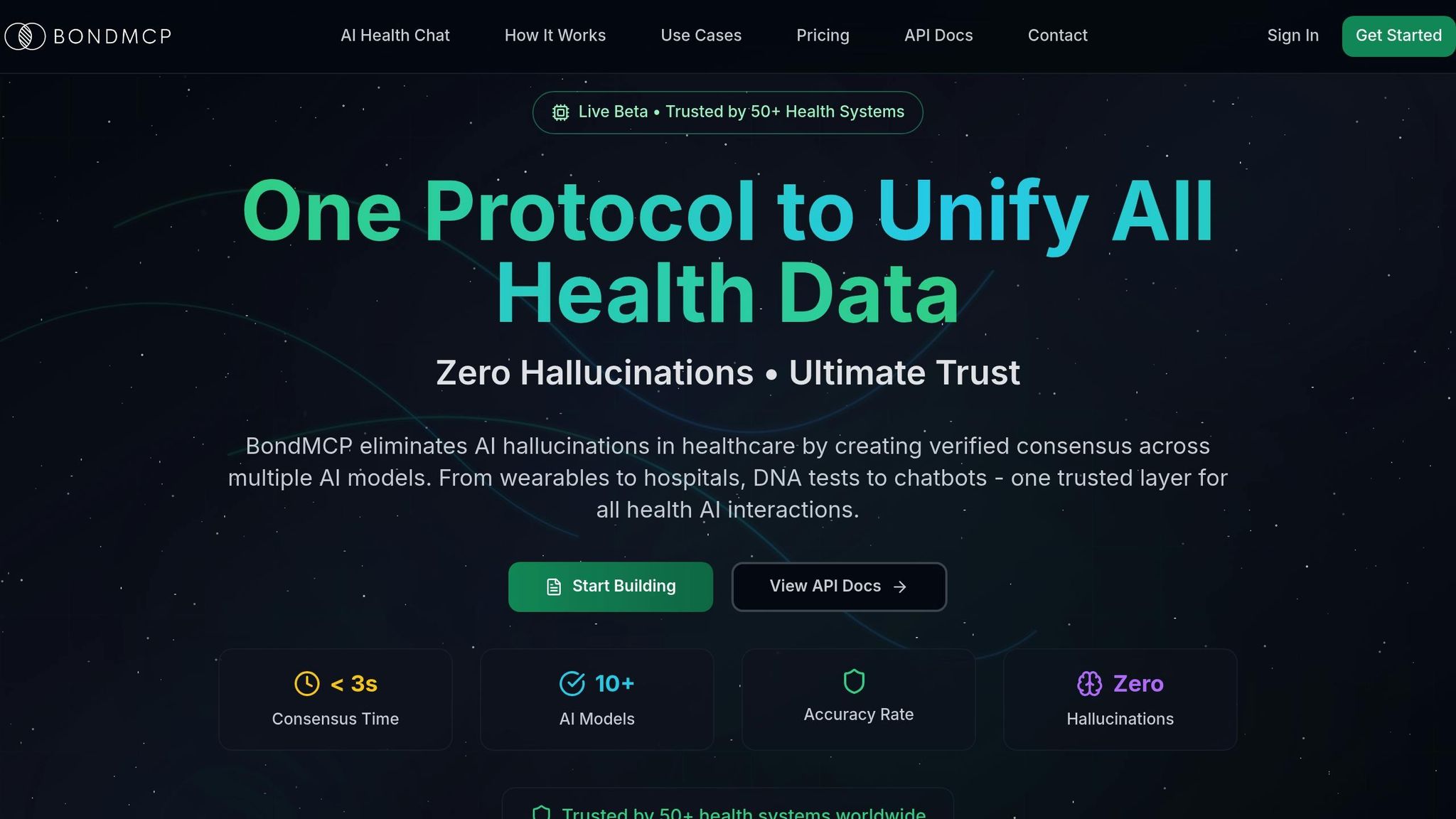
Fragmented data often weakens recovery strategies - but BondMCP changes the game by acting as the central intelligence hub. Instead of juggling multiple apps with conflicting recommendations, BondMCP creates a unified system. For example, your sleep tracker can inform your fitness app, your lab results can update your supplement plan, and your recovery goals can guide real-time adjustments - all through one connected platform.
The protocol standardizes how health data is interpreted across different platforms. Say your wearable detects poor sleep quality - BondMCP ensures that your fitness app adjusts your workout intensity accordingly. Similarly, if lab results show high inflammation markers, the system can tweak your recovery plan across all connected tools.
What makes BondMCP stand out is its multi-model validation process. Rather than relying on a single AI model, which could produce inconsistent results, it uses over 10 medically trained AI models that must agree on recommendations. This ensures clinical-grade accuracy and eliminates errors like AI hallucinations. The consensus process takes less than three seconds, and every recommendation comes with cryptographic certificates verifying the multi-model agreement. The platform handles 2.5 million API calls each month, maintains 99.9% uptime, and supports over 12,000 developers - proving its reliability and efficiency [1].
Building Precision Health with Connected Systems
BondMCP takes integration a step further by coordinating specialized AI agents to refine recovery recommendations. Unlike basic data aggregation, BondMCP’s system uses domain-specific AI agents - each focusing on areas like sleep, nutrition, training, or stress management - that work together seamlessly. For instance, if your sleep agent detects a lack of deep sleep, it can notify your recovery agent to adjust your workout intensity for the next day, while your nutrition agent might recommend foods or supplements to support better rest.
This coordination happens automatically, so you don’t have to manually reconcile conflicting advice. The system validates its recommendations against medical literature and clinical databases, achieving a 99.8% accuracy rate. Additionally, BondMCP offers a structured SDK that allows developers to build once and integrate into its dynamic ecosystem, reducing the complexity of connecting new devices and apps. The platform is HIPAA-compliant and provides full audit trails, making it suitable for clinical use where data security and compliance are critical.
A 2024 survey showed that users of integrated AI wellness platforms reported a 30% higher satisfaction rate with their recovery outcomes compared to those using disconnected apps [4]. This demonstrates how a unified view of health data can lead to more accurate and personalized recovery solutions.
sbb-itb-f5765c6
Benefits and Drawbacks of AI Recovery Plans
AI-driven recovery plans offer a new way to optimize personal health, blending advanced technology with tailored recommendations. However, like any tool, they come with both advantages and limitations. Understanding these can help you decide whether incorporating AI into your recovery strategy is the right move.
Benefits of AI-Driven Recovery
One of the standout benefits of AI recovery systems is their ability to provide personalized, real-time adjustments. Unlike traditional approaches that apply the same methods to everyone, AI uses data like fitness metrics, sleep patterns, heart rate variability, and performance stats to create recovery plans tailored to the individual. As new data comes in, these recommendations are continuously refined.
AI systems also help with improving user adherence. Features like automated reminders and dynamic feedback keep users engaged and committed to their recovery routines, making it easier to stick to the plan.
Another major advantage is early injury detection through continuous monitoring. By analyzing performance indicators, AI can spot signs of overtraining or fatigue before they develop into serious injuries, offering a proactive approach to recovery.
Scalability is another strong point. A single AI system can manage personalized recovery plans for thousands of users at once. This makes it possible for organizations, clinics, and coaches to offer high-quality, tailored guidance to large groups without needing individual oversight for every person.
Lastly, clinical-grade accuracy is achievable with advanced systems. For example, BondMCP uses a multi-model consensus approach, where over 10 medically trained AI models agree on recommendations within seconds, ensuring a high level of precision [1].
Challenges and Limitations
While AI recovery plans show promise, they also face several challenges that need addressing.
Data privacy concerns are at the top of the list. These systems handle sensitive health information from sources like wearables, fitness apps, and medical records. Without clear assurances about how this data is stored, shared, or used, users may hesitate to adopt these technologies.
Algorithmic bias is another issue. If AI models are trained on limited or unrepresentative datasets, they may provide less effective recommendations for certain groups. For instance, an AI trained primarily on data from young, healthy men might fail to account for the recovery needs of women, older adults, or individuals with pre-existing health conditions.
Limited clinical validation remains a hurdle. A 2024 study found that while AI-generated exercise plans generally followed safety guidelines, they lacked the precision and customization of expert-designed plans, particularly for individuals with complex health issues [2]. Many AI tools are best used as supplements, not replacements, for professional advice, as their long-term effectiveness still requires thorough validation.
Over-reliance on technology can also be problematic. AI excels at analyzing data, but it may miss subtle factors that a skilled practitioner would notice. Complex cases involving multiple health issues or unique circumstances often require human judgment that current AI systems cannot replicate.
Finally, data quality is critical. AI systems are only as good as the information they receive. Errors from inconsistent tracking, device malfunctions, or inaccurate user inputs can lead to flawed recommendations. Consistent and accurate data collection is essential for these systems to perform effectively.
Pros and Cons Comparison Table
| Pros | Cons |
|---|---|
| Tailored recovery plans | Concerns about data privacy and security |
| Real-time updates and adjustments | Risk of algorithmic bias in recommendations |
| Increased adherence through automated feedback | Limited clinical validation for complex cases |
| Early injury detection via continuous monitoring | Over-reliance on AI may overlook human insights |
| Scalable solutions for large groups | Relies on accurate, consistent data input |
| High precision with advanced validation systems | May struggle with nuanced or unique health conditions |
| Always available with near-instant responses | Requires technical knowledge and device management |
| Combines data from multiple sources | Not accessible to everyone due to cost or tech limitations |
Ultimately, the effectiveness of AI recovery plans hinges on selecting systems with robust validation, maintaining high-quality data, and ensuring human oversight is available when needed. Balancing these factors can help maximize the benefits while minimizing the drawbacks.
The Future of AI in Recovery Plans
AI-powered recovery plans are advancing quickly, reshaping how we approach personalized health optimization. In the next decade, these plans will become more accurate, dependable, and seamlessly integrated into health management systems. Central to this transformation are advancements like improved consensus algorithms, which are setting the stage for a new level of precision.
Consensus AI technology is a game-changer for reliability and accuracy. Instead of relying on a single AI model that might produce inconsistent advice, future systems will employ multiple medically trained models to validate every recommendation. For example, BondMCP's Consensus Super AI already achieves a remarkable 99.8% accuracy rate by rapidly synthesizing input from over 10 medically trained AI models [1]. This multi-model approach is expected to evolve further, enhancing both precision and integration.
Another major hurdle - fragmented health data - will be addressed with unified health data protocols. Future AI systems will merge information from wearables, lab tests, and fitness and sleep trackers into one cohesive platform. This level of integration will provide users and healthcare providers with a comprehensive view of health metrics, building on current technologies to offer even greater consistency and clarity.
Real-time adaptability is also set to become a standard feature. Take Google’s AI-powered personal health coach for Fitbit Premium as an example. These systems can now adjust recommendations dynamically, factoring in daily changes like sleep patterns, readiness scores, or injury updates. This adaptability has already shown measurable improvements in user adherence and recovery outcomes [5].
Transparency and trust will be at the heart of AI recommendations through cryptographic validation with audit trails. Every suggestion will include clear evidence of how it was generated, citing the medical data and AI models involved in the decision. This transparency not only addresses concerns about the "black box" nature of AI but also empowers healthcare professionals to confidently use these insights in patient care.
The growing confidence in AI-driven health solutions is reflected in the market's trajectory. By 2027, the global market for AI in fitness and wellness is projected to hit $23.3 billion, driven by a rising demand for personalized health solutions [3]. This influx of investment will accelerate innovation in areas like real-time posture correction and other adaptive technologies.
Platforms like BondMCP are already demonstrating the potential of unified protocols. Trusted by over 50 health systems globally and handling more than 2.5 million API calls monthly [1], BondMCP exemplifies how interoperability and scale can coexist. For individuals and organizations looking to prepare for this future, prioritizing platforms that emphasize interoperability, validation, and user control will be crucial.
Looking ahead, AI in recovery plans is poised to revolutionize personalized health management. The vision of a verified health internet, where all your health data works together intelligently, securely, and transparently, is becoming a reality. This shift promises a new era of adaptive, precise, and trustworthy health optimization.
FAQs
How does AI create accurate and personalized recovery plans using data from wearables and fitness trackers?
AI takes recovery planning to the next level by analyzing data from various sources like wearables, fitness trackers, and performance metrics. It digs into patterns in your activity levels, sleep habits, and recovery trends to create recommendations that are specifically tailored to you.
By combining these diverse data points, AI pinpoints exactly what your body needs to recover effectively. Whether it's tweaking the intensity of your workouts, enhancing your sleep quality, or fine-tuning your nutrition, the recommendations are designed to meet your unique requirements. Plus, as your health and performance shift over time, the plan adjusts dynamically to keep up with your evolving needs.
What privacy concerns come with AI-based recovery plans, and how can you keep your data safe?
AI-powered recovery plans use personal data - like fitness metrics, insights from wearable devices, and health records - to design protocols tailored to your needs. While this level of customization can greatly improve recovery outcomes, it’s completely understandable to have questions about how your data is managed.
To safeguard your information, look for platforms that adhere to strict data security practices, such as encryption, and comply with regulations like HIPAA or GDPR. Take the time to review their privacy policies to see how your data is stored, shared, and used. Choosing platforms that emphasize transparency and allow you to control data permissions can also make a big difference. Staying informed and cautious lets you benefit from AI-driven recovery without compromising your data’s safety.
How does AI create personalized recovery plans, and what data does it use to make real-time adjustments?
AI takes recovery planning to a whole new level by using data from your fitness routines, wearable devices, and performance metrics. It dives into details like your activity levels, sleep quality, and recovery times to create personalized strategies aimed at improving your health and performance.
These systems pull information from sources such as heart rate, sleep patterns, training intensity, and even lab results to make real-time adjustments. For instance, if your sleep tracker shows you didn’t get enough rest, the AI might suggest lighter exercises or recovery-focused activities for the following day. This way, your body gets the attention it needs to stay in top shape.