

The combination of genomics and AI is changing how healthcare is delivered. By analyzing your DNA alongside real-time health data, AI systems can now create tailored health protocols. This means treatments, medications, and even lifestyle recommendations can be customized to your unique genetic profile.
Key Takeaways:
- Genomic Data: Your DNA holds permanent information about disease risks, drug responses, and more.
- AI's Role: AI analyzes massive genetic datasets, identifying patterns and making predictions that guide personalized care.
- Current Challenges: Privacy, data integration, and equitable access remain obstacles, but new standards and tools are addressing these issues.
- Emerging Tools: Platforms like BondMCP integrate genetic data with wearable devices and health metrics for real-time, personalized insights.
Genomic AI is already helping doctors make better decisions and empowering individuals to take control of their health. The future of medicine is precise, dynamic, and tailored to each person.
4. Applications of AI in Genomic Medicine - Ehsan Misaghi
Standards and Best Practices for Genomic Integration
Bringing genomic data into AI-driven health systems requires strict adherence to quality, security, and accessibility standards. Without clear guidelines, genomic information risks becoming fragmented, insecure, or biased - undermining the goals of precision medicine.
Data Standards for Genomic Integration
For genomic data to work seamlessly with AI systems, standardized formats are essential. HL7 FHIR (Fast Healthcare Interoperability Resources) has become the go-to standard for exchanging healthcare data, including genomic information. Its Genomics Implementation Guide outlines how to represent genetic variants, test results, and clinical interpretations in a way that AI systems can easily process.
SMART on FHIR enhances this by providing a secure framework for accessing both genomic and clinical data. For developers, it offers the tools to authenticate and authorize access to sensitive genetic information while maintaining privacy protections.
The Global Alliance for Genomics and Health (GA4GH) has also introduced standards tailored to genomic data sharing. For instance, their Beacon API allows researchers to query genomic databases without exposing individual-level data, and the Data Repository Service (DRS) ensures consistent methods for accessing genomic files across platforms.
File formats are another crucial piece of the puzzle. VCF (Variant Call Format) is widely used for storing genetic variant data, while GVCF (Genomic Variant Call Format) extends this to whole-genome sequencing. AI systems must be capable of processing these formats to integrate genomic data effectively into health protocols.
Quality control is equally important. Guidelines from the College of American Pathologists (CAP) and Clinical Laboratory Improvement Amendments (CLIA) ensure the accuracy and reliability of genomic testing. AI systems should rely exclusively on data from laboratories that meet these standards to maintain clinical validity.
By adhering to these standards, genomic data exchange becomes more efficient, setting the stage for robust privacy protections and equitable practices.
Privacy and Security in Genomic Data
Genomic data is among the most sensitive types of health information. It requires encryption (AES-256 as a minimum) and advanced security measures that go beyond typical healthcare practices. Unlike other health data, genetic information is permanent, hereditary, and can reveal details about family members who may not have consented to testing.
To protect this data, encryption must be applied at all times, even within secure networks. Many organizations implement additional security layers beyond basic encryption to further safeguard sensitive information.
Traditional de-identification methods often fall short for genomic data. Instead, platforms should adopt differential privacy techniques, which add mathematical noise to datasets while preserving their usefulness for AI analysis.
Consent management is especially complex with genomic data. Genetic testing often has implications that extend beyond its original purpose. Dynamic consent frameworks allow individuals to specify how their data can be used and update their preferences as new applications emerge. AI systems must respect these evolving permissions, automatically restricting access when consent is withdrawn.
Federated learning offers a promising solution for privacy concerns. Instead of centralizing genomic data, AI models are trained on distributed datasets, allowing for population-level insights without transferring raw genetic information. This keeps sensitive data secure while enabling large-scale analysis.
To ensure accountability, all queries involving genomic data should be logged with timestamps, user IDs, and the purpose of access.
Strong data handling protocols reinforce the precision medicine approach and uphold the trustworthiness of genomic AI systems.
Promoting Equity in Genomic AI
Once data standards and privacy protocols are in place, the next step is ensuring equitable representation. Without diverse datasets, genomic AI risks perpetuating health disparities. Historically, most genomic databases have been dominated by individuals of European ancestry, leading to AI models that perform poorly for other populations.
Diverse representation in training data is critical. The All of Us Research Program, initiated by the National Institutes of Health, aims to collect genomic and health data from one million participants, with at least 50% from underrepresented groups. AI systems should prioritize such datasets to build more inclusive models, rather than relying on commercially available databases that often lack diversity.
Population-specific validation ensures AI models work accurately across various ancestral backgrounds. Genetic variants can have different clinical implications depending on the population, and algorithms must account for these differences. For instance, the ClinVar database now includes population-specific annotations to help AI systems provide more accurate interpretations for diverse patients.
Algorithmic bias testing should be a standard practice for genomic AI systems. Regular audits are necessary to check whether predictions and recommendations are equally accurate for all demographic groups. If disparities are found, models must be retrained with more representative data or adjusted to address population-specific needs.
Access barriers to genomic testing and AI-driven insights must also be addressed. Factors like cost, geographic location, and healthcare access can prevent certain populations from benefiting from these advancements. Public health initiatives and insurance coverage policies play a key role in making genomic AI accessible to all.
Cultural competency is another crucial aspect. Different communities may have unique perspectives on genetic testing and AI-driven health recommendations. Some groups, for example, may distrust genetic research due to historical injustices. Sensitive approaches to education and engagement are essential to building trust. AI systems should also consider these cultural contexts, offering recommendations that align with diverse health beliefs and practices.
Integrating genomic data into AI health protocols has enormous potential, but achieving this requires a careful balance of standards, security, and equity. By following established guidelines, respecting privacy, and fostering inclusivity, genomic AI can advance healthcare for everyone while maintaining the highest levels of trust and clinical accuracy.
Tools and Platforms for Genomic Data Integration
The field of genomic data integration has grown rapidly, with specialized platforms serving dual roles: as repositories for research and as systems that connect genomic data with broader health information. These tools cater to a wide range of needs, from cancer genomics analysis to integrating genetic data with personal health insights.
Overview of Available Platforms
Several platforms have played a key role in making genomic data more accessible and usable. For instance, cBioPortal, a web-based platform developed at Memorial Sloan Kettering Cancer Center, stands out for its ability to explore cancer genomics data. It offers interactive tools to visualize and analyze genomic alterations alongside clinical data from numerous cancer studies.
Similarly, UCSC Xena specializes in multi-omic visualization. It enables users to work with datasets that include genomic, transcriptomic, and epigenomic information from major consortiums like The Cancer Genome Atlas (TCGA) and the International Cancer Genome Consortium (ICGC).
On the clinical side, VariantValidator focuses on validating and standardizing genetic variant nomenclature, ensuring consistency with established guidelines. Meanwhile, GenomeConnect takes a patient-centered approach, empowering individuals to share their genomic and health data to advance research and improve data sharing efforts.
Together, these platforms have laid a solid foundation for integrating genomic data, leading to the development of more comprehensive systems like BondMCP.
BondMCP - Health Model Context Protocol
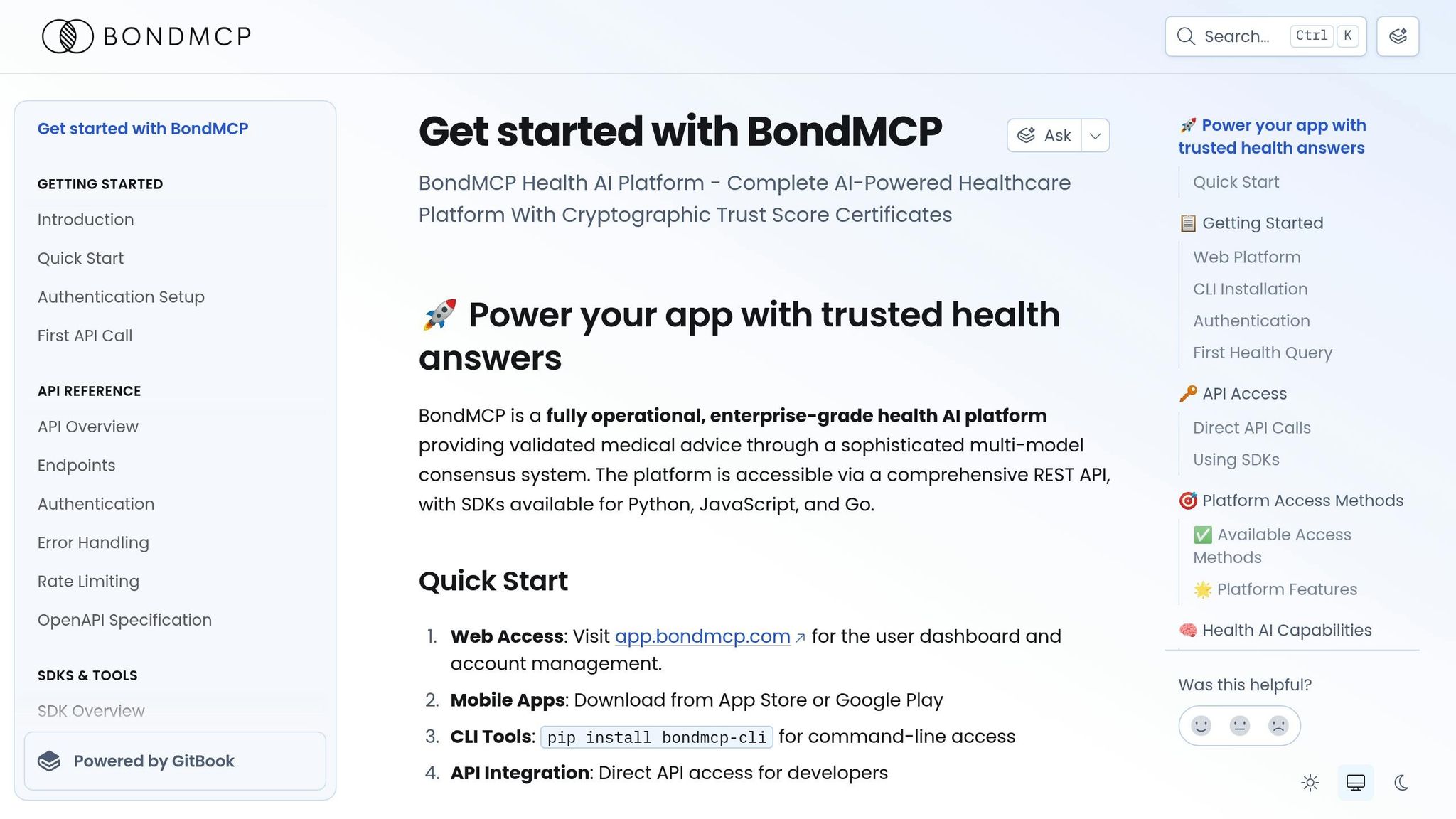
BondMCP fills a critical gap in the genomic health landscape by combining genomic data with broader personal health information. Unlike traditional platforms that focus solely on genetic analysis, BondMCP integrates genomic insights with real-world health data, such as lifestyle habits and clinical metrics.
Using a specialized health ontology, BondMCP interprets genetic variants within the context of an individual’s overall health profile. This approach moves beyond static genetic risk assessments, offering personalized protocols that can guide everyday health decisions.
What sets BondMCP apart is its use of AI agents to analyze genomic data alongside inputs from wearables, lab results, and other health services. This creates a comprehensive view of an individual’s health, enabling a more coordinated and personalized strategy for optimizing well-being. BondMCP’s ability to turn genetic data into actionable insights supports healthcare providers and individuals - like biohackers - seeking precision health solutions.
By connecting the dots between genetic data and broader health metrics, BondMCP transforms static information into dynamic, real-time insights that drive predictive and personalized care.
Comparison of Tools and Features
To better understand how these platforms align with precision health goals, here’s a side-by-side comparison:
| Platform | Primary Focus | Data Integration | Real-Time Capabilities | Clinical Application | Scalability |
|---|---|---|---|---|---|
| cBioPortal | Cancer genomics research | Genomic and clinical data | Static analysis | Research-focused | High for research |
| UCSC Xena | Multi-omic analysis | Genomic, transcriptomic, epigenomic | Batch processing | Research and clinical | Moderate |
| VariantValidator | Variant standardization | Focused on genetic nomenclature | Supports validation tasks | Clinical support tool | High for validation |
| GenomeConnect | Patient data sharing | Genomic and patient-reported information | Limited real-time | Patient engagement | Moderate |
| BondMCP | Comprehensive health optimization | Integrates genomic data with diverse health metrics | Real-time monitoring | Clinical and consumer | High across use cases |
Each platform has its strengths. Research-oriented tools like cBioPortal and UCSC Xena excel at analyzing genomic patterns, while clinical tools like VariantValidator ensure accuracy and consistency in genetic data. Patient-focused systems like GenomeConnect encourage data sharing and research participation.
However, BondMCP stands out by bridging the gap between isolated genomic insights and the broader health ecosystem. By integrating diverse health metrics with genomic data, it transforms static genetic risk scores into actionable, context-aware health protocols that support both clinical decisions and personalized care strategies.
sbb-itb-f5765c6
Building Scalable Genomic-AI Health Protocols
Developing genomic-AI health protocols that truly make a difference involves shifting from static genetic reports to dynamic systems. These systems process genomic data in real time and combine it with various health data streams. The goal? To create protocols that work across diverse populations while still offering personalized care for each individual.
Real-Time Genomic Data Analysis
Thanks to advancements in data standards, real-time genomic analysis is transforming how genetic data shapes health decisions. Instead of relying on one-off genetic reports, machine learning algorithms now continuously update genetic risk assessments using the latest research and population data. These systems focus on actionable genetic variants - those that can directly impact health decisions. For example, some variants influence how a person metabolizes medications, enabling real-time adjustments to drug dosages. Others affect nutrient absorption, allowing dietary recommendations to be tailored based on current lab results.
Speed is a critical factor here. With high-throughput genomic data, computational efficiency is key. By using pre-computed variant databases and streamlined analysis pipelines, these systems can deliver updated insights in minutes. This makes it possible to use genomic data for immediate decisions, like adjusting exercise routines based on recovery-related gene variants and current sleep metrics.
Integrating Genomic Data with Health Devices
When genomic data is combined with information from wearables, lab results, and sensors, it creates a more complete picture of health. For instance, heart rate variability data from a fitness tracker takes on new significance when paired with genetic markers linked to cardiovascular stress responses. Similarly, integrating lab data helps correlate genetic predispositions with real-world biomarker trends over time.
Even environmental data - like air quality or UV exposure - can influence how genetic predispositions affect daily health. This ensures that recommendations account for external factors. To make this integration work across multiple devices and platforms, standardized health ontologies are used to merge these diverse data streams into a cohesive framework.
Role of Context-Aware AI Agents
The next step goes beyond simply combining data. Context-aware AI agents turn these insights into actionable health protocols. These agents bring together genetic, clinical, lifestyle, and environmental data to craft tailored recommendations.
Take BondMCP - Health Model Context Protocol as an example. This system integrates genetic data with metrics like sleep patterns, exercise responses, nutritional needs, and supplement plans to provide personalized, scalable health advice. Instead of treating genetic data in isolation, BondMCP’s AI agents identify how genetic variants interact with other health factors, making adjustments in real time.
These AI agents are particularly adept at spotting patterns across different types of data. For example, they can detect when genetic predispositions start to show up in real-world health metrics, allowing for timely updates to health protocols. Their ability to learn and adapt over time ensures that recommendations stay effective. By drawing insights from broad population data while maintaining individual personalization, these agents achieve scalability without compromising care.
Interoperability is a must for these systems to work seamlessly in healthcare. Context-aware AI agents need to integrate with electronic health records, lab databases, and consumer health devices. BondMCP addresses this challenge by offering a standardized protocol that allows different AI agents to share information and coordinate recommendations. This creates dynamic systems where genomic data serves as the backbone for personalized health protocols that evolve with both new discoveries and individual health changes.
Ethical and Regulatory Considerations
The use of genomic data in AI-driven health protocols brings a unique set of ethical and regulatory challenges. These challenges grow even more intricate when dealing with predictive genetic insights and automated health recommendations.
Ethical Concerns in Genomic AI
One of the biggest ethical issues in genomic AI is patient consent. Genetic information doesn’t just impact the individual - it can also have implications for their family and future generations. Many patients may not fully understand how their data will be used or what kinds of insights AI might uncover.
Dynamic consent - a system allowing patients to update their preferences on data use - sounds promising but is hard to implement when AI systems continuously evolve by analyzing new genetic patterns.
Another thorny issue is data ownership. While individuals technically own their genetic information, AI systems generate insights by analyzing large datasets from many people. This raises tough questions: Who owns these insights? Should patients be compensated for their contributions to discoveries?
Genetic discrimination is another concern, even with laws like the Genetic Information Nondiscrimination Act (GINA) in place. If AI systems use genetic data to predict health risks, there’s a chance this information could be misused, leading to discriminatory practices.
The psychological impact of predictive genetic insights also cannot be ignored. For example, learning about a predisposition to a condition that may never develop could lead to unnecessary anxiety or drastic lifestyle changes. Healthcare providers must carefully weigh the benefits of early intervention against the potential for creating undue stress or overly cautious behaviors.
These ethical dilemmas naturally lead into the complex regulatory environment that governs genomic AI.
Regulatory Frameworks in the US
In the United States, several federal agencies oversee genomic AI in healthcare, each with its own set of rules and requirements.
HIPAA compliance is a cornerstone for protecting genomic data. However, applying HIPAA standards to AI systems presents unique challenges. Even after removing obvious identifiers, genetic data can still be linked back to individuals. AI systems must implement extra safeguards to prevent re-identification.
The FDA plays a key role in overseeing AI-based health tools. The agency now requires clinical validation for AI systems that provide diagnostic or treatment recommendations based on genetic data. This ensures these systems work accurately across diverse populations, not just on the datasets used during development.
Facilities that process genetic samples for AI analysis must also comply with Clinical Laboratory Improvement Amendments (CLIA) regulations. These standards ensure the quality of genomic data fed into AI systems but can create compliance hurdles for organizations working with data from multiple sources.
The 21st Century Cures Act has been a game-changer for precision medicine, including genomic AI applications. It emphasizes data sharing and interoperability, shaping how AI systems interact with electronic health records and other healthcare platforms.
On top of federal regulations, some states have enacted stricter genetic privacy laws, adding another layer of complexity for organizations operating nationwide.
Need for Clinical Validation
Clinical validation is particularly challenging for genomic AI systems. Unlike traditional tests that focus on a single genetic variant, these systems analyze multiple genetic factors alongside other health data to predict outcomes.
Continuous validation is critical because AI systems evolve over time, incorporating new patient data and outcomes. This means validation efforts must go beyond the traditional one-time clinical trial model.
Population diversity in validation studies is another major hurdle. Many genomic databases have historically been dominated by data from individuals of European ancestry. This lack of diversity can result in AI systems that are less effective for other populations. Ensuring accuracy across a wide range of genetic backgrounds is essential.
Real-world evidence is also key. It bridges the gap between controlled clinical studies and actual patient outcomes. Long-term monitoring is necessary to confirm that AI-generated insights lead to better health decisions and improved treatments.
Regulatory approval for genomic AI systems requires more than just analytical validity - it demands proof of clinical utility. In other words, these systems must demonstrate that their insights genuinely help patients make better decisions or lead to more effective treatments. Achieving this often requires extensive, long-term studies.
Quality assurance is another critical area. This includes addressing algorithmic bias, ensuring high-quality data from multiple sources, and maintaining accuracy as genetic databases grow and scientific knowledge advances.
Take systems like BondMCP, for example. They highlight the need for ongoing clinical validation as AI integrates genomic data into broader health protocols. Coordinating multiple AI agents to analyze genomic and other health data adds another layer of complexity. This "multi-agent validation" represents a new challenge for clinical testing, one that regulatory frameworks are still evolving to address.
The Future of AI-Driven Genomic Health
The integration of genomic data into AI-based health systems is reshaping healthcare, shifting it from a reactive approach to one that’s proactive and personalized. Imagine a world where your genetic makeup doesn’t just predict potential health risks - it actively guides every aspect of your wellness plan. This transformation is setting the stage for advancements explored in the sections ahead.
Emerging AI technologies are taking things a step further by combining genomic data with real-time health metrics. These systems adapt continuously, offering recommendations that account for how your genes interact with your lifestyle, environment, and overall health. Genetic testing is no longer a one-off event - it’s evolving into a dynamic tool for ongoing health management.
AI is now personalizing treatments based on your DNA. Advanced algorithms can pinpoint genetic variations that influence how your body processes medications, absorbs nutrients, or responds to exercise. This enables healthcare providers to move beyond trial-and-error treatments, prescribing therapies that align precisely with your genetic profile.
The wider availability of genomic insights is also changing the game. Thanks to AI-powered tools, complex genetic analyses are no longer confined to specialized clinics. Primary care doctors now have access to systems that translate genomic data into actionable health recommendations. This shift is making personalized medicine a reality for more people, driving forward innovations like multi-agent systems.
Multi-agent AI systems such as BondMCP are leading the charge in integrative health solutions. These platforms create a unified ecosystem where genetic information informs every part of your health plan, from sleep and nutrition to fitness routines. For instance, if your genes suggest a predisposition to vitamin D deficiency, your supplement plan adjusts automatically. Similarly, genetic markers for muscle composition can refine your exercise program for better results.
One of the key hurdles - interoperability - is being tackled through standardized protocols that enable different AI systems to share genomic insights. This means data analyzed by one platform can seamlessly enhance recommendations from another, creating a cohesive and adaptive health network.
Looking ahead, combining genomic data with wearable devices and continuous monitoring tools will take things even further. These devices will track how your genes respond to interventions in real time, creating feedback loops that fine-tune your personalized health strategies.
On a broader scale, large-scale genomic AI is accelerating the discovery of new treatments and improving preventive care strategies. By leveraging collective intelligence while prioritizing privacy through advanced encryption and federated learning, these systems are paving the way for safer, more effective healthcare solutions.
As clinical validations strengthen and regulatory frameworks catch up, genomic AI is poised to become a standard part of healthcare rather than a cutting-edge innovation. The future of medicine is not only personal - it’s tailored to your genetic code, powered by AI, and designed to adapt continuously to your unique biology.
FAQs
How does AI use genomic data to create personalized health plans?
AI uses genomic data to dive deep into your unique genetic markers, blending that information with other health-related details like your medical history, lifestyle choices, and environmental influences. The result? Personalized health plans crafted specifically for your needs.
By pinpointing genetic predispositions and uncovering potential risks, AI can fine-tune treatments, suggest preventive strategies, and enhance overall health outcomes. This means less guesswork in healthcare and more accurate, effective solutions tailored just for you.
How is my genomic data protected when used with AI health systems?
Your genomic data is protected using state-of-the-art encryption during both storage and transmission, ensuring it stays secure at every stage. The systems are built following Privacy by Design principles, which means privacy and security are integrated into every part of the process from the ground up.
To further safeguard your data, organizations enforce strict access controls, conduct regular security audits, and adhere to all relevant privacy laws and regulations. They also follow top-tier cybersecurity practices, including comprehensive employee training and proactive monitoring to counter emerging threats. These combined efforts ensure your sensitive genomic information remains secure while supporting advancements in AI-powered healthcare.
How can AI-driven genomics address biases to improve healthcare equity for all populations?
AI-powered genomics has the potential to tackle biases by prioritizing the inclusion of diverse populations in data collection. By gathering genetic and demographic information from a wide range of groups, researchers can build datasets that better reflect the variety of human experiences. This approach minimizes the risk of skewed results and paves the way for fairer healthcare outcomes.
It’s also crucial to design algorithms with inclusivity at their core. This means actively identifying and addressing biases during the development process. By integrating social determinants of health - factors like socioeconomic status, education, and environment - alongside genomic data, healthcare solutions can be tailored to meet the distinct needs of individuals from different backgrounds. These steps help make personalized care more inclusive and accessible to all.