
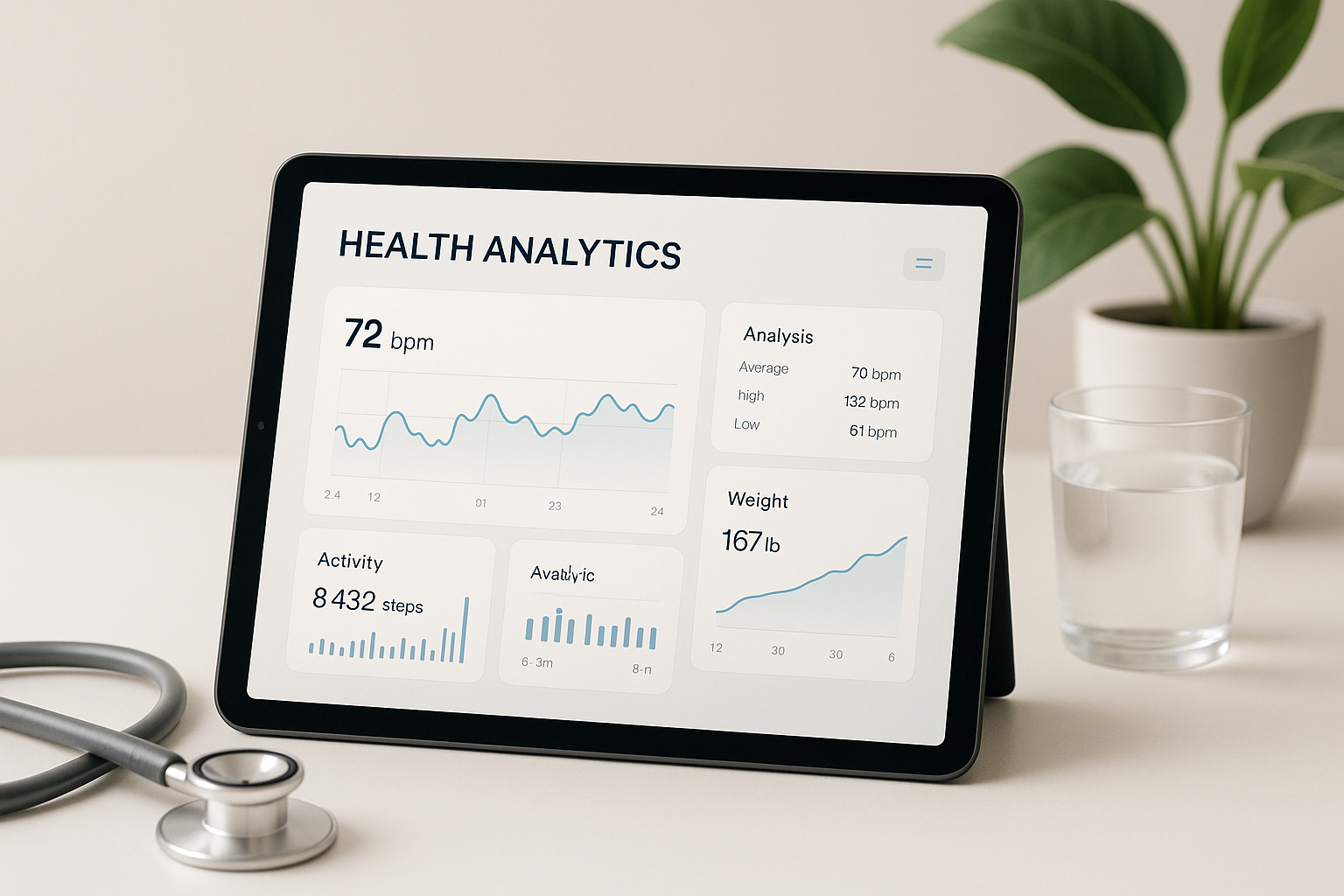
AI-powered health analytics is transforming how we monitor and manage our health. It uses data from wearables, medical records, and daily habits to provide personalized insights, detect health risks early, and track progress in real time. Here's what you need to know:
- What It Does: Tracks metrics like heart rate, sleep, and activity 24/7 while spotting potential health issues early.
- Who Benefits: Everyone - from fitness enthusiasts to those managing chronic conditions.
- How It Helps: Provides tailored health advice, creates custom wellness plans, and simplifies health tracking with dashboards and alerts.
AI health tools are making healthcare more proactive and personalized. Whether you're improving sleep, managing nutrition, or monitoring chronic conditions, these systems offer actionable insights to help you stay on top of your health.
Core Elements of AI Health Systems
Health Data Sources
AI health systems gather information from wearables, smartphones, and medical sensors as you go about your day. This includes real-time indoor health monitoring to ensure safety and wellness at home. These devices monitor various health metrics, including:
- Heart rate and rhythm
- Blood pressure
- Physical activity and steps
- Sleep quality
- Skin temperature
- Blood glucose levels
"PGHD enables us to collect data about the remaining 99% of their time" [5]
This constant stream of data provides the foundation for detailed algorithmic analysis.
Data Analysis Methods
AI algorithms process this diverse data to detect patterns and link fitness data to preventive care. By examining multiple data streams together, the system can uncover connections that may signal emerging conditions.
For example, one study analyzed typing speed, speech patterns, and texting behavior using data from smartphones and smartwatches. The study involved 31 individuals with mild cognitive impairment and 82 healthy participants, successfully identifying early signs of cognitive decline [5].
Data Display and Reports
Once the analysis is complete, the results are presented in easy-to-understand formats. Modern AI health platforms use clear visuals to help users track daily metrics and observe their progress over time.
| Display Type | Purpose | Key Features |
|---|---|---|
| Dashboard Views | Daily health overview | Real-time metrics, trend analysis |
| Progress Charts | Long-term tracking | Historical comparisons, goal progress |
| Alert Systems | Health notifications | Early warnings, preventive recommendations |
In a notable development, TDK partnered with Tokyo Medical and Dental University to advance magneto-cardiometry. They successfully measured cardiac activity using an MR sensor array outside of a magnetically shielded room [6].
These components work together to give users actionable insights into their health.
Real-World Uses of AI Health Tools
Health Risk Detection
AI is making a big impact on early disease detection. For example, a June 2023 study from Stanford University showed that an AI system could outperform radiologists in identifying lung cancer from X-rays [7]. At Mount Sinai Hospital, an AI program helped cut hospitalizations related to heart failure by 20% [7]. In rural areas, the Mayo Clinic tested an AI-based screening system for diabetic retinopathy, which could potentially save billions in healthcare costs by preventing vision loss [7].
In addition to identifying risks early, AI also helps create personalized health strategies based on individual needs.
Custom Health Plans
AI analyzes diverse data sources to create health recommendations tailored to each person. By combining medical history, genetic information, lifestyle habits, and treatment responses, it identifies risks and customizes interventions. For instance, HealthSnap’s Remote Patient Monitoring (RPM) program integrates with over 80 Electronic Health Record systems, continuously analyzing patient data to refine treatment recommendations almost in real time [2].
| Data Type | Examples | How It Helps |
|---|---|---|
| Medical History | Past illnesses, treatments | Highlights risk patterns |
| Genetic Information | DNA tests, family history | Shapes prevention plans |
| Lifestyle Data | Activity, diet habits | Refines daily advice |
| Treatment Response | Medication effectiveness | Adjusts interventions |
24/7 Health Tracking
AI doesn’t just plan - it keeps watch around the clock. Platforms like ONEai Health monitor vital signs continuously and provide predictive insights through mobile apps [11]. Some popular applications include:
- Sleep Cycle: Tracks sleep patterns and offers improvement tips [10].
- MySugr: Monitors blood glucose levels and provides real-time advice [10].
- SkinVision: Keeps an eye on skin changes to flag early warning signs [10].
In February 2024, researchers at the University of Virginia showcased a Big Data dashboard that tracks infectious diseases in real time. This tool allows for quick responses to potential outbreaks, demonstrating the value of continuous monitoring [8].
First Steps with AI Health Tools
Selecting Your Tools
Start by identifying your health goals and choosing tools that align with them. When evaluating AI health apps, keep these factors in mind:
| Criteria | Features to Look For | Importance |
|---|---|---|
| Data Security | Compliance with HIPAA/GDPR | Safeguards your private health data |
| AI Accuracy | Clinically validated | Provides dependable health insights |
| User Interface | Easy-to-use design | Simplifies daily tracking |
Selecting the right tools ensures you can gather accurate data to build a personalized health plan.
Setting Up Data Collection
Start small and expand as you go. Begin with basic health metrics like heart rate, blood pressure, and respiratory rate. Once comfortable, include lifestyle data such as sleep, physical activity, and diet.
For example, WHOOP tracks sleep, strain, and recovery. It helps users see how various factors impact their daily well-being, offering insights to fine-tune their routines.
Using Health Insights
Collected data becomes actionable when analyzed. For instance, the Fresh Tri platform, introduced in 2023, combines its Iterative Mindset Method™ with AI to guide users in gradually improving their health habits.
Nutrition apps can use your data to create personalized meal plans. By making small, consistent changes based on AI recommendations, you can identify trends and spot early health warnings over time.
sbb-itb-f5765c6
Next Generation Health Analytics
Connected Health Systems
Health analytics is evolving into a more connected and integrated experience. BondMCP's unified system links data from wearables, lab results, and fitness trackers, creating a detailed health profile. This setup allows AI to spot subtle patterns that might go unnoticed when data is analyzed separately.
By connecting these data points, healthcare can shift from reacting to illnesses after they occur to predicting and preventing them before they happen.
AI-Driven Prevention
AI is making strides in early disease detection, offering impressive accuracy:
| Disease Type | AI Detection Capability | Note |
|---|---|---|
| Pancreatic Cancer | 86% accuracy in early detection | Identifies subtle signs years before diagnosis [13] |
| Lung Cancer | Detects nodules up to 3 years early | Retrospective studies show 18% of cases had a missed diagnosis [14] |
"This AI tool was able to capture and quantify very subtle, early signs of pancreatic ductal adenocarcinoma in CT scans years before occurrence of the disease. These are signs that the human eye would never be able to discern."
– Debiao Li, PhD, Director of the Biomedical Imaging Research Institute [13]
Clear AI Decision-Making
Once diseases are detected, AI systems provide clear and actionable recommendations. Generative AI is reshaping healthcare communication by automating processes and improving access to clinical data [2]. This technology simplifies complex information, making it easier for patients to understand and act on.
AI-powered tools are also addressing gaps in healthcare services. For example, only 41% of women feel their health concerns are adequately addressed [12]. By making health insights easier to access and understand, AI is helping to make personalized healthcare guidance available to more people.
AI Transforms Health Care | Artificial Intelligence: The Future of Medicine & Health Care Is Here
Summary
AI health analytics is changing personal care by combining advanced data analysis with practical healthcare solutions. This technology excels in areas like diagnosis, treatment planning, and prevention [1].
| Capability | Impact | Example Use |
|---|---|---|
| Predictive Analysis | Detects diseases early and prevents them | Examines patient data to predict health issues and recommend interventions [9] |
| Personalized Care | Creates tailored treatment plans | Uses individual health data to design custom wellness strategies [1] |
| Continuous Monitoring | Tracks health 24/7 | Provides real-time health updates via wearable devices [3] |
Together, these features highlight the move toward AI-powered healthcare, focusing on improving patient outcomes. By analyzing vast amounts of medical data, AI shifts healthcare from being reactive to proactive [1].
AI's ability to process complex medical information faster than humans has opened new doors in healthcare delivery [3][4]. Combining AI with clinical expertise enhances both preventive and personalized care, paving the way for better patient outcomes while keeping the human connection at the center of care [1].
FAQs
How does AI-powered health analytics protect my personal health data?
AI-powered health analytics safeguards your personal health data through advanced privacy and security measures. De-identification techniques are used to remove or mask personally identifiable information, ensuring data can be analyzed without compromising your privacy. Additionally, encryption technologies secure your information during storage and transmission, preventing unauthorized access.
AI also plays a role in monitoring compliance by analyzing access logs, detecting policy violations, and flagging potential risks. Regular security audits and testing help identify vulnerabilities, while strict access controls ensure only authorized personnel can view sensitive data. These measures work together to keep your health information private and secure.
Can AI tools help detect diseases early without needing a doctor?
Yes, AI-powered health tools can help identify early signs of diseases, often before symptoms become noticeable. By analyzing data like medical imaging, wearable device metrics, and electronic health records, AI can detect subtle patterns that might be missed by the human eye. This can lead to earlier diagnoses and better health outcomes.
For example, AI has been used to identify early stages of conditions like lung cancer with impressive accuracy. Predictive analytics, powered by machine learning, can also assess your risk for certain diseases by processing large amounts of personal health data. These tools are designed to complement - not replace - medical professionals, helping individuals make more informed decisions about their health.
What should I look for when choosing AI tools to support my health goals?
When selecting AI-powered health tools, focus on how well they align with your specific health goals, whether it's tracking fitness, managing nutrition, or improving mental well-being. Choose tools that offer personalized recommendations based on your data and can adapt as your needs evolve.
Make sure the tool is backed by credible clinical evidence for safety and effectiveness, especially if it involves medical interventions. Privacy is crucial - confirm that the company adheres to HIPAA standards and has strong data protection policies.
Lastly, look for features that provide ongoing support, like reminders, progress tracking, and real-time feedback, to help you stay consistent and achieve your goals.