
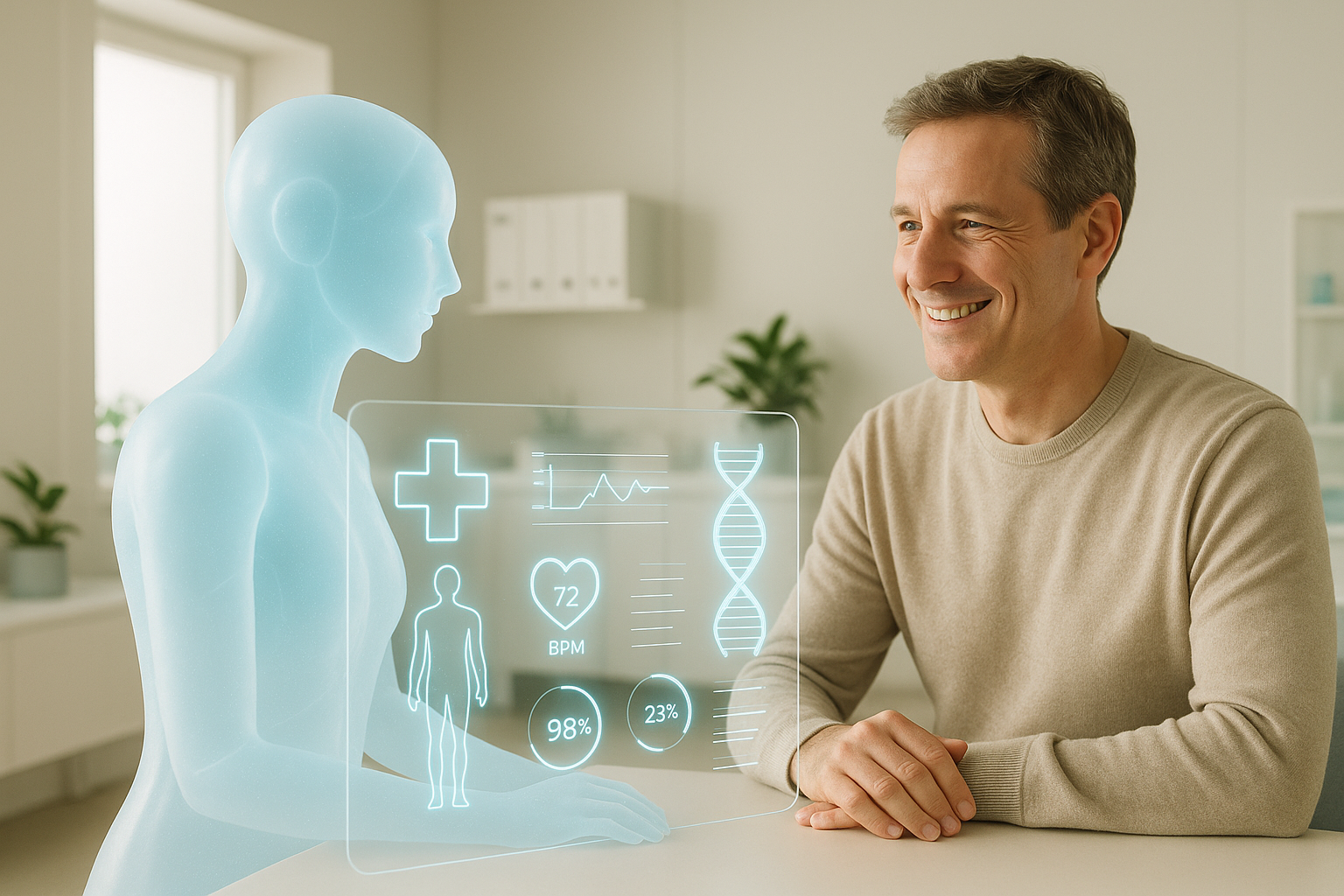
The intersection of artificial intelligence (AI) and human health is reshaping how we understand and pursue longevity. As the complexities of the human body challenge traditional science, AI emerges as the ultimate tool to decode and optimize our biology, offering the potential to extend human lifespan to unprecedented limits. The era of personalized health, guided by intelligent systems, is no longer a distant dream but an evolving reality.
This article delves into how AI health agents are revolutionizing the science of longevity, from decoding the intricate processes of the human body to uncovering groundbreaking treatments. We’ll explore the most transformative insights shared in a recent discussion between experts, including AI’s role in precision health, the future of diagnostics, and what it means to live not just longer, but better.
The Case for AI in Longevity Science
The human body is a marvel of complexity, with innumerable interacting systems, variables, and processes that make traditional research methods increasingly inadequate. Historically, scientific studies have focused on isolating variables to determine cause-and-effect relationships. However, with the growing number of supplements, personalized therapies, and biological inputs people use, researchers face an insurmountable problem: the sheer number of interactions. For instance, combining 30 or 40 supplements results in trillions of potential biochemical interactions - something no human researcher could possibly analyze in a lifetime.
Artificial intelligence offers a way out of this bottleneck. By leveraging machine learning and neural networks, AI can process massive amounts of data and uncover patterns that are invisible to human investigators. This capability allows researchers to:
- Model highly intricate systems, such as the cascade of reactions triggered by peptides in the body.
- Simulate interactions between hundreds of variables, from genetics to diet, to predict health outcomes.
- Accelerate drug discovery, as demonstrated by recent breakthroughs using AI-driven protein folding and compound testing.
As one expert in the discussion pointed out, "AI is the only way we can ever really fully model the entire process of the human body." By doing so, AI can help us identify the "low-hanging fruit" of treatments while also enabling entirely new approaches to science.
sbb-itb-f5765c6
A New Era of Precision Health
One of the most promising applications of AI in longevity is the creation of precision health systems. These systems integrate an individual’s genetic, biometric, and lifestyle data to provide tailored recommendations for optimizing health and longevity. Imagine an AI health advisor that knows your DNA profile, tracks your daily biometrics, and provides real-time guidance on everything from sleep to supplements.
Several cutting-edge developments exemplify this shift:
1. DNA and Epigenetic Analysis
AI is revolutionizing genetics by analyzing millions of DNA sites to generate highly detailed health reports. Companies are now using methylation pattern analysis to assess biomarkers from a single drop of blood. This method not only estimates biological age but also provides insight into critical metrics like mineral levels, inflammation markers, and cognitive health. Remarkably, AI has been shown to predict biomarker patterns with greater accuracy than direct measurements, offering a longer-term view of health trends.
2. Dynamic Supplementation and Nutrition
AI enables hyper-personalized nutrition by evaluating an individual's genetic predispositions, current health data, and lifestyle factors. For example, an AI health agent might recommend a supplement regimen customized to your specific deficiencies or genetic vulnerabilities. Importantly, AI can also analyze interactions between supplements, revealing whether combinations have synergistic effects or unintended negative outcomes.
3. Adaptive Diagnostics
The concept of "adaptive testing" is emerging, where AI decides which biomarkers to retest or emphasize based on prior results. This ensures that diagnostics are not only accurate but also dynamic, evolving with an individual’s health over time.
AI’s Role in Decoding Longevity Mechanisms
Longevity science has traditionally been split into two main objectives: slowing the aging process and reversing it. AI has the potential to impact both by addressing key biological mechanisms. For example:
- Slowing Aging: AI helps identify interventions that reduce inflammation, enhance mitochondrial function, and improve cardiovascular health - all of which are critical for slowing biological aging.
- Reversing Aging: Cutting-edge research into cellular repair mechanisms, such as clearing senescent cells or optimizing DNA repair, benefits from AI’s ability to process large-scale data from trials and experiments.
One of the most exciting frontiers is the possibility of modeling the human body as a "function" - a system of inputs (e.g., nutrients, therapies) and outputs (e.g., biomarkers, performance metrics). If AI can fully approximate this function, it might one day unlock the "holy grail" of longevity: a blueprint for perpetual biological health.
Practical Applications: Tools for the Present and Future
While the future of AI in longevity holds vast potential, many tools and strategies are already available:
1. Wearables and Continuous Monitoring
Devices like the Oura Ring and other smart wearables use AI algorithms to provide actionable insights on sleep, recovery, and stress. These tools empower users to make evidence-based decisions about their health in real time.
2. AI Health Advisors
Emerging platforms are integrating AI to offer personalized health advice. These systems evaluate diagnostics, research treatments, and optimize health regimens across multiple domains, such as nutrition, exercise, and mental health.
3. Optimized Protocols for Everyday Longevity
Simple but powerful strategies like sauna use, cold therapy, and specific supplementation are now being refined through AI-driven research. For example:
- Sauna Therapy reduces all-cause mortality by over 50% when used for one hour per week.
- Cold Plunges stimulate adaptive stress responses but should be personalized based on individual health conditions.
By integrating these practices with AI-guided insights, individuals can maximize their healthspan while minimizing risks.
Philosophical and Ethical Implications
As AI becomes an integral part of health and longevity, it raises profound questions about what it means to be human. If AI enables us to live to 150 or beyond, how will this alter our identity, purpose, and connection to others? Moreover, the pursuit of longevity often intersects with deeper, spiritual questions about life and death. Some experts suggest that while physical optimization is crucial, true health must also encompass mental and emotional well-being.
Ultimately, AI is not just a tool for living longer - it’s a partner in redefining what it means to live fully.
Key Takeaways
- AI as a Game-Changer: AI’s ability to model complex systems is revolutionizing longevity science, enabling insights that were previously unattainable with traditional methods.
- Precision Health: From genetic analysis to epigenetic profiling, AI allows for highly personalized health strategies tailored to individual needs.
- Breakthroughs in Diagnostics: AI can infer biomarker trends with greater accuracy over time, offering a dynamic view of health.
- Practical Interventions: Strategies like sauna therapy and cold plunges are now being optimized with AI-driven research.
- Ethical Dimensions: AI’s role in extending lifespan raises philosophical questions about identity, purpose, and quality of life.
- Future Potential: As AI continues to evolve, it may unlock the ability to model the human body as a fully comprehensible system, paving the way for unprecedented advances in longevity.
Conclusion
The convergence of AI and longevity science is ushering in a transformative era for health optimization. For those at the frontier of biohacking and personal transformation, AI offers not just answers but entirely new pathways for extending life and enhancing its quality. As we move forward, the challenge - and opportunity - will lie in embracing this technology while ensuring it remains a trusted ally in our pursuit of well-being.
In the words of one expert, "I think people will be able to turn 150 if they really optimize." With AI as our partner, that future may be closer than we think.
Source: "Can AI Let Us Live To 150? (How AI Health Agents Are Changing Human Lifespan Forever)" - METAMIND AI, YouTube, Aug 18, 2025 - https://www.youtube.com/watch?v=uOgIh8_GsY8
Use: Embedded for reference. Brief quotes used for commentary/review.