
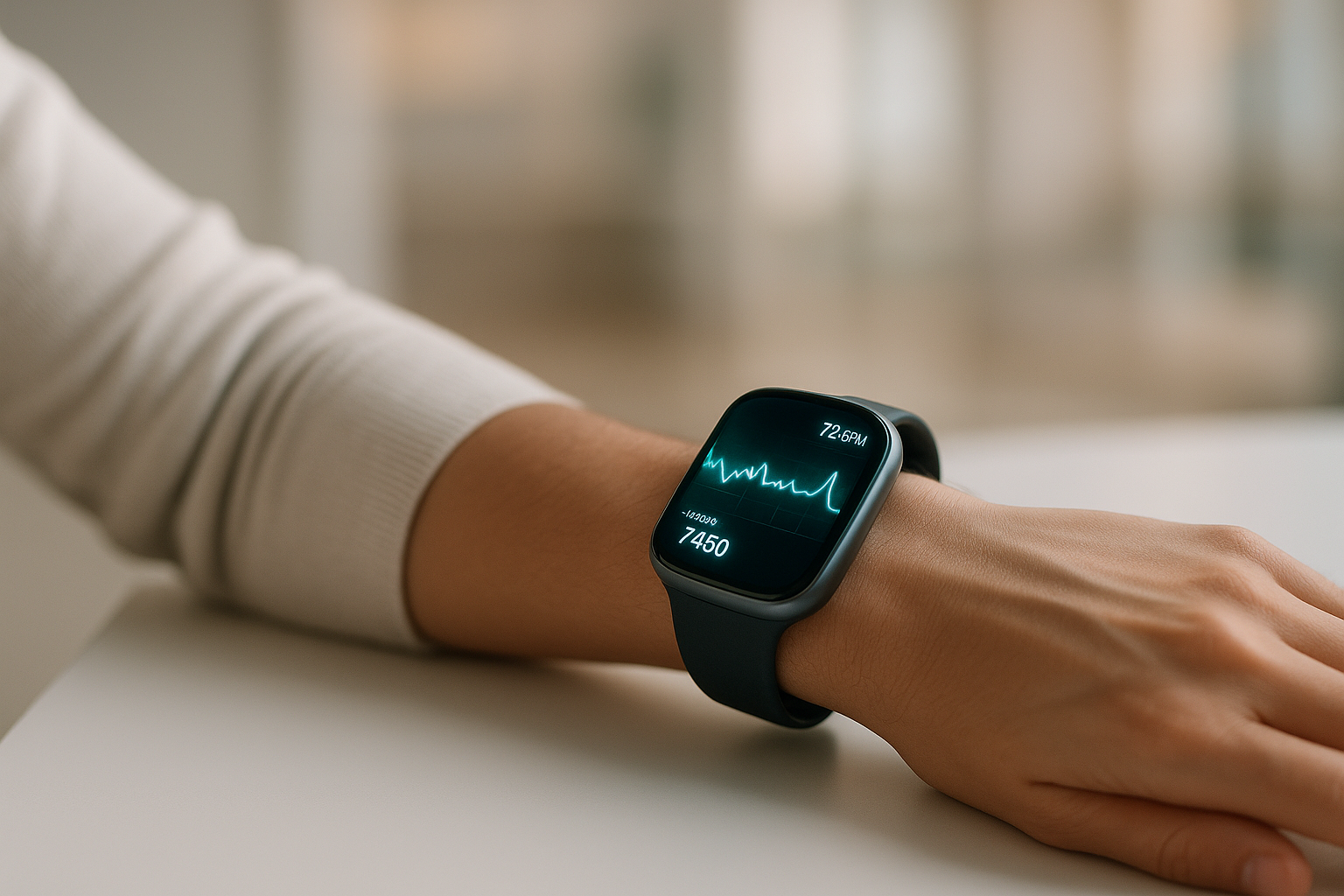
AI-powered wearables are changing healthcare by focusing on preventive care instead of treatment. These devices monitor health data like heart rate, blood pressure, sleep, and activity to predict and prevent issues such as heart disease, diabetes, and even cancer. Here's what you need to know:
- Chronic Disease Burden: Chronic illnesses account for 90% of the $4.1 trillion annual U.S. healthcare costs. AI wearables aim to reduce this by catching problems early.
- Advanced Detection: Devices show detection rates of 80% for heart disease, 94% for cancers, and 97% for atrial fibrillation.
- Market Growth: The wearable health market is expected to grow from $50 billion today to $169 billion by 2029.
- Cost Savings: AI in healthcare could save $200 billion to $360 billion annually by reducing hospitalizations and unnecessary tests.
These wearables don’t just collect data - they use AI to provide actionable insights, improve chronic disease management, and lower healthcare costs. The future lies in integrating these devices with platforms like BondMCP, which unify fragmented health data to make personalized, preventive care more accessible.
AI-Driven Personalised Care with Wearable Health Data | Manav Goel | Healthcare Meetup | GeekyAnts
AI Technologies in Wearable Health Devices
Expanding on earlier discussions about proactive health monitoring, AI technologies play a pivotal role in turning raw data from wearables into meaningful health insights. These smart devices use advanced AI to process sensor data, enabling early detection of potential health issues. Let’s dive into how machine learning, natural language processing, and predictive analytics are driving these advancements.
Machine Learning for Health Pattern Recognition
At the heart of wearable devices lies machine learning (ML), which processes continuous streams of data to uncover subtle health patterns that might go unnoticed by humans. For instance, ML algorithms can analyze ECG data to monitor heart rhythms and identify irregularities like arrhythmias. A study by Chiang et al. demonstrated the effectiveness of ML models, such as random forest and ARIMA, in predicting blood pressure changes using smartwatch data. Their system, which integrated data from ECG readings, sleep patterns, and physical activity, provided lifestyle recommendations that led to reductions of 3.8 mmHg in systolic blood pressure and 2.3 mmHg in diastolic pressure. They also used Shapley values to identify key lifestyle factors influencing these outcomes [4].
Similarly, ML is being applied to sleep data, analyzing movement, heart rate variability, and skin temperature to detect disruptions and improve sleep quality. These insights make wearables more than just trackers - they become tools for meaningful health interventions.
Natural Language Processing for Data Interpretation
Natural Language Processing (NLP) helps transform complex health data into simple, actionable guidance. By enabling features like conversational health coaching, wearables can now respond to voice commands, offering advice on fitness, medication, or mental health [6]. NLP also bridges wearable data with clinical insights by analyzing unstructured text from electronic health records (EHRs) and medical notes. For example, Costa et al. developed an AI model to transcribe and classify emergency call data with impressive accuracy, despite challenges like varied language contexts [5].
Beyond this, NLP supports mental health monitoring by analyzing voice patterns and text inputs to detect signs of stress, anxiety, or depression. Interactive chatbots powered by NLP provide tailored advice on topics such as diet, smoking cessation, and chronic disease management, making health education more personalized and accessible [5].
Predictive Analytics for Early Interventions
Predictive analytics is shifting healthcare from reactive treatments to preventive care. By analyzing long-term trends in vital signs, activity, and sleep, AI can predict the onset of chronic conditions like diabetes, heart disease, and hypertension [8]. A real-world example of this is Johns Hopkins Hospital, which reported a 14.91% reduction in readmission rates after implementing a predictive analytics tool [3].
Wearables equipped with predictive analytics can also adapt recommendations in real time. For instance, if elevated stress levels, poor sleep, and an increased heart rate are detected, the device might suggest breathing exercises or a medical consultation [8].
"In this new age of HEOR, a predictive AI model using wearable data could assess long-term outcomes for patients, as well as provide a case for potential savings from early intervention, where doctors and patients can make quicker, more precise health decisions through real-time data and continuous monitoring." [7] [1]
These systems also personalize lifestyle recommendations, offering guidance on optimal workout schedules, tailored nutrition plans, or stress management techniques. Regulatory efforts, like the FDA's Artificial Intelligence/Machine Learning (AI/ML)-Based Software as a Medical Device (SaMD) Action Plan introduced in January 2021, are supporting innovation in this space [7]. This proactive approach aligns with a broader shift toward preventive healthcare.
Together, these AI technologies are transforming wearable devices into comprehensive health monitoring systems, moving beyond basic fitness tracking to enable a more preventive and personalized approach to healthcare.
How AI Wearables Improve Health Outcomes
AI wearables are reshaping healthcare by improving how we manage chronic conditions, preventing emergencies, and cutting healthcare costs. These devices are transforming preventive health into a proactive and data-driven approach.
Better Chronic Disease Management
Managing chronic conditions like diabetes or hypertension is challenging, but AI wearables are making it easier. In 2021, 537 million people worldwide were living with diabetes [10]. This staggering number highlights the urgent need for tools that offer real-time monitoring and actionable insights.
Dr. Jagreet Kaur, Chief Research Officer at XenonStack, explains:
"Wearable devices, often integrated with Artificial Intelligence, are a big step forward in treating and controlling chronic diseases...they offer great value in early identification, specific care, and better patient outcomes." [9]
Take diabetes management, for example. Devices like continuous glucose monitors (CGMs) analyze blood sugar trends and suggest adjustments for insulin, diet, or exercise. The Glutrac Smartwatch achieved an 80.35% Clarke grid error accuracy, making it a reliable tool for glucose control [9]. Similarly, the SAED Intelligent Mobile Diabetes Management System not only improved HbA1c levels but also educated patients about their condition [9]. This dual benefit - better health markers and increased awareness - illustrates how AI wearables address chronic diseases comprehensively.
Hypertension management is another area where AI shines. Wearables track blood pressure trends and provide personalized advice on lifestyle changes or medication timing. Some even detect abnormal heart rhythms, helping prevent conditions like heart disease before they escalate [9].
Fewer Hospitalizations and Emergency Events
AI wearables also excel at preventing emergencies. By continuously monitoring health data with real-time insights, these devices can catch early warning signs of serious conditions. Whether it’s cardiovascular, neurological, or respiratory issues, AI systems analyze data in real time and notify users or healthcare providers when intervention is needed [11].
For example, wearables like the Apple Watch Series 9 offer ECG monitoring, SpO2 tracking, and fall detection, while the Zio Patch provides 14 days of continuous cardiac monitoring. These tools help identify heart rhythm abnormalities before they lead to emergencies [12]. For diabetic patients, devices like the Dexcom G7 and FreeStyle Libre 3 send real-time glucose alerts to smartphones, helping users avoid life-threatening hypo- or hyperglycemic episodes [12].
The impact of these devices is backed by numbers. Wearable technology is projected to lower hospital costs by 16% within five years, and 88% of healthcare providers are investing in remote monitoring solutions [12]. By reducing hospital admissions and promoting early intervention, AI wearables are proving their value in both patient care and cost efficiency.
Cost Savings and Healthcare System Benefits
The financial benefits of AI wearables are just as compelling as their clinical advantages. Analysts estimate that AI could save the U.S. healthcare system $200 billion to $360 billion by improving efficiency and reducing unnecessary interventions [14].
Here’s how: early detection and timely treatment minimize the need for costly emergency care and hospital stays. For instance, the Smith+Nephew LEAF System, designed to prevent hospital-acquired pressure injuries (HAPIs), led to a 77% reduction in HAPIs in one U.S. study. This translated to $6,621 in savings per patient annually [13].
AI wearables also help fine-tune healthcare resources. In one study, AI-driven diagnostics for metastatic colorectal carcinoma saved $400 million, reducing costs by 12.9% compared to traditional methods [14]. By cutting unnecessary tests and procedures, these devices align perfectly with value-based care models, which focus on improving outcomes while reducing costs.
For patients, these savings mean lower insurance premiums and fewer out-of-pocket expenses. By combining better health outcomes with reduced costs, AI wearables deliver benefits that extend from individual users to the entire healthcare system.
sbb-itb-f5765c6
How BondMCP Connects Fragmented Health Data
Wearable devices have transformed how we monitor our health, but the real game-changer is connecting these scattered data points to enable preventive care on a larger scale. Right now, many people face a frustrating reality: their health data is scattered across various platforms. Fitness trackers, sleep monitors, lab results, and supplement routines often operate in isolation, creating a fragmented view of overall health. BondMCP steps in to solve this by acting as the intelligence layer that brings all these data streams together.
BondMCP integrates personal health data from wearables, lab tests, supplements, and daily habits into one cohesive system. This unified platform allows AI agents to work together in real time, offering personalized, context-aware insights and actions. The result? Better sleep, sharper focus, enhanced performance, and a longer, healthier life [17]. This seamless integration paves the way for a more personalized approach to health and wellness, as well as advancements in precision healthcare.
Connected Health Data for Personal Optimization
BondMCP’s strength lies in its ability to make your health data work in harmony. Instead of juggling multiple apps that don’t communicate with each other, you get a unified system where your sleep tracker informs your fitness routine, your lab results adjust your supplement plan, and your long-term health goals shape real-time decisions.
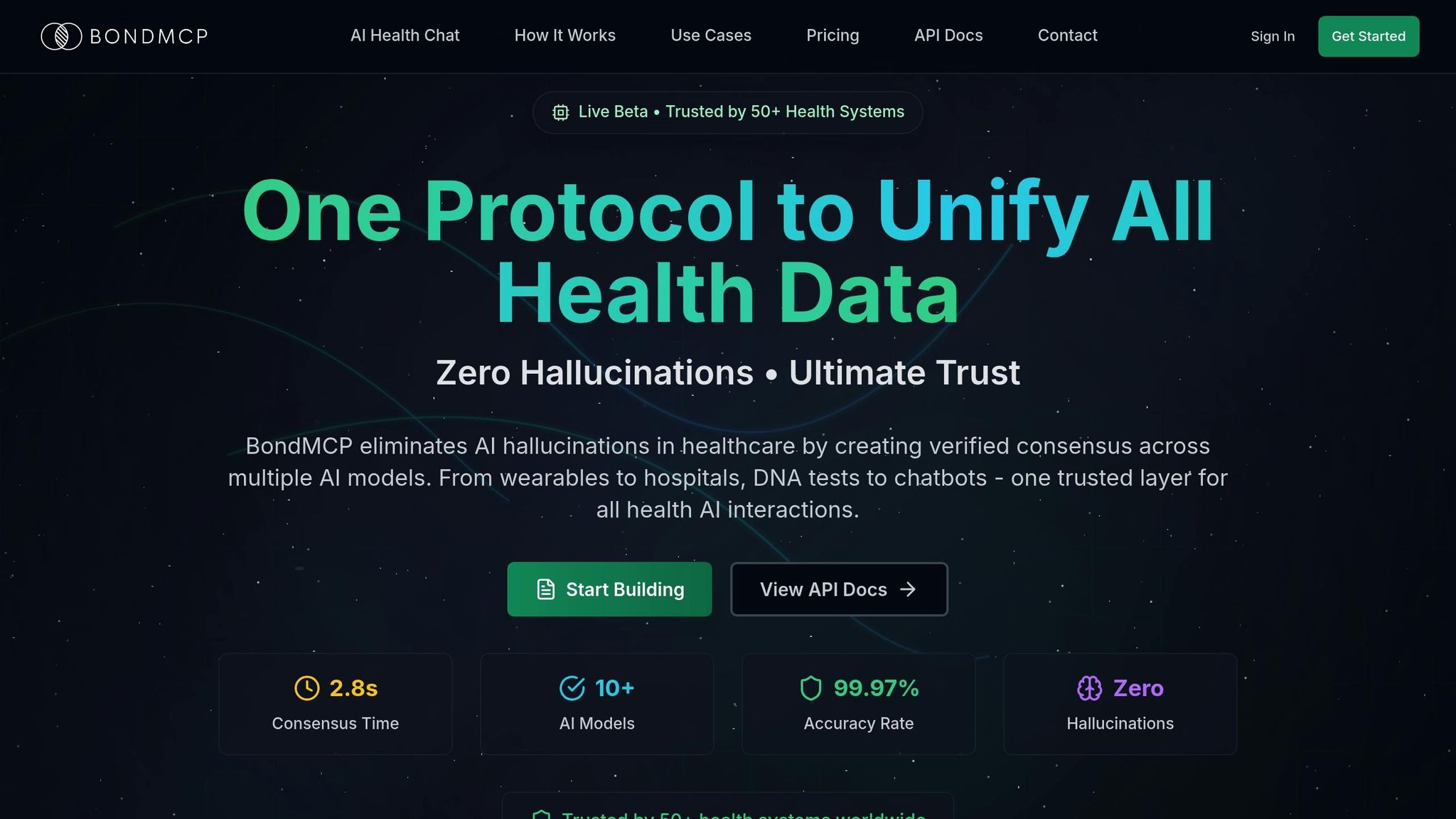
The platform achieves this through a consensus-driven system that combines data from multiple AI models, delivering 99.97% accuracy in less than three seconds [18]. This means every piece of your health data contributes directly to actionable insights, cutting through the noise and focusing on what matters most.
"BondMCP's multi-model consensus has eliminated AI hallucinations in our clinical decision support system. The 99.97% accuracy rate gives our physicians confidence in AI-powered recommendations." [18]
Simplified AI Development for Health Applications
For developers creating health-focused applications, BondMCP offers a ready-to-use protocol and SDK. This eliminates the need to build basic infrastructure from scratch, saving time and resources. The platform’s AI agents come equipped with health-specific knowledge, making them ready to tackle complex challenges right out of the box.
"BondMCP's API ecosystem saved us 6 months of development time. Its webhook system and endpoints streamline our development process." [18]
BondMCP also uses straightforward, usage-based pricing with no monthly fees or feature limitations. Developers gain full access to features like HIPAA compliance from day one. Pricing per API call includes: Multi-model AI consensus at $0.80, Health Data Analysis at $0.75, Lab Result Interpretation at $0.55, and Health Recommendations at $0.60 [16]. Every response is backed by cryptographic proof of consensus validation, ensuring developers can trust the insights their applications generate [18].
"The real-time validation and cryptographic verification make BondMCP the only AI platform we trust for patient-facing applications. HIPAA compliance was seamless." [18]
Precision Health Solutions for Clinics and Platforms
Beyond personal health optimization, BondMCP brings immense value to clinics and healthcare platforms by delivering real-time, integrated insights. Healthcare providers can use BondMCP to deliver proactive, precision care at scale. Trusted by over 50 health systems, the platform breaks down data silos, enabling a more comprehensive approach to patient care [18].
For clinics, BondMCP transforms static dashboards into dynamic decision-support systems. By unifying data from wearables, electronic health records (EHRs), labs, and other sources into a standardized format, healthcare professionals gain a complete and actionable view of patient health [18].
"The multi-model orchestration and trust scoring have revolutionized our drug discovery research. We can now validate AI insights with unprecedented confidence." [18]
"BondMCP eliminates AI hallucinations in healthcare by creating verified consensus across multiple AI models. From wearables to hospitals, DNA tests to chatbots - one trusted layer for all health AI interactions." [18]
Whether you’re an individual aiming to take control of your health, a developer building cutting-edge health apps, or a clinic striving to improve patient outcomes, BondMCP offers the tools to transform fragmented health data into a unified, actionable system. It’s not just about connecting data - it’s about creating meaningful insights that drive better decisions.
Future Opportunities and Challenges in AI Wearables
The AI wearables market is growing at an impressive pace. For instance, the AI healthcare sector is projected to surge from $10.4 billion in 2021 to a whopping $120.2 billion by 2028 [6]. In 2024, over 1.1 billion people worldwide were using wearable devices, a number expected to climb to 1.5 billion by 2026 [19]. With this rapid growth comes a mix of exciting possibilities and pressing challenges, setting the stage for technological breakthroughs and important regulatory discussions.
Expanding Biometric Data for Advanced Predictions
The next generation of AI wearables will go far beyond tracking basic metrics like heart rate or step counts. Future devices are expected to incorporate genetic markers, microbiome analysis, non-invasive glucose monitoring, and wearable biosensors capable of early cancer detection. These advancements will significantly enhance AI's ability to predict and prevent health issues. Additionally, mental health support systems powered by AI are on the horizon [2].
Interestingly, the military's use of real-time data for health monitoring could pave the way for similar applications in civilian healthcare, offering early warnings for various conditions [20]. These developments align closely with the P4 medicine model, which emphasizes predictive, preventive, personalized, and participatory healthcare [6]. Such technologies could revolutionize how we approach health, shifting the focus from treatment to proactive care.
The Call for Standards and Guidelines
While the opportunities are immense, the regulatory landscape is struggling to keep up. As of March 2024, the FDA has authorized 882 AI/ML-enabled medical devices [22]. However, global regulators like the FDA, EU, and WHO stress the importance of addressing key issues such as transparency, risk management, and cybersecurity [21][22].
Dr. Tedros Adhanom Ghebreyesus, Director-General of the WHO, highlights the dual nature of AI in healthcare:
"Artificial intelligence holds great promise for health, but also comes with serious challenges, including unethical data collection, cybersecurity threats and amplifying biases or misinformation." - Dr. Tedros Adhanom Ghebreyesus [21]
Manufacturers are being urged to adopt robust risk-management practices throughout a product's lifecycle. This includes using high-quality training data, ensuring human oversight, and prioritizing system security and transparency. Real-world monitoring is particularly critical for wearables that adapt and modify their performance over time.
Balancing Data Privacy and AI Advancements
As AI wearables become more advanced, protecting user privacy remains one of the industry's biggest hurdles. The wearable tech market grew from $15.4 billion in 2020 to $71.91 billion in 2023 [23], but this growth has been accompanied by rising privacy concerns. In the U.S., privacy laws lag behind European standards, and HIPAA regulations generally don’t apply to wearable companies [25]. This gap has left many users uneasy - 82% of U.S. residents express concerns about data privacy in non-clinical settings, yet only 9% actually read the user agreements they sign [25].
The risks are real. For example, a 2023 data breach at 23andMe resulted in $30 million in losses and eventual bankruptcy by 2025 [25]. Similarly, researchers at ESET demonstrated how hackers could exploit vulnerabilities in fitness trackers to manipulate health data like step counts and heart rates [26]. These types of attacks are not just personal risks but could also serve as entry points for ransomware attacks on larger networks. Alarmingly, 70% of hospitals have faced significant ransomware attacks, and over 60% of healthcare data breaches involve data in transit [26].
Ron De Jesus, Field Chief Privacy Officer at Transcend, underscores the importance of trust in this space:
"Consumers flock to companies that advertise and make sure that they're fully transparent around their privacy practices." - Ron De Jesus [25]
To tackle these challenges, companies need to adopt a multi-layered approach. This includes deploying strong encryption, multi-factor authentication, and AI-based real-time threat detection. Educating users about device security is equally important. Transparency is becoming a decisive factor - 88% of adults across 14 countries consider brand trust when making purchasing decisions [25].
The industry is also exploring innovative solutions like Living Labs. These collaborative spaces allow for testing AI-enabled devices in environments that mimic real-world conditions. They also incorporate dynamic consent management, enabling users to control how their data is collected and used in real time [27]. Striking the right balance between innovation and data privacy will be key to unlocking the full potential of AI wearables [24].
Conclusion: The Future of Preventive Health with AI Wearables
AI wearables are changing the game in healthcare by shifting the focus from treating illnesses after they arise to preventing them in the first place. Devices like the Apple Watch, which can detect irregular heart rhythms and alert users to seek care, show how technology can step in before complications spiral out of control.
But the real potential lies in connecting these devices into a cohesive health ecosystem. Right now, traditional healthcare systems often struggle with fragmented data and disconnected tools, leaving patients to juggle multiple apps and conflicting advice. Platforms like BondMCP are addressing this by pulling together data from wearables, lab results, and daily routines into a single, user-friendly framework [15].
This type of integration doesn't just streamline information - it turns it into meaningful, personalized health insights that operate quietly in the background [15]. Healthcare providers are already seeing the benefits, using predictive analytics to pinpoint high-risk individuals and intervene before problems escalate.
For developers and providers, this interconnected approach opens up new opportunities. Platforms like BondMCP simplify the process by offering ready-made tools and protocols, so developers don’t have to start from scratch every time. With flexible pricing models, these tools make precision health solutions more accessible and scalable for a variety of organizations [29].
Of course, challenges remain. Issues like data quality, health equity, and algorithmic bias need to be addressed, and patient trust hinges on transparency. There’s also a broader push for standardizing integrations across fragmented health systems. As Innocent Clement, CEO of Ciba Health, puts it:
"By prioritizing prevention and using technology thoughtfully, we as healthcare leaders can help foster a system that enhances individual well-being" [28].
The future of preventive health isn’t just about smarter wearables - it’s about creating intelligent systems that connect the dots across all aspects of health data. When isolated metrics are transformed into actionable insights, we can prevent diseases, lower healthcare costs, and save lives. The technology is already here. The real question is how quickly we can build the infrastructure to make this vision a reality. Smarter data can lead to smarter care, and that’s the evolution we’re heading toward.
FAQs
How do AI-powered wearables help detect and prevent chronic diseases early?
AI-powered wearables are transforming how we manage chronic diseases by keeping a constant check on essential health metrics like heart rate, blood pressure, and glucose levels. These devices rely on real-time data analysis to spot early warning signs, allowing for timely action before a condition escalates.
Take advanced glucose monitors, for instance - they can anticipate blood sugar spikes or drops, giving users the chance to adjust their habits or medications. Similarly, AI-driven cardiac monitors can pinpoint irregular heart rhythms with impressive precision. This kind of information empowers individuals to make smarter health choices and gives healthcare providers the tools to offer care that's tailored to each person. By identifying problems early, these wearables not only improve health outcomes but also help ease the burden on the healthcare system.
What privacy risks come with AI-powered wearables, and how can users safeguard their data?
AI-powered wearables track sensitive health details like heart rate, sleep habits, and daily activities. While this technology is impressive, it also brings up real concerns about privacy. In the U.S., the lack of comprehensive federal regulations means companies aren’t always required to fully protect or restrict the use of this data. This opens the door to risks, like unauthorized access or even your data being sold to third parties without your consent.
To better safeguard your personal health information, here are a few steps you can take:
- Check privacy policies to see how your data is collected, stored, and shared.
- Use strong passwords and enable multi-factor authentication on your accounts.
- Make sure your wearable encrypts data while it’s being transmitted.
- Choose devices from companies that are upfront about their privacy practices and show a solid commitment to data security.
Taking these precautions can help you stay in control of your health data and reduce the chances of privacy breaches.
How does BondMCP improve the performance of AI-powered wearables in preventive healthcare?
BondMCP takes AI-powered wearables to the next level by bringing together health data from various sources - wearables, lab tests, fitness activities, supplements, and sleep tracking - into a single, connected system. This integration enables real-time insights, tailored recommendations, and proactive health management designed specifically for each individual.
By allowing wearables to share both data and context, BondMCP makes it possible to identify potential health concerns early, dynamically adjust recommendations, and send actionable alerts for significant health changes. This cohesive system not only enhances personal health outcomes but also contributes to a more seamless and connected healthcare experience.