

Managing multiple medications can be overwhelming, especially for patients with chronic conditions. Non-compliance often leads to health risks, higher medical costs, and added strain on healthcare systems. Artificial intelligence (AI) steps in to simplify this process by:
- Detecting drug interactions: AI scans medication lists to identify risks, including timing and dosage adjustments.
- Creating personalized plans: AI considers genetic, lifestyle, and health data to tailor treatments.
- Monitoring adherence: Tools like smart pill bottles and wearables track medication use and alert patients or providers when issues arise.
- Centralizing data: AI integrates fragmented health records for a complete patient overview.
Polypharmacy and Compliance Problems
What is Polypharmacy?
Polypharmacy refers to the use of five or more medications at the same time [1][2]. This practice is increasingly common, especially among older adults and those managing multiple chronic health conditions. While it can be necessary to address various medical issues, juggling numerous medications often makes managing a treatment plan more complicated. This added complexity is a key factor behind many compliance challenges.
Common Compliance Barriers
Managing multiple medications can be tricky. Complex dosing schedules often lead to missed doses or confusion about what to take and when. Short consultation times with healthcare providers can leave patients without a clear understanding of their treatment plans. On top of that, fragmented medical records make it harder for providers to coordinate care effectively. Financial difficulties, such as the high cost of prescriptions, also discourage patients from sticking to their regimens. These hurdles create a perfect storm for non-compliance.
Impact of Non-Compliance
When patients don't follow their prescribed medication plans, the consequences can be serious. Non-adherence increases the risk of harmful drug interactions and reduces the effectiveness of treatments. Over time, this can worsen chronic conditions and lead to more frequent doctor visits, hospitalizations, and additional strain on both patients and the healthcare system.
Ep #484 Medication Intelligence via AI with Yoona Kim of Arine

AI Applications in Polypharmacy Management
Artificial intelligence is reshaping how healthcare providers address the complexities of polypharmacy. By processing massive amounts of medical data in seconds, these systems can uncover patterns that might escape human observation and offer real-time support for both patients and clinicians. These AI-powered tools focus on improving safety and creating tailored treatments, starting with drug interaction analysis.
Drug Interaction Analysis
AI excels at scanning medication databases to identify potentially harmful drug combinations. In just milliseconds, these systems can cross-check a patient’s complete medication list against thousands of known interactions, contraindications, and potential side effects.
Machine learning models take this a step further by continuously refining their predictions based on the latest research and patient outcomes. They don’t just flag direct drug-to-drug interactions - they also detect more nuanced risks, like how a combination of medications could impact kidney function or how factors like age and weight might alter a patient’s risk profile.
These systems go beyond issuing basic warnings. They analyze factors like medication timing, dosage levels, and even genetic markers to provide actionable recommendations. For example, instead of advising against a potentially beneficial drug combination, AI might suggest spacing the medications at specific intervals to reduce risks.
Healthcare providers benefit from prioritized alerts that separate minor concerns from serious safety risks. This approach reduces “alert fatigue,” a common issue where clinicians start ignoring notifications because they’re bombarded with low-priority warnings.
Personalized Treatment Plans
AI enables the creation of highly tailored medication regimens by analyzing a wealth of information, including genetic data, medical history, health status, lifestyle habits, and social factors.
One of the standout applications is pharmacogenomics, where AI predicts how a patient’s genetic makeup will influence their response to specific medications. This helps doctors select the best drug and dosage right from the beginning, minimizing side effects and avoiding the trial-and-error process that can frustrate patients and lead to poor adherence.
AI also takes into account a patient’s daily routines and preferences. For instance, if someone works night shifts, frequently travels, or struggles with swallowing pills, the system can suggest alternative formulations or adjust dosing schedules to better fit their lifestyle. This level of personalization makes it easier for patients to stick to their treatment plans.
But the process doesn’t stop there. AI continuously monitors patient responses and adjusts treatment recommendations in real time, ensuring that personalized plans remain effective and manageable.
Adherence Monitoring Systems
AI-powered monitoring tools help track whether patients are taking their medications as prescribed and intervene when issues arise. By combining data from various sources, these systems create a detailed picture of medication adherence.
Smart pill bottles with sensors and smartphone imaging can confirm whether medications are being taken on time, sending alerts when doses are missed. AI analyzes these patterns to differentiate between occasional lapses and more serious adherence problems.
Wearable devices add another layer of insight by tracking vital signs, activity levels, and sleep patterns. AI correlates this data with medication schedules to evaluate how well treatments are working and to spot early signs of non-adherence or adverse effects.
The most advanced systems use predictive analytics to identify patients who are likely to struggle with adherence before problems escalate. By analyzing factors like past adherence behavior, socioeconomic challenges, medication complexity, and recent life changes, AI can flag individuals who might need extra support.
When adherence issues are detected, AI triggers tailored interventions. These could include text message reminders, calls from care coordinators, medication delivery services, or even adjustments to the treatment plan to make it easier for the patient to follow. Integrated systems like BondMCP demonstrate how AI can close the loop, offering proactive and personalized care every step of the way.
How to Implement AI-Driven Adherence Solutions
Implementing AI-driven adherence solutions effectively requires a well-thought-out strategy that combines advanced technology, seamless clinical workflows, and meaningful patient engagement. To make this work, healthcare organizations should focus on three key areas: centralizing data, equipping clinicians with actionable AI insights, and automating patient support.
Centralized Data Integration
A solid foundation for AI-driven polypharmacy management starts with bringing together fragmented health data from various sources. Without this, it’s nearly impossible to get a full picture of a patient’s medication usage.
By creating a centralized data hub, AI systems can piece together a comprehensive view of each patient’s medication history. This involves pulling data from electronic health records (EHRs), pharmacy dispensing records, insurance claims, lab results, and patient-reported outcomes. When these data streams are unified, AI can uncover patterns that would otherwise remain hidden.
Standardized API integrations, particularly those using FHIR protocols, allow seamless connections between EHRs, pharmacy records, lab results, and real-time patient-generated data. This setup ensures that AI algorithms can process the data consistently, no matter where it originates. For example, data from fitness trackers, smart pill bottles, or wearable devices can provide real-world insights. If a patient’s activity tracker shows reduced physical movement alongside missed doses, AI can flag this as a potential adherence issue before it escalates.
Take BondMCP as an example. Their unified intelligence layer integrates diverse data streams, enabling smarter interventions for managing polypharmacy. By consolidating this information, clinicians gain access to advanced AI-driven insights directly within their decision-making tools.
AI Decision Tools for Clinicians
To truly make an impact, clinicians need AI tools that are seamlessly embedded into their existing workflows, offering real-time insights at the point of care.
Smart clinical decision support systems analyze a patient’s full medication profile in real-time, highlighting potential risks and suggesting evidence-based alternatives. These tools deliver information in easy-to-understand formats, such as risk scores, visual timelines, or prioritized action lists. For instance, when treating a patient with diabetes and heart disease who’s on eight different medications, the AI might present a dashboard showing adherence trends, potential drug interactions, and areas for optimization.
Integration into clinical workflows is essential for these tools to be effective. Insights should appear naturally during routine tasks like medication reconciliation or prescription writing. Pop-up alerts or separate apps often go unnoticed, but when AI recommendations are embedded contextually, they’re far more likely to influence decisions.
Another important feature is explainability. Clinicians need to understand why the AI is suggesting a specific action, such as altering a medication schedule or recommending a different drug. Transparent reasoning builds trust and helps healthcare providers make informed choices.
Customizable alert thresholds are also critical. These allow healthcare organizations to tailor the system to their specific patient populations and clinical needs, reducing alert fatigue while ensuring that urgent safety concerns get immediate attention. By bridging data integration with clinical care, these AI tools empower providers to make more informed decisions, improving adherence and patient outcomes.
Automated Patient Interventions
Once robust data integration and clinician support are in place, the next step is automating patient interventions to maintain engagement and address adherence issues in a timely manner.
AI systems can trigger personalized interventions based on each patient’s needs. For instance, automated text reminders can be tailored to medication schedules and patient preferences. Some patients might respond best to morning reminders, while others prefer evening check-ins. AI can analyze response patterns and adjust the timing and messaging accordingly.
For more serious adherence challenges, smart escalation protocols come into play. If a patient misses multiple doses or exhibits concerning patterns, the system can schedule follow-up calls, notify care coordinators, or flag the issue for discussion during the next clinical visit.
Voice response systems can also play a role by conducting brief adherence assessments. These systems ask patients about missed doses, side effects, or barriers to taking their medications. AI then analyzes these responses to identify those who might need extra support or medication adjustments.
Additionally, AI can coordinate with pharmacies to automate prescription refills, medication synchronization, and delivery services. For example, if the system detects that a patient is running low on medication based on refill history, it can automatically request a refill and arrange for timely delivery.
These automated interventions can range from sending educational content to facilitating prescription refills. If a patient consistently forgets their morning blood pressure medication, the system might send practical tips for establishing a morning routine alongside information about the risks of uncontrolled hypertension.
While AI handles routine monitoring and basic interventions, it works best as part of a broader care team. Human clinicians can then focus on complex cases and building relationships with patients, ensuring that care remains both efficient and personal.
sbb-itb-f5765c6
Privacy and Compliance in AI Systems
When using AI-driven polypharmacy management systems, healthcare organizations face the critical task of adhering to strict regulatory and privacy standards. With over 133 million individuals impacted by healthcare data breaches in 2023 alone [3], the need for strong data protection measures is more pressing than ever. Here's a closer look at the regulatory frameworks and security practices that support these systems.
Regulatory Frameworks
For any AI system handling patient health information, HIPAA compliance is non-negotiable. The Health Insurance Portability and Accountability Act sets strict rules for how protected health information (PHI) can be used, shared, and secured. This means AI tools designed for medication management must incorporate robust safeguards to ensure patient data remains confidential.
A key principle here is data minimization - AI systems should only access the specific data they need to perform their tasks. For example, if an AI tool is designed to detect potential drug interactions, it should only access relevant medication and health condition data, not an entire medical history.
In addition to HIPAA, the FDA's oversight plays a critical role, especially for AI tools that influence clinical decisions or patient care. The FDA's Digital Health Center of Excellence has established clear guidelines for AI/ML-based software classified as Software as a Medical Device (SaMD). These guidelines emphasize transparency in how algorithms make decisions, comprehensive risk management, and continuous post-market monitoring. AI systems that recommend medication adjustments or flag drug interactions often require FDA premarket review, which includes clinical validation, detailed risk analysis, and clear documentation of decision-making processes. The FDA also promotes Good Machine Learning Practice (GMLP), which outlines rigorous standards for data management and algorithm transparency.
Data Security and Confidentiality
Beyond meeting regulatory requirements, protecting patient data is essential for maintaining trust and ensuring system integrity. A layered security approach is critical to safeguarding sensitive information while enabling AI systems to deliver actionable insights. Key practices include:
- End-to-end encryption: All data, whether in transit or at rest, must be encrypted using industry-standard protocols. This applies to medication adherence data, patient communications, and AI-generated recommendations.
- Role-based access controls: Access to data should be limited based on roles. For instance, pharmacists might view medication histories and adherence patterns, while physicians access broader health data and treatment recommendations. Administrative staff might only see de-identified, aggregated data for quality improvement purposes.
- Auditable logging systems: Detailed logs should track who accessed what data, when it was accessed, and what actions were taken. These logs should be encrypted and protected by strict access controls.
- Automated monitoring: Systems should detect and flag unusual activity, such as a user accessing an unusually large number of patient records or attempting to export sensitive data. Such incidents should trigger immediate review.
Data retention practices also play a role in minimizing risks. Retaining only the necessary information according to predefined schedules helps reduce privacy vulnerabilities without compromising system effectiveness.
Regular vulnerability assessments and penetration testing are crucial for identifying and addressing potential security gaps before they can be exploited. Additionally, having a robust incident response plan ensures that organizations can quickly address and contain security breaches. These plans should include clear steps for notifying patients, regulatory bodies, and business partners in the event of an incident.
Integrating AI tools with existing electronic health record (EHR) systems adds another layer of complexity. All data exchanges must use secure, standards-based protocols like HL7 FHIR, and integration points must be carefully monitored and logged to prevent unauthorized access.
BondMCP's unified intelligence layer offers a structured solution to many of these challenges. By enabling secure, auditable data sharing across platforms, it ensures privacy-preserving AI interventions while maintaining the detailed logging and access controls necessary for compliance. Its health-specific ontology and shared context layer help reduce risks associated with fragmented or insecure data flows, making it easier to harness AI's potential in improving polypharmacy management without compromising security or compliance standards.
BondMCP's Unified Intelligence Layer
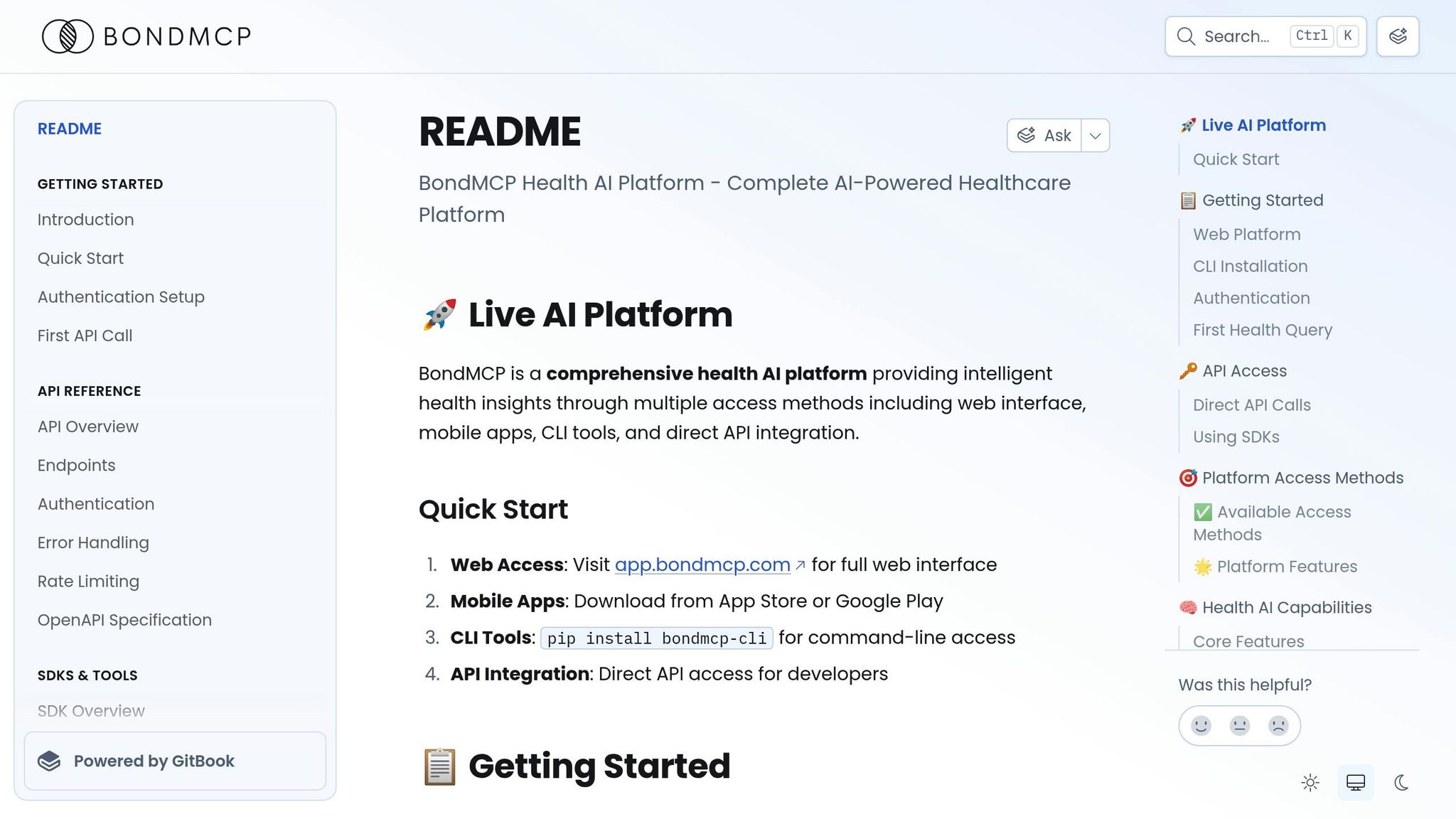
Managing polypharmacy becomes increasingly complex when health data is scattered across various devices and systems. This fragmentation can lead to missed medication interactions, poor adherence, and suboptimal outcomes. BondMCP addresses these challenges with a unified intelligence layer that consolidates health data into a single, streamlined system. By eliminating the need for patients and clinicians to juggle multiple data sources, this platform lays a strong foundation for advanced AI-driven interventions.
Bringing Fragmented Data Together
BondMCP integrates data from wearables, apps, and clinical systems to create a real-time, comprehensive health profile. Wearable devices like Apple Health, Google Fit, Fitbit, Oura Ring, and Continuous Glucose Monitors automatically sync with the platform, providing essential real-time data. This data empowers polypharmacy patients to optimize their medication schedules and effectiveness.
Beyond wearables, third-party apps add another layer of valuable insights. Tools like MyFitnessPal, Strava, and Headspace capture lifestyle factors - nutrition, exercise, and stress - that directly influence how medications perform. By combining these inputs, BondMCP ensures no critical detail is overlooked when analyzing a patient’s health.
The platform also supports seamless multi-device syncing, making it easy for patients to stay on track. They can check medication schedules on their phones, review drug interactions on tablets, and share detailed reports with their healthcare providers - all from connected devices.
AI Agents Driving Compliance and Safety
With all health data unified, BondMCP’s AI agents take the lead in managing medication compliance and safety. The AI Health Assistant continuously monitors patient data, spotting patterns that could indicate adherence issues before they escalate into bigger problems.
One of the most challenging aspects of polypharmacy is identifying medication interactions and side effects. BondMCP’s AI agents tackle this by examining the patient’s full health picture - sleep patterns, exercise habits, diet, and stress levels - to provide personalized recommendations that enhance treatment outcomes.
These AI-driven insights are also designed to ease the workload of healthcare providers. Instead of manually sifting through multiple data sources, clinicians receive comprehensive summaries generated by the platform. These summaries highlight trends in adherence, potential interaction risks, and opportunities for optimization, allowing providers to focus on critical decision-making.
Real-time monitoring is another powerful feature. By analyzing medication timing alongside changes in vital signs and other health metrics, the AI agents can detect early warning signs of adverse drug reactions. When concerning patterns emerge, the system immediately alerts both the patient and their healthcare team, enabling swift intervention.
What sets BondMCP apart is its ability to uncover subtle patterns that might otherwise go unnoticed. By analyzing data from various sources simultaneously, the platform can identify how factors like seasonal changes, stress, or shifts in lifestyle impact medication efficacy. This leads to more precise dosing recommendations and better overall outcomes.
BondMCP’s unified intelligence layer transforms polypharmacy management into a proactive, coordinated process. By leveraging every data point, it ensures that medication outcomes are optimized, improving patient care at every step.
Conclusion: AI's Impact on Polypharmacy Compliance
AI has reshaped how we approach polypharmacy management, turning what was once a complex and fragmented process into something far more efficient and precise. It tackles long-standing challenges, such as identifying harmful drug interactions and tailoring treatment plans to the specific needs of each patient.
One of the standout features of AI is its ability to analyze multiple streams of health data in real time. Gone are the days of relying solely on manual reviews and static guidelines. AI systems now process data from various sources, spotting potential risks early. This shift has moved polypharmacy management from reacting to crises to focusing on prevention and optimization.
A significant leap forward is the integration of centralized data systems. These provide a complete view of a patient’s health, making it easier to predict how medications will work together and to flag potential adverse effects. Automation also plays a crucial role, easing the workload for healthcare providers while ensuring patients receive timely advice and support to stay on track with their medications.
Of course, privacy and regulatory compliance remain top priorities. Frameworks like HIPAA help ensure that AI solutions are implemented safely, balancing robust data security with the need for systems to work seamlessly together.
As highlighted earlier, BondMCP's unified intelligence platform is a great example of how AI can address data fragmentation in polypharmacy management. By linking diverse health data sources and enabling AI agents to collaborate, platforms like this pave the way for highly personalized medication management that adjusts to the unique needs of each patient.
FAQs
How does AI enhance the detection and management of drug interactions in polypharmacy?
AI plays a critical role in improving how drug interactions are identified and managed, especially in cases of polypharmacy. Using advanced algorithms, it can sift through massive datasets - like medical records and scientific studies - to pinpoint potential interactions, contraindications, and side effects across multiple medications. This helps healthcare providers make more informed and safer prescribing decisions.
On top of that, AI tools are capable of flagging potentially inappropriate medications (PIMs) and spotting patterns linked to multiple chronic conditions. This ensures that treatments can be more precisely tailored to meet the unique needs of each patient. By simplifying these complex processes, AI not only boosts patient safety but also enhances the overall effectiveness of managing multiple medications.
How does AI enhance treatment plans for patients taking multiple medications?
AI-powered treatment plans bring a new level of personalization to managing medications, especially for patients juggling multiple prescriptions. By analyzing individual health data, AI can create medication schedules that are easier to follow, reduce the chances of drug interactions, and adapt treatments in real time to meet a patient’s specific needs.
What’s more, AI can flag potential problems before they become serious, allowing for proactive care and a lower risk of side effects. This tailored approach doesn’t just make sticking to a medication plan simpler - it also enhances overall health management, ensuring patients get treatments that are both effective and safe for their conditions.
How does AI help patients stick to their medication schedules?
AI-powered systems are transforming how we address medication adherence by leveraging patient data to spot patterns of missed doses. With machine learning and predictive analytics, these tools can identify when someone is likely to skip their medication and step in with timely, tailored reminders. Think of alerts sent through apps, text messages, or even smart devices - nudging patients to stay on track with their treatments.
What makes these systems even more effective is their ability to tap into real-time data. Whether it's wearables, prescription records, or connected devices, they use this information to confirm if medications are being taken and anticipate potential adherence issues down the road. By catching and addressing these problems early, AI solutions help improve health outcomes and minimize the risks tied to missed doses.