

APIs are transforming healthcare by enabling systems to share data efficiently, solving the long-standing problem of disconnected health information. They act as bridges between electronic health records (EHRs), medical devices, and consumer health apps, ensuring secure, real-time data exchange. This improves patient care by reducing errors, eliminating redundant tests, and allowing providers to access complete medical histories.
Key points:
- Interoperability Defined: The ability of different systems to exchange and use data cohesively.
- Legacy Systems vs. APIs: APIs replace outdated, custom integrations with standardized, scalable solutions.
- Standards: Protocols like HL7 FHIR and SMART on FHIR streamline data sharing, ensuring consistency and security.
- Challenges: Privacy concerns, varying API maturity, and data quality remain obstacles.
- Solutions: Vendor-neutral APIs and platforms like BondMCP simplify integration and improve health data connectivity.
APIs are now central to improving healthcare efficiency and outcomes, connecting fragmented systems while maintaining flexibility for future advancements.
Insights into API Use to Enable Data Sharing between EHRs and Apps
Standards and Protocols That Support API Interoperability
Bringing health data together in a unified way relies heavily on standardized protocols. These protocols ensure that data is interpreted consistently, forming the backbone of API-driven health data exchange. They act as a shared language, enabling healthcare providers, tech developers, and consumer health platforms to exchange information smoothly across the U.S. healthcare system.
The creation of these protocols is the result of years of teamwork between healthcare professionals, tech experts, and regulators. Their adoption has revolutionized how health information flows. Now, a patient’s data can seamlessly travel from a primary care doctor to a specialist, from a hospital to a pharmacy, or even from wearable devices to clinical care systems.
HL7 FHIR and SMART on FHIR Standards
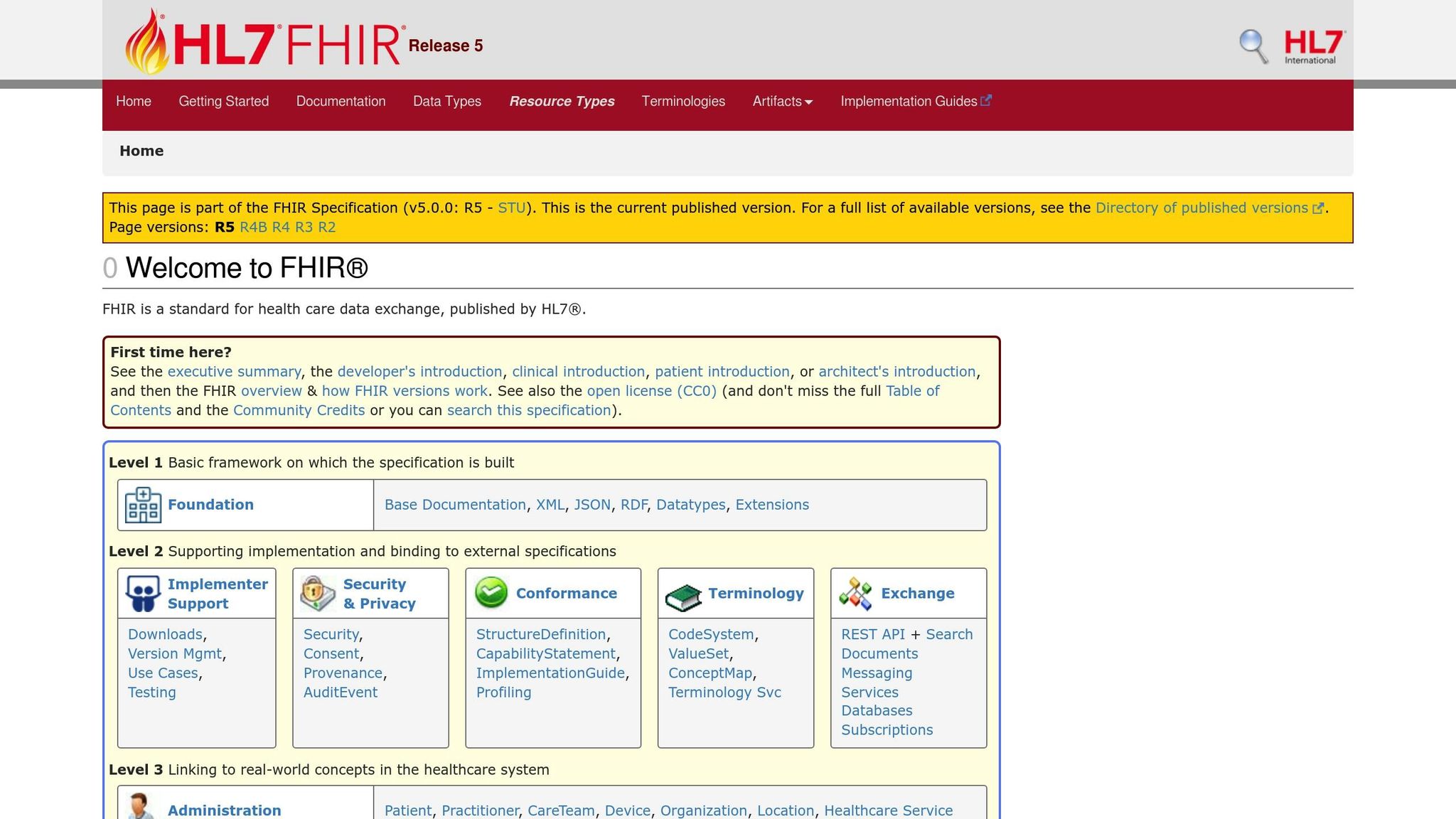
Health Level Seven Fast Healthcare Interoperability Resources (HL7 FHIR) has become the go-to standard for modern healthcare APIs. By replacing outdated messaging systems with REST APIs and JSON, FHIR simplifies integration processes.
FHIR organizes health data into modular "resources" such as patients, medications, and care plans. This means systems can request only the specific data they need instead of transferring entire patient records. For instance, a pharmacy system might pull just medication details without accessing unrelated medical history.
Building on FHIR, the SMART on FHIR framework adds essential layers of security and authorization. This enables controlled third-party access, making it ideal for patient-facing apps and clinical decision-making tools that integrate with existing healthcare systems.
Major electronic health record (EHR) vendors like Epic and Cerner (now Oracle Health) have adopted these standards, driven in part by regulatory requirements. The 21st Century Cures Act played a key role in this shift by mandating that healthcare providers make patient data accessible through standardized APIs, with penalties for blocking information.
Clinical Terminology Standards
Even when systems can exchange data, they must also agree on what that data means. Clinical terminology standards ensure that terms like diagnosis codes, lab results, or medication names are interpreted the same way across different platforms.
- ICD-10 (International Classification of Diseases, 10th Revision) provides universal codes for diagnoses and procedures. For example, a diabetes diagnosis coded in ICD-10 will be understood consistently, whether it’s stored in an EHR, sent to an insurer, or used in public health research.
- LOINC (Logical Observation Identifiers Names and Codes) standardizes lab tests and clinical observations. A blood glucose reading coded with LOINC retains its meaning, whether it comes from a hospital lab or a home glucose monitor.
- RxNorm creates a standardized naming system for medications, linking brand names, generics, and dosages. This reduces the risk of medication errors caused by inconsistent naming.
- CPT (Current Procedural Terminology) codes standardize medical procedures and services, ensuring smooth billing and care coordination.
Together, these standards enable semantic interoperability - allowing systems not just to share data but to interpret it accurately. Without this shared understanding, connected systems would function like people speaking different languages, even if they’re using the same communication tools.
Open Standards and Vendor-Neutral Design
The strength of healthcare interoperability lies in its open, vendor-neutral approach. Unlike proprietary systems that lock users into specific ecosystems, open standards promote competition and allow organizations to adopt solutions that best meet their needs.
With open standards, healthcare providers can switch vendors or add new systems without overhauling their entire infrastructure. This flexibility drives innovation while ensuring compatibility across platforms.
The HL7 organization leads the development of these standards through collaboration with healthcare providers, tech companies, regulators, and other stakeholders. This inclusive process ensures the standards address practical needs and are adaptable across different healthcare settings.
Open source tools further boost adoption. For example, the HAPI FHIR library provides free resources for developers to create compliant applications, lowering barriers for smaller organizations and startups to join the interoperable ecosystem.
The Office of the National Coordinator for Health Information Technology (ONC) has also been instrumental in advancing open standards. Through certification programs and initiatives like the Trusted Exchange Framework and Common Agreement (TEFCA), the ONC aims to build a nationwide health information exchange network based on these standardized protocols.
Research Findings: How APIs Improve Health System Connectivity
Research confirms a transformative role for APIs in healthcare, reshaping how systems connect and share information. By moving away from traditional point-to-point integrations, healthcare organizations are adopting API-driven architectures to improve data sharing, simplify workflows, and support better patient care. These advancements demonstrate how APIs can deliver meaningful improvements in vendor-neutral environments.
Proven Benefits of Vendor-Neutral APIs
Vendor-neutral APIs play a key role in improving healthcare system connectivity. They make it easier to integrate third-party applications with EHR systems, offering secure and efficient data access. This approach reduces the strain on IT teams by minimizing common data access challenges. The result? A more seamless integration process that supports clinical workflows and enhances patient outcomes.
Main Challenges in Interoperability Research
While the benefits of API-based interoperability are clear, certain challenges persist. One major issue is balancing secure authentication with the need for smooth data sharing across multiple API endpoints. Healthcare IT leaders must navigate strict patient privacy regulations while ensuring efficient system access. Another hurdle lies in the varying levels of API maturity among vendors. Some providers have implemented robust interoperability standards, while others lag behind, offering limited functionality. Additional challenges include maintaining high data quality, adhering to regulatory compliance, and addressing resource limitations - especially for organizations with smaller IT teams. These obstacles highlight the ongoing need for innovation in API standards and practices.
Current Trends in API Standardization and Scalability
To address these challenges, developers are turning to modular architectures and cloud-native platforms. Modular APIs allow organizations to customize solutions based on their specific integration needs, while cloud-native platforms provide scalable and cost-effective alternatives to traditional on-site systems. Artificial intelligence is also becoming a powerful tool for API management, automating processes like call routing and data flow optimization. Real-time data streaming is another game-changer, giving clinicians access to up-to-date patient information for better decision-making. Additionally, standardized API testing frameworks are emerging to ensure compatibility across systems, helping to reduce integration headaches as digital health technologies continue to grow.
sbb-itb-f5765c6
BondMCP: API-Driven Health Interoperability in Practice
When it comes to making API-driven interoperability a reality, BondMCP showcases how modern solutions can tackle the long-standing problem of fragmented health data. By leveraging its agent-native protocol and shared context layer, this platform demonstrates how advanced API architecture can overcome the limitations of traditional integration methods.
How BondMCP Connects Health Data Across Systems
BondMCP addresses the issue of fragmented health data by creating a unified intelligence layer that links various health systems through standardized APIs. It acts as a bridge, enabling seamless communication between devices and platforms like wearables, lab systems, supplement trackers, fitness apps, and sleep monitors.
The platform uses a health-specific ontology to make sense of data. For instance, if a sleep tracker records poor sleep quality, that information flows automatically through BondMCP's APIs. This data can then inform other connected systems: a training coach app might adjust workout plans, while a supplement tracker could recommend sleep-supporting nutrients based on recent lab results.
Instead of requiring individual API connections for every system pair, BondMCP functions as a central hub. Each platform connects once, gaining access to an integrated ecosystem. This setup allows AI agents to work with a full picture of a user’s health, rather than relying on isolated data.
Benefits for Consumers, Developers, and Clinics
BondMCP’s integration capabilities translate into clear benefits for everyone involved: consumers, developers, and clinics.
- Consumers enjoy automated health insights and personalized recommendations without the hassle of syncing data manually. By connecting their health data into one unified system, they can make decisions aligned with their longevity and wellness goals.
- Developers save time and effort with BondMCP’s SDK and protocol, which provide ready-made, context-aware and interoperable components. Instead of building core functionalities like memory management or agent routing for every health app, developers can plug into BondMCP’s ecosystem and focus on innovation.
- Clinics and healthcare platforms can scale up precision health delivery without creating complex integration infrastructures. BondMCP ties together previously siloed data, enabling healthcare providers to shift from static dashboards to dynamic, AI-powered insights that adapt in real time as new patient data comes in.
BondMCP's Vendor-Neutral and Standards-Based Approach
BondMCP takes a vendor-neutral stance, ensuring flexibility for healthcare organizations. By adopting open standards, the platform supports integration with new technologies while protecting prior investments. This approach ensures that healthcare providers don’t have to overhaul existing systems to adopt BondMCP.
Its standards-based architecture bridges the gap between clinical-grade systems and consumer health applications. Whether it’s integrating with a hospital’s electronic medical records or syncing with a wearable device, BondMCP uses the same underlying protocol. This unified framework simplifies the process of connecting clinical and consumer health ecosystems, reducing the technical challenges that often arise in such integrations.
Conclusion: APIs as the Foundation for Health System Interoperability
Research confirms that APIs are now the cornerstone of modern healthcare interoperability. As health systems evolve, the transition from outdated integration methods to API-driven solutions is reshaping how healthcare data flows, offering new opportunities to improve efficiency and outcomes.
Key Takeaways
APIs simplify data exchange by replacing complex, fragmented integrations with unified, standards-based solutions. This approach directly addresses the long-standing issue of disconnected systems in healthcare, enabling smoother communication across platforms.
The ability to access and integrate diverse data sources - like wearable sleep trackers, lab results, or fitness metrics - empowers healthcare providers to make more informed decisions. This leads to care that is not only more precise but also tailored to individual patient needs, enhancing outcomes across the board.
Research also emphasizes the importance of standards-based frameworks such as HL7 FHIR and SMART on FHIR. These open standards provide a scalable foundation for interoperability, helping organizations avoid vendor lock-in while remaining flexible for future advancements.
With these benefits in mind, there are clear steps that healthcare systems can take to build on the potential of APIs.
Next Steps for Health System Interoperability
Healthcare organizations should focus on adopting open standards at every level of care delivery. Prioritizing vendor-neutral, standards-compliant solutions over proprietary systems will help eliminate the creation of new data silos.
A research-driven approach is essential for success. Combining technical expertise with a deep understanding of clinical workflows ensures that interoperability projects address real-world challenges. Pilot programs that test API integrations in practical settings can provide valuable insights before scaling solutions across an entire system.
Platforms like BondMCP highlight the real-world possibilities of advanced API architectures. By incorporating shared context layers and health-specific ontologies, these solutions extend interoperability beyond traditional clinical environments to include consumer health devices, wellness apps, and precision medicine tools.
The future lies in agent-native ecosystems, where AI-powered systems can collaborate seamlessly. This shift moves beyond basic data exchange to intelligent orchestration, enabling systems to adapt and learn from the vast streams of connected health data.
Healthcare organizations that embrace comprehensive API strategies today will be better positioned to deliver the connected, personalized care that patients increasingly expect.
FAQs
How do APIs enhance interoperability in healthcare systems?
APIs play a pivotal role in transforming healthcare by enabling real-time data sharing across various platforms, devices, and applications. Unlike older legacy systems that trap data in isolated silos, APIs facilitate smooth communication between wearables, labs, clinics, and even AI-driven tools.
This level of connectivity helps break down barriers, eliminates repetitive processes, and supports tailored, forward-thinking care. By creating a vendor-neutral environment for data exchange, APIs give healthcare providers the tools to make quicker, well-informed decisions - enhancing patient care while simplifying operations.
What are the main challenges of using APIs for interoperability in healthcare, and how can they be solved?
The healthcare industry's push for API-driven interoperability faces several hurdles. One of the biggest is the lack of consistent data standards. Many systems rely on proprietary formats, which creates barriers to effective communication. Add vendor lock-in to the mix, and you’ve got a situation where data exchange becomes unnecessarily complicated. On top of that, fragmented data scattered across different platforms and ongoing privacy and security concerns make the challenge even tougher.
What can help? For starters, open data standards, vendor-neutral APIs, and strong security protocols are key. These tools can pave the way for smoother integration. Another important step is investing in scalable platforms that can bring together systems that currently don’t play well with each other. But none of this happens in isolation - regulators, developers, and healthcare providers need to team up. By working together, they can create a secure, standardized environment where data can flow freely and efficiently.
How do HL7 FHIR and SMART on FHIR improve data sharing in healthcare?
HL7 FHIR and SMART on FHIR are transforming how healthcare systems share data by providing standardized frameworks that improve communication between different platforms. FHIR (Fast Healthcare Interoperability Resources) leverages modern web technologies like RESTful APIs and JSON, enabling secure and efficient exchange of both clinical and administrative data across electronic health records (EHRs), medical devices, and applications.
Building on FHIR, SMART on FHIR introduces an application layer that allows third-party apps to seamlessly and securely connect with EHRs. This plug-and-play functionality gives healthcare providers access to customized tools that enhance data sharing, simplify workflows, and ultimately contribute to better patient care and smoother operations.