
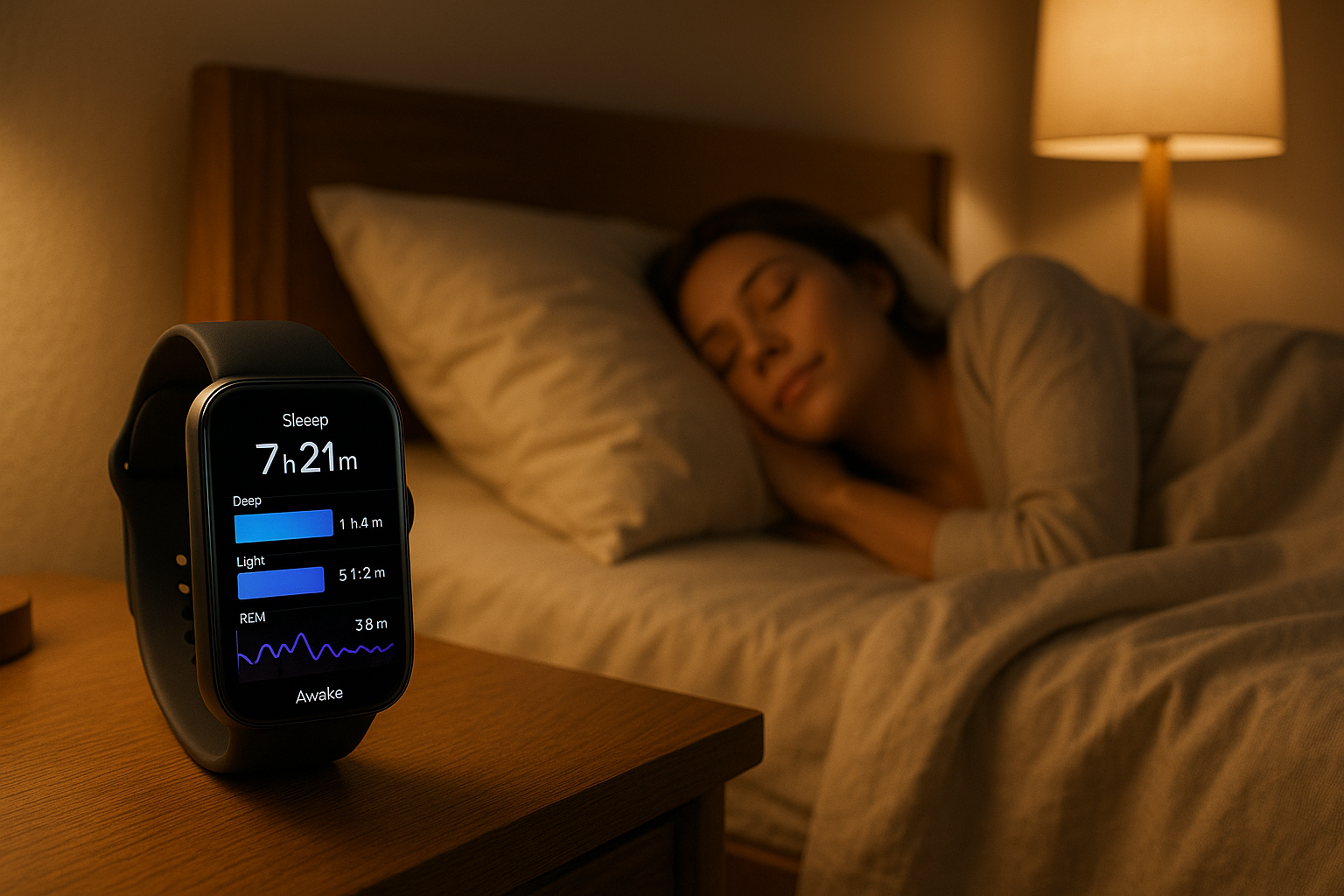
Real-time data from wearable devices is transforming how we understand and improve sleep. Unlike one-night lab studies, these devices collect continuous data - like heart rate, motion, breathing, and oxygen levels - while you sleep at home. This approach identifies patterns, detects potential sleep issues, and provides actionable insights to help you sleep better.
Key takeaways:
- Wearables track metrics like heart rate, movement, and oxygen levels.
- AI tools analyze data to give tailored sleep advice.
- Early detection of sleep disorders, like sleep apnea, is now possible.
- You can adjust habits and environment based on real-time feedback.
Though wearables aren't as precise as clinical studies, they offer a practical way to monitor sleep over time. Pairing this data with professional advice ensures better results.
How the Apple Watch Tracks Your Sleep (Scientific Review)
Common Sleep Problems
Sleep troubles are a reality for millions of Americans, bringing along a host of physical and mental challenges. According to the CDC, roughly 1 in 3 adults doesn’t get enough sleep on a regular basis, and an estimated 50–70 million Americans live with chronic sleep disorders [4]. These numbers highlight a serious public health issue, underscoring not only the impact of poor sleep on well-being but also the limitations of traditional methods for tracking sleep.
How Poor Sleep Affects Your Health
Some of the most common sleep issues include insomnia (affecting up to 30% of adults), sleep apnea (impacting about 25 million adults), restless legs syndrome, and irregular sleep schedules [4]. While each condition comes with its own set of challenges, they all can take a heavy toll on both physical health and mental performance.
Lack of sleep increases the risk of heart disease, obesity, diabetes, and a weakened immune system [4]. It also plays a major role in mental health, contributing to mood disorders, reduced cognitive abilities, and memory problems [4]. Interestingly, sleep deprivation can even mimic symptoms of conditions like ADHD and depression, sometimes leading to incorrect diagnoses.
The ripple effects of poor sleep extend into everyday life. People who don’t sleep well often struggle with workplace errors, trouble focusing, and strained social interactions [4]. Irregular sleep patterns, such as those experienced by shift workers, disrupt the body’s natural rhythm, leading to higher rates of metabolic disorders, chronic fatigue, cardiovascular issues, and mood disturbances [4]. Over time, these challenges can result in long-term health problems and a noticeable decline in quality of life.
Problems with Traditional Sleep Tracking
Given the serious health risks tied to sleep problems, accurate tracking of sleep patterns is crucial. Unfortunately, traditional sleep monitoring methods often fall short, leaving patients and healthcare providers with incomplete or misleading data. This gap can hinder proper diagnosis and treatment of sleep disorders.
Self-reported sleep data is one common method, but it’s prone to errors due to recall bias. People often misjudge their sleep quality and duration, leading to inaccurate assessments [4].
Another method, actigraphy, uses motion sensors to track sleep and wake periods. While helpful, it has its flaws. For instance, it can mistake stillness for sleep, providing only a basic view of sleep patterns without delving into different sleep stages [4]. This means critical details - like short naps or brief awakenings that could point to issues like narcolepsy or shift work disorder - can easily go unnoticed [4].
Clinical sleep studies conducted in labs offer more detail but miss the mark when it comes to real-life conditions. These studies don’t account for environmental factors like noise, light, or room temperature, all of which can significantly influence sleep quality at home.
As a review in Nature points out, devices relying solely on accelerometer data are useful for detecting when someone is awake or asleep, but they fail to identify various sleep stages. This limitation is a major obstacle in diagnosing and treating sleep disorders effectively [5].
These shortcomings in traditional tracking methods often lead to delayed or incorrect treatments. Without a complete picture of a person’s sleep habits, healthcare providers may miss opportunities for early intervention. Reliable, continuous data over time is essential for pinpointing problems and making meaningful improvements to sleep quality - a goal that remains difficult to achieve with current tools.
How Real-Time Data Improves Sleep Tracking
Real-time sleep tracking has completely changed how we understand and improve sleep. Gone are the days of relying on incomplete sleep diaries or basic motion sensors. Modern wearable devices now provide continuous monitoring of various physiological metrics throughout the night, delivering a detailed view of your sleep patterns and overall quality.
What Real-Time Data Tracks
Let’s dive into the key metrics these devices monitor. Modern wearables track multiple biometrics to create a clearer picture of your sleep health:
- Heart Rate: This is a cornerstone of sleep tracking. Your heart rate naturally slows and varies during different sleep stages. Advanced devices use this data to identify light, deep, and REM sleep phases.
- Movement: Accelerometers have come a long way from simply detecting motion. Today, they work alongside other metrics to assess restlessness, position changes, and periods of stillness, offering deeper insights into your sleep quality.
- Breathing Patterns: Monitoring your respiratory rate can reveal irregularities that suggest sleep apnea or other breathing issues. When combined with other data, this provides a more complete picture of your sleep health.
- Skin Temperature: Changes in skin temperature throughout the night can indicate shifts in your body’s circadian rhythms. Wearable devices track these fluctuations to spot potential disruptions or natural sleep-preparation signals.
- Blood Oxygen Levels (SpO2): This is one of the most valuable additions to real-time sleep tracking. Drops in blood oxygen levels can flag breathing interruptions or sleep disorders like sleep apnea, which might otherwise go unnoticed.
Instant Sleep Pattern Analysis
One of the most impressive aspects of real-time data is its ability to detect and analyze sleep disruptions as they happen. Unlike traditional methods that rely on recalling events after the fact, continuous monitoring captures every moment - whether it’s an awakening, restless movement, or irregular breathing pattern.
This immediate detection allows for timely feedback. For example, if your wearable notices frequent heart rate spikes or irregular breathing during the night, you can quickly consider possible causes like stress, caffeine consumption, room temperature, or external noise.
Over time, this data builds a comprehensive profile of your sleep habits. Patterns emerge, helping to identify potential sleep disorders or gauge how effective changes to your routine have been.
The integration of AI-powered analysis takes this even further. Platforms like Healify use real-time data from wearables to deliver instant insights and tailored advice. As Healify explains:
Healify is your AI-powered health companion, designed to decode your body in real time. From stress levels to sleep patterns, it provides personalized insights and actionable advice, empowering you to optimize your physical and mental well-being instantly [6].
This type of analysis turns raw numbers into meaningful guidance. Instead of guessing why you’re tired or what’s disrupting your rest, you get clear feedback on factors like blood oxygen drops or cortisol peaks that directly affect your sleep. The result? A more personalized and effective approach to improving your sleep health.
Benefits of Real-Time Sleep Tracking
Real-time sleep tracking takes raw data and transforms it into practical steps you can use right away to improve your sleep and overall health.
Personalized Sleep Recommendations
With wearable devices, you get more than just numbers - you get a detailed sleep profile that leads to tailored advice. Instead of one-size-fits-all tips, these recommendations are based on your unique sleep habits, daily routines, and physical responses.
For example, if your tracker notices disrupted sleep caused by late-night screen use or caffeine, it can suggest changes to your habits. Smart home devices can even adjust your room’s lighting or temperature to match your sleep stage. These adjustments not only help you rest better but can also flag potential sleep disorders early.
Early Sleep Disorder Detection
One of the standout features of real-time tracking is its ability to spot early warning signs of sleep issues. It can identify subtle changes, like dips in blood oxygen levels or irregular breathing, that might point to conditions like sleep apnea.
Companies like Healify use this technology to send instant alerts if something seems off. As Healify explains:
Instant Alerts: Catch health issues before they impact your day
This kind of early detection encourages you to consult a healthcare professional before minor issues turn into major health problems.
AI Health Coaching Integration
AI health coaching takes things a step further by turning your sleep data into actionable advice. For instance, Healify’s AI coach, Anna, analyzes data from wearables, biometrics, and even your daily habits. Available 24/7, Anna offers personalized guidance to help you tweak your routines and achieve better sleep more quickly and effectively.
sbb-itb-f5765c6
Practical Uses of Real-Time Sleep Data
Real-time sleep data takes the benefits of continuous monitoring and turns them into actionable insights that can improve your sleep quality almost immediately. By analyzing this data, you can make adjustments to your sleep habits and environment, building on the concept of personalized sleep analytics.
Improving Sleep Routines and Environment
Wearable devices that track heart rate variability (HRV) and movement can highlight stress spikes, restless periods, or environmental factors disrupting your sleep [1][2].
For instance, sensors can detect how ambient light or room temperature impacts your rest. If your data shows disruptions, you might lower the room temperature by 2–3°F or adjust your bedroom lighting to encourage better sleep [1][2].
Shift workers can also benefit from light exposure tracking. By analyzing this data, you can identify the best times for bright light exposure to help reset your internal clock and improve sleep–wake cycles [1].
Breathing patterns and SpO2 levels are another critical area. If your wearable detects frequent dips in oxygen levels, it might signal a risk of sleep apnea, prompting you to seek medical advice [1].
While these adjustments create a better sleep environment, AI tools can take it a step further by turning insights into personalized strategies.
AI Sleep Support
AI health coaching transforms sleep data into a tailored action plan, offering guidance at any time. For example, Healify’s AI coach, Anna, uses information from wearables, biometrics, and daily habits to provide personalized recommendations based on your sleep patterns.
AI tools can uncover subtle connections between your lifestyle and sleep. If your data shows a pattern where high stress correlates with poor sleep, Anna might suggest stress management techniques or a more consistent bedtime routine [1].
Because the system continuously monitors your progress, it adjusts its recommendations as you improve. For example, if frequent awakenings are resolved, the AI might shift focus to another area, like optimizing your bedtime routine. This creates a step-by-step path toward better sleep [1].
Healify simplifies complex health data into actionable steps. Sophie, a fitness enthusiast, shares her experience:
I used to feel overwhelmed by health data on my iPhone and Apple Watch. Healify changed that, giving me clear guidance. My energy has improved, and I now know exactly what steps to take for better health.
The AI also sends instant alerts if it detects unusual patterns in your sleep data. Whether it’s elevated stress levels or irregular sleep patterns, you’ll receive timely suggestions to make proactive adjustments [6].
Limitations and Considerations
Real-time sleep tracking offers helpful insights, but it’s essential to recognize its limitations and approach the technology thoughtfully. Even the most advanced devices have accuracy challenges, and privacy concerns should not be overlooked.
Accuracy and Privacy Issues
Wearable sleep trackers are not as precise as polysomnography (PSG) [1][3]. Unlike PSG, which directly measures brain activity, consumer devices rely on indirect signals that can misclassify sleep states. A 2023 review reported that these trackers are about 78–85% accurate in distinguishing sleep from wakefulness, but their accuracy drops to 50–70% when identifying specific sleep stages [3]. Common errors include mistaking inactivity for light sleep and struggling to reliably differentiate REM, deep, and light sleep phases [1][3].
Privacy is another concern. Sleep trackers store sensitive data, which could be vulnerable to breaches. In a study of 1,000 users, 32% expressed concerns about how their sleep data might be used or accessed [2]. To protect your information, review privacy settings, avoid using unsecured networks, and ensure strong passwords with two-factor authentication.
Consistency in using these devices can also be a hurdle. Factors like comfort, battery life, and motivation significantly influence long-term adherence [1]. Discomfort or forgetting to charge the device can lead to inconsistent data, reducing its overall effectiveness.
While these technical and practical limitations are important, the key to making wearable data meaningful lies in combining it with professional medical advice.
Combining Data with Professional Medical Advice
Due to their limitations, wearables provide valuable trends but cannot diagnose sleep disorders [3]. Tools like AI-powered health coaching apps, such as Healify, can enhance the experience by integrating wearable data and offering tailored recommendations [6]. However, these insights should be paired with guidance from healthcare professionals. For conditions like sleep apnea or insomnia, consulting a doctor ensures proper evaluation and treatment [3]. Medical experts can interpret the data in context, recommend additional testing, and provide solutions that go beyond what wearables can detect.
Interestingly, only 12% of wearable users share their sleep data with healthcare providers, which highlights a missed opportunity to bridge consumer technology with professional care [3]. The best results come from combining the convenience of tracking devices with medical expertise. Use wearable data to build self-awareness and improve sleep habits, but always rely on a healthcare professional for persistent issues or suspected disorders. Wearables can guide you, but clinical evaluation is essential for accurate diagnosis and treatment.
Conclusion: Better Sleep Through Real-Time Data
Real-time sleep tracking is changing the way we understand and improve our sleep. Unlike traditional methods that depend on single-night lab studies or self-reported habits, wearables provide a continuous flow of data, offering a clearer picture of your sleep patterns over time. This ongoing monitoring opens the door to tailored sleep solutions and early detection of potential disorders.
By analyzing multiple physiological signals - like heart rate variability, movement, skin temperature, and blood oxygen levels - these devices uncover sleep patterns that might otherwise go unnoticed. Research shows that wearables using a combination of accelerometer and photoplethysmography data are more effective at classifying sleep stages than older devices that rely solely on motion tracking [4][5].
The real game-changer here isn't just the amount of data collected but how it's used. Platforms powered by AI, such as Healify, are simplifying complex data streams and turning them into actionable steps. Instead of overwhelming users with raw numbers, these tools provide clear, practical guidance to help improve sleep.
When continuous monitoring is paired with AI, it turns nightly sleep data into meaningful daily adjustments. This combination allows for real-time feedback, enabling users to make informed changes while also seeking guidance from medical professionals. Together, these insights offer a powerful way to enhance sleep quality and overall health.
Real-time sleep tracking does more than monitor your nights - it helps you take control of them with insights tailored just for you.
FAQs
How does real-time sleep tracking with wearables compare to traditional sleep studies for accuracy and insights?
Real-time sleep tracking through wearables has transformed how we monitor sleep, making it far more accessible than traditional sleep studies. Unlike the controlled setting of a lab, which typically gathers detailed data over just one or two nights, wearables let you observe your sleep patterns over weeks or even months. This extended tracking paints a broader picture of your habits and routines.
Equipped with advanced sensors, these devices measure key metrics like heart rate, movement, and oxygen levels. While they don't offer the pinpoint accuracy of clinical studies for diagnosing sleep disorders, they shine in other areas. Wearables help you spot patterns, refine your sleep hygiene, and make smarter lifestyle choices to achieve better rest.
What privacy concerns should I be aware of when using wearable devices for sleep tracking, and how can I keep my data secure?
Wearable devices gather a lot of personal health data, including details like your sleep patterns. While this can be incredibly useful, it also comes with privacy risks, such as unauthorized access, data breaches, or even misuse of your information. Taking steps to protect this data is essential.
Start by using strong, unique passwords for both your wearable device and any related apps. Adding two-factor authentication where available provides an extra layer of protection. It's also a good idea to carefully review the privacy policies of the devices and apps you use. This helps you understand how your data is collected, stored, and shared. Lastly, make it a habit to keep your device's software updated - those updates often include critical security improvements.
How does AI-powered health coaching use real-time sleep data to improve sleep quality and detect potential issues?
AI-driven health coaching takes real-time sleep data and turns it into practical advice designed just for you. By studying your sleep patterns, it offers customized suggestions to help you drift off more easily, enjoy deeper rest, and wake up feeling recharged.
It can even spot potential warning signs of sleep issues, like irregular cycles or frequent interruptions, and provide tips to tackle them. With round-the-clock monitoring and guidance, AI health coaching gives you the tools to improve your sleep and boost your overall wellness.