
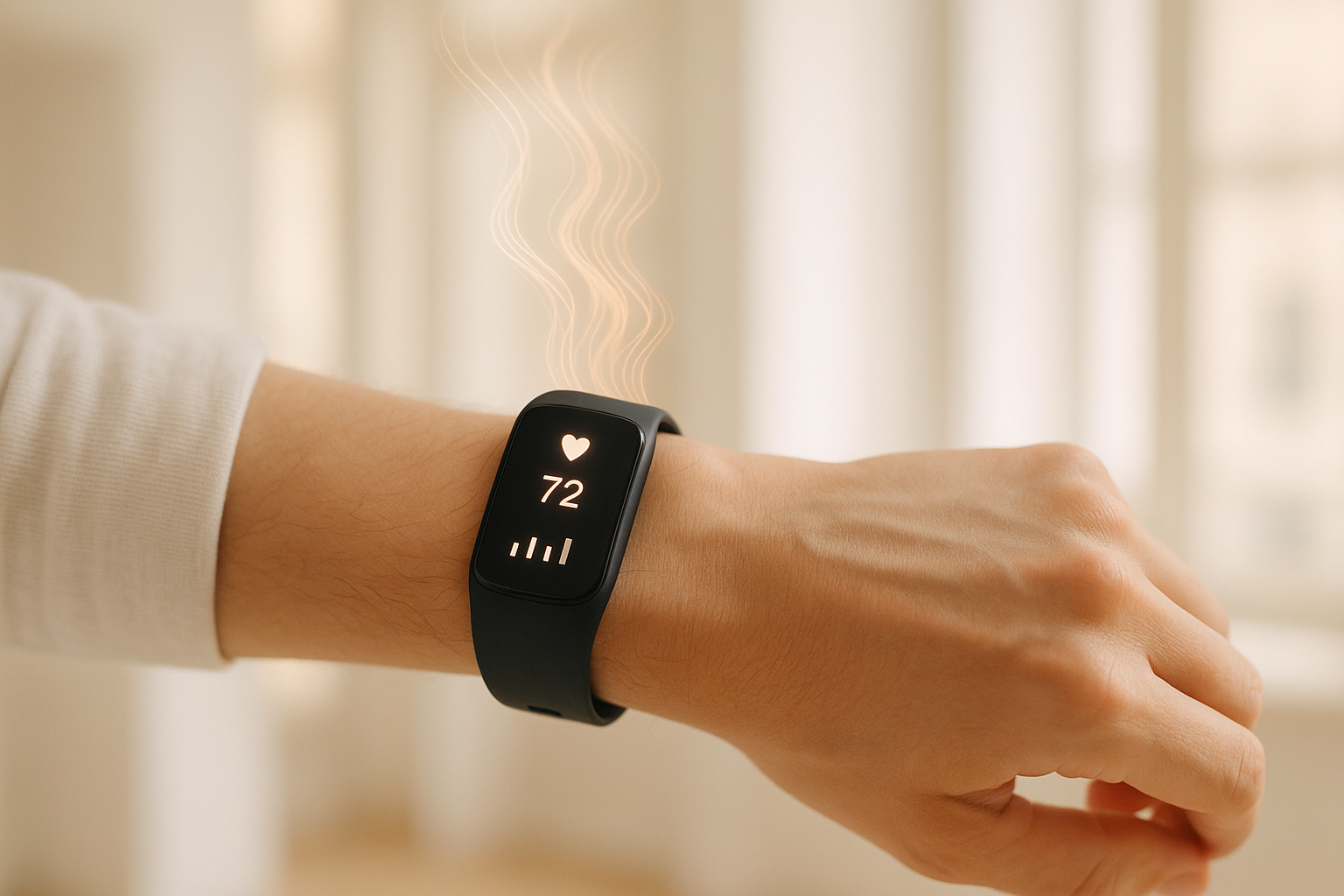
Wearable devices are changing how we understand health by focusing on your unique patterns, not generic averages. These devices track anomalies - unexpected changes in metrics like heart rate or sleep - and use AI to turn them into personalized insights. This means spotting potential stress, illness, or recovery issues early, often before you notice them.
Here’s the big picture:
- AI detects changes: It identifies shifts in your health data, like a higher resting heart rate or poor sleep, and flags them.
- Personalized advice: Suggestions are tailored to your habits, lifestyle, and goals, helping you make informed decisions about rest, exercise, or when to seek medical advice.
- Unified data: Platforms like BondMCP combine data from wearables, lab tests, and supplements into one system, simplifying health management and improving accuracy.
AI-Driven Personalised Care with Wearable Health Data | Manav Goel | Healthcare Meetup | GeekyAnts

How AI Detects Anomalies in Wearable Data
AI algorithms are constantly at work, monitoring your data, learning your unique patterns, and flagging any unusual deviations. By analyzing your health metrics in real-time, these systems can identify patterns and irregularities that might otherwise go unnoticed.
Types of Health Metric Anomalies
AI systems classify health anomalies into three main categories, each providing a different perspective on your well-being:
- Point anomalies: These are single data points that stand out as unusual. For instance, if your resting heart rate typically ranges between 55–65 beats per minute but suddenly jumps to 85 bpm for a day, the system would flag this as a point anomaly.
- Contextual anomalies: These take into account the situation surrounding your data. A heart rate of 120 bpm might be perfectly normal during a workout, but it would raise concerns if recorded while you're sleeping. AI algorithms use factors like time of day, activity level, and other context-specific details to determine if a reading is truly out of the ordinary.
- Collective anomalies: These involve patterns that emerge across multiple metrics or over a longer period. For example, a gradual decline in sleep quality combined with a drop in heart rate variability and stagnant recovery scores might point to chronic stress or overtraining. While these individual changes might seem minor, AI excels at spotting these broader patterns across various data streams - something that would be nearly impossible for a person to detect manually.
Once anomalies are identified and categorized, the system processes the raw data to generate actionable insights tailored to your health profile.
Data Processing and Analysis Steps
Transforming raw sensor data into meaningful health insights involves several key steps:
- Data collection: Your wearable device gathers data continuously, capturing measurements every few seconds or minutes depending on the metric.
- Data normalization: This step ensures the data is clean and consistent. AI corrects for sensor variations, removes outliers (like an implausible 300 bpm reading), and fills in any gaps. Adjustments are also made for factors like device placement, movement artifacts, and even skin tone to improve accuracy.
- Pattern recognition: By analyzing your historical data, AI learns your unique physiological rhythms. It might recognize that your heart rate typically hits its lowest point around 3:00 AM or that your activity levels follow a weekly cycle.
- Trend analysis: The system applies statistical and machine learning models to differentiate between temporary changes and longer-term trends that could signal health issues.
- Real-time alerts: When significant anomalies occur, such as a sudden drop in heart rate variability or a drastic change in sleep patterns, the system can notify you immediately - often within hours - rather than waiting for periodic reports.
These steps work together to establish a clear and accurate picture of your health, forming the foundation for personalized anomaly detection.
Creating Personal Health Baselines
For AI to detect anomalies effectively, it needs accurate personal baselines. Unlike generic health metrics that compare you to population averages, AI-driven systems create reference points tailored specifically to your body and lifestyle.
- Initial baselines: Over the first 2–4 weeks of data collection, the system establishes your normal ranges for metrics like resting heart rate, sleep duration, activity levels, and recovery patterns. It also accounts for natural variations, such as differences between weekday and weekend sleep or seasonal activity shifts.
- Dynamic updates: As your health and habits evolve, so do your baselines. For example, improvements in fitness might lower your resting heart rate, or lifestyle changes could alter your sleep schedule. AI prioritizes recent data while still considering longer-term trends.
- Seasonal and cyclical patterns: The system also learns how external factors, like weather or work-related stress, influence your metrics throughout the year.
- Lifestyle factors: AI integrates external influences like travel, caffeine intake, or exercise types to better understand how these factors impact your health metrics.
BondMCP takes this baseline creation process a step further by incorporating data from multiple sources. Beyond wearable devices, it integrates lab results, supplement usage, workout performance, and even environmental factors like air quality. This comprehensive approach ensures more accurate baselines and sharper anomaly detection across your entire health ecosystem.
Turning Anomalies into Actionable Health Insights
AI systems don't just flag anomalies in your wearable data - they turn them into practical steps to help you improve your health and performance. Here's how these alerts, analyses, and decision-making tools work together to make that happen.
Real-time Alerts and Health Recommendations
When your wearable picks up on unusual shifts in metrics, it doesn’t just notify you - it provides tailored advice based on your health profile. For example, if your heart rate variability drops, you might be advised to ease up on training or prioritize rest. If your skin temperature rises unexpectedly during sleep, the system could suggest reviewing your sleep setup or keeping an eye on potential health issues.
These alerts adapt as your habits change. The system learns from how you respond to its suggestions, fine-tuning its guidance to stay relevant and useful as time goes on.
Behavioral Pattern Analysis for Better Personalization
AI thrives on spotting the small, often overlooked patterns in your daily life that impact your health. It connects the dots between habits like your sleep schedule, workout routines, or meal timing and how your body responds. For instance, if winding down with certain activities at night improves your sleep, the system might recommend incorporating those into your routine. On days when your performance indicators suggest taking it easy, it could suggest lighter exercises or alternative recovery activities.
This ongoing feedback loop ensures that the recommendations evolve with you, offering insights that feel increasingly tailored to your needs.
AI-Powered Health Decision Support
AI doesn’t stop at alerts and pattern recognition - it ties everything together to guide your choices. By analyzing a mix of data points, it provides clear, actionable suggestions. Instead of generic advice, it can pinpoint the best times for exercise, recovery strategies, or even when it might be wise to consult a healthcare professional.
Systems like BondMCP take this a step further by combining data from wearables, lab tests, supplements, and environmental factors into a unified framework. So, when an anomaly pops up, BondMCP cross-checks all these inputs to deliver highly personalized recommendations. This comprehensive approach ensures you're making informed decisions based on a full understanding of your health, helping you stay ahead of potential issues and optimize your well-being.
sbb-itb-f5765c6
How BondMCP Unifies Health Data Integration
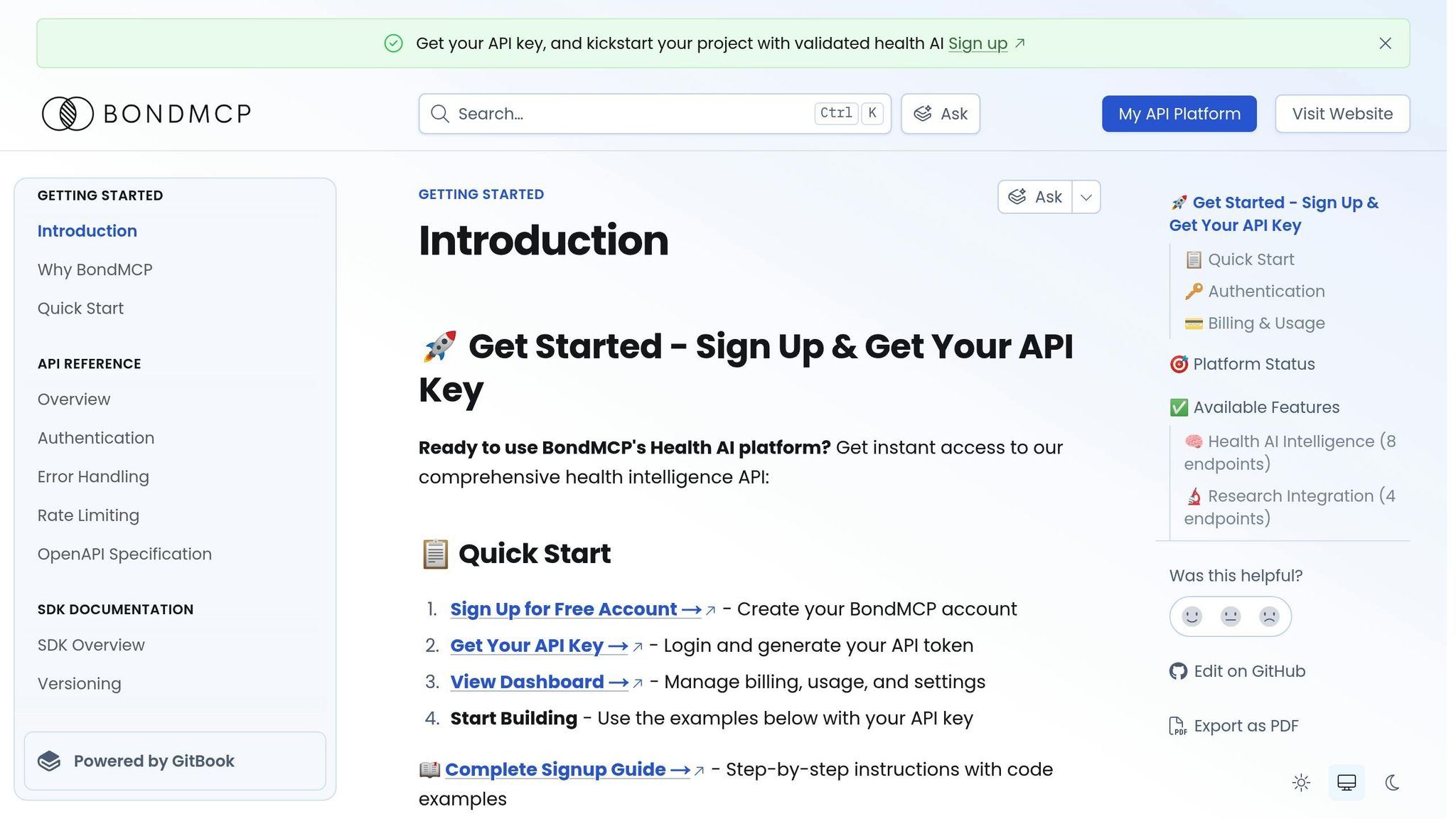
When it comes to optimizing personal health, the real challenge isn’t collecting data - it’s making sense of it all. Think about it: your fitness tracker logs your workouts, your sleep monitor tracks how well you rest, lab tests reveal biomarkers, and supplement apps keep tabs on your daily intake. But these data streams rarely work together, leaving you to piece everything together manually.
That’s where BondMCP steps in. It brings all your health data - sleep, lab results, activity metrics - into one cohesive system. No more juggling multiple apps or dealing with conflicting advice. With BondMCP, your sleep patterns can directly influence your training plan, and your lab results can adjust your supplement regimen. This unified framework sets the stage for AI-driven insights that actually make sense.
Connecting Health Data with BondMCP
BondMCP acts as a bridge, creating seamless connections between different health platforms by standardizing data formats. This allows your sleep quality, workout intensity, and lab results to be cross-referenced, giving you a clearer picture when something feels off.
Here’s how it works: BondMCP uses secure gateways and standardized APIs to ensure your data flows smoothly between authorized apps while staying encrypted and fully under your control. For example, if your sleep tracker shows you’re not getting enough deep sleep, BondMCP can notify your fitness app to suggest lighter workouts or recovery-focused activities instead of intense training.
The system also uses a health-specific ontology - a kind of universal translator for health data. Whether your heart rate stats come from an Apple Watch, Garmin, or Oura Ring, BondMCP ensures this information can be understood and used across your entire health ecosystem. This integration is what makes BondMCP’s AI agents so effective at delivering personalized recommendations.
AI Agents for Smart Health Personalization
BondMCP’s AI agents take health personalization to the next level. They don’t just send you alerts - they provide real-time, actionable interventions tailored to your unique needs. These agents work together, using your complete health profile to make informed decisions about your wellbeing.
Imagine you’re training for a marathon. BondMCP pulls data from your GPS watch, sleep monitor, and lab results. If it notices a consistent drop in your heart rate variability over several days, the AI agents might adjust your training plan, suggest recovery strategies, and even notify your coach or healthcare provider.
This isn’t generic advice like “get more sleep.” Instead, you might receive specific guidance, such as scaling back your next workout and prioritizing rest to aid recovery. Over time, the AI agents learn from your responses, refining their recommendations to better align with your needs.
Tools for Developers and Healthcare Providers
BondMCP doesn’t just benefit individual users - it’s also a game-changer for developers and healthcare providers. With its structured protocol and SDK, developers can quickly build health integrations without spending months on custom solutions. BondMCP’s plug-and-play architecture includes pre-built components for memory management, agent routing, and health data interpretation, letting developers focus on delivering value instead of wrestling with technical hurdles.
For healthcare providers, BondMCP simplifies data aggregation. Clinics can automatically pull information from wearables, lab results, and medication tracking apps without needing separate APIs for each source. This reduces the need for manual data entry and static dashboards.
Providers gain access to real-time health profiles, offering a complete picture of a patient’s wellbeing between visits. For example, if BondMCP detects patterns like declining heart rate variability, poor sleep, and elevated stress markers, it can flag these warning signs for clinical review. This allows healthcare professionals to shift from reactive treatments to proactive care, identifying risks early and delivering personalized interventions at scale. By unifying health data, BondMCP empowers providers to focus on what really matters: improving patient outcomes.
Challenges and Best Practices in Wearable Anomaly Detection
Wearable anomaly detection has the potential to provide tailored health insights, but it comes with both technical and ethical hurdles. Tackling these issues is essential to deliver reliable, actionable data that helps users make informed health decisions.
Common Challenges and Solutions
One of the biggest challenges is false positives. When algorithms misinterpret normal variations as anomalies, users may lose confidence in the system. Everyone's baseline is different - what's unusual for one person might be perfectly normal for someone else.
To address this, systems can use dynamic baseline adjustments. By learning from each user’s patterns, algorithms can refine thresholds over time. For instance, an athlete with a naturally low resting heart rate shouldn’t receive unnecessary alerts if their readings stay within their established range.
Another issue is data quality. Wearable devices often produce inconsistent results due to factors like sensor misalignment, motion artifacts, or external interference. For example, a fitness tracker might mistakenly count car vibrations as steps, or a poorly positioned heart rate monitor might generate erratic readings.
The solution lies in multi-sensor validation and contextual filtering. By cross-checking data from multiple sources and considering the context, systems can reduce errors. For instance, if GPS data shows the user is in a car while the device logs physical activity, the system should ignore those readings rather than flag them as anomalies.
Privacy and security concerns also weigh heavily in wearable health technology. Health data is extremely sensitive, so users need assurance that their information is safe. Using a privacy-by-design approach - which includes end-to-end encryption, user-controlled data sharing, and clear privacy policies - can give users control over who accesses their data and how it’s used.
While solving technical problems is important, ethical considerations are just as critical for maintaining trust.
Ethical AI Implementation Guidelines
Technical fixes alone won’t suffice - ethical practices are key to effective and trustworthy health monitoring. One essential aspect is transparency. Users need to understand why an anomaly was flagged and what factors contributed to it. Black-box algorithms that offer no explanation can cause unnecessary anxiety and erode trust.
With explainable AI frameworks, systems can provide clearer insights. Instead of vague alerts like “unusual heart rate detected,” they should offer context. For example, a notification might explain that a drop in heart rate variability over several days could indicate elevated stress or insufficient recovery.
Bias prevention is another ethical priority. Algorithms trained on limited datasets may not perform equally well across all demographics. For instance, a system trained primarily on data from young, healthy individuals might struggle to identify anomalies in older adults or those with chronic conditions. To avoid this, companies should ensure their training data is diverse and routinely audit algorithms for fairness.
Finally, informed consent goes beyond a simple checkbox agreement. Users should know exactly what data is being collected, how it’s analyzed, and what actions might follow. This is especially important when systems share data with healthcare providers or recommend medical interventions.
Best Practices for Accurate Health Insights
To provide reliable, personalized health insights, wearable systems should follow these best practices:
- Use user feedback for continuous improvement. Alerts that users find helpful - or not - can guide algorithm adjustments over time.
- Combine multiple data sources. Integrating metrics like heart rate, sleep patterns, activity levels, and environmental factors creates a more complete health picture. For example, an elevated resting heart rate might mean different things depending on whether it’s paired with poor sleep or high stress.
- Validate insights clinically. Regularly comparing wearable data with clinical evaluations ensures accuracy. Collaborations with healthcare professionals can confirm whether flagged anomalies align with real health issues.
- Educate users on their data. Instead of just presenting raw numbers or alerts, systems should include explanations of what the metrics mean and when to seek professional advice versus making lifestyle changes.
- Regularly recalibrate systems. As users age, change fitness levels, or develop new health conditions, their baselines may shift. Systems should adapt automatically to stay accurate.
- Integrate with professional healthcare. Wearables are great for monitoring, but they’re not replacements for medical advice. The best systems make it easy for users to share data with their healthcare providers for expert interpretation.
Conclusion
Wearable anomaly detection is reshaping the way we think about personal health. By analyzing raw sensor data and turning it into actionable insights, AI-powered systems can spot subtle patterns - whether it’s an early warning of illness or a chance to improve performance. This isn’t just about tracking; it’s about creating a smarter, more connected approach to health monitoring.
One of the biggest hurdles to making this vision a reality is the problem of fragmentation. Right now, many people rely on a mix of health apps and devices that don’t communicate with each other, leading to lost opportunities and incomplete insights.
That’s where BondMCP steps in. Acting as a unifying intelligence layer, it connects the dots between different health data sources. Imagine your sleep tracker syncing seamlessly with your fitness coach, or your lab results automatically updating your supplement plan. Instead of juggling multiple apps, BondMCP brings everything together, powered by AI agents that work as a team to improve your overall well-being.
At the heart of this system is a strong technical foundation. By using adaptive baselines, cross-validated sensor data, and contextual filters, it minimizes false alarms while maintaining accuracy. Plus, a focus on privacy and transparency ensures users can trust the AI recommendations.
For developers and healthcare professionals, BondMCP offers tools like a structured protocol and SDK to create context-aware, interoperable systems. This plug-and-play framework allows innovators to concentrate on solving real health problems without getting bogged down by technical challenges.
The ultimate goal? To turn health data into clear, personalized, and automated solutions that make a real difference. By combining wearable anomaly detection with unified data integration, we’re moving toward a future where health optimization is smarter, seamless, and more effective.
It’s time to leave fragmented systems behind and embrace a unified approach to health.
FAQs
How does AI distinguish between short-term fluctuations and meaningful health trends in wearable data?
AI leverages advanced machine learning to study data from wearables over time, spotting patterns and distinguishing lasting trends from temporary shifts. By honing in on changes that go beyond everyday fluctuations, it identifies meaningful health insights while ignoring short-term noise.
This approach ensures that health recommendations are grounded in consistent patterns, allowing users to tackle potential health issues or fine-tune their performance with greater accuracy.
How does BondMCP protect my personal health data and ensure its security?
BondMCP places a strong emphasis on protecting your personal health data, adhering to strict industry standards and established best practices. Although specific technical details aren’t provided, it’s clear that BondMCP likely follows rigorous protocols to safeguard your information. This includes compliance with regulations like HIPAA, which is designed to protect electronic health data in the United States.
Through these security measures, BondMCP ensures your data stays private and is used solely to provide meaningful health insights. You can feel confident knowing your information is handled with care to uphold both your trust and privacy.
How does BondMCP improve the accuracy of personalized health recommendations by connecting multiple data sources?
BondMCP takes personalized health recommendations to the next level by bringing together data from multiple sources like wearables, lab results, supplements, fitness routines, and sleep patterns. By combining all this information into a single, unified system, it provides a well-rounded picture of your health, offering insights that are not only precise but also actionable.
Say goodbye to juggling disconnected apps and conflicting advice. BondMCP introduces a shared context layer that ensures all your data works in harmony. This means you get customized recommendations that align with your goals, fit your lifestyle, and adjust based on your real-time health data - making it easier to optimize your health with clarity and efficiency.