
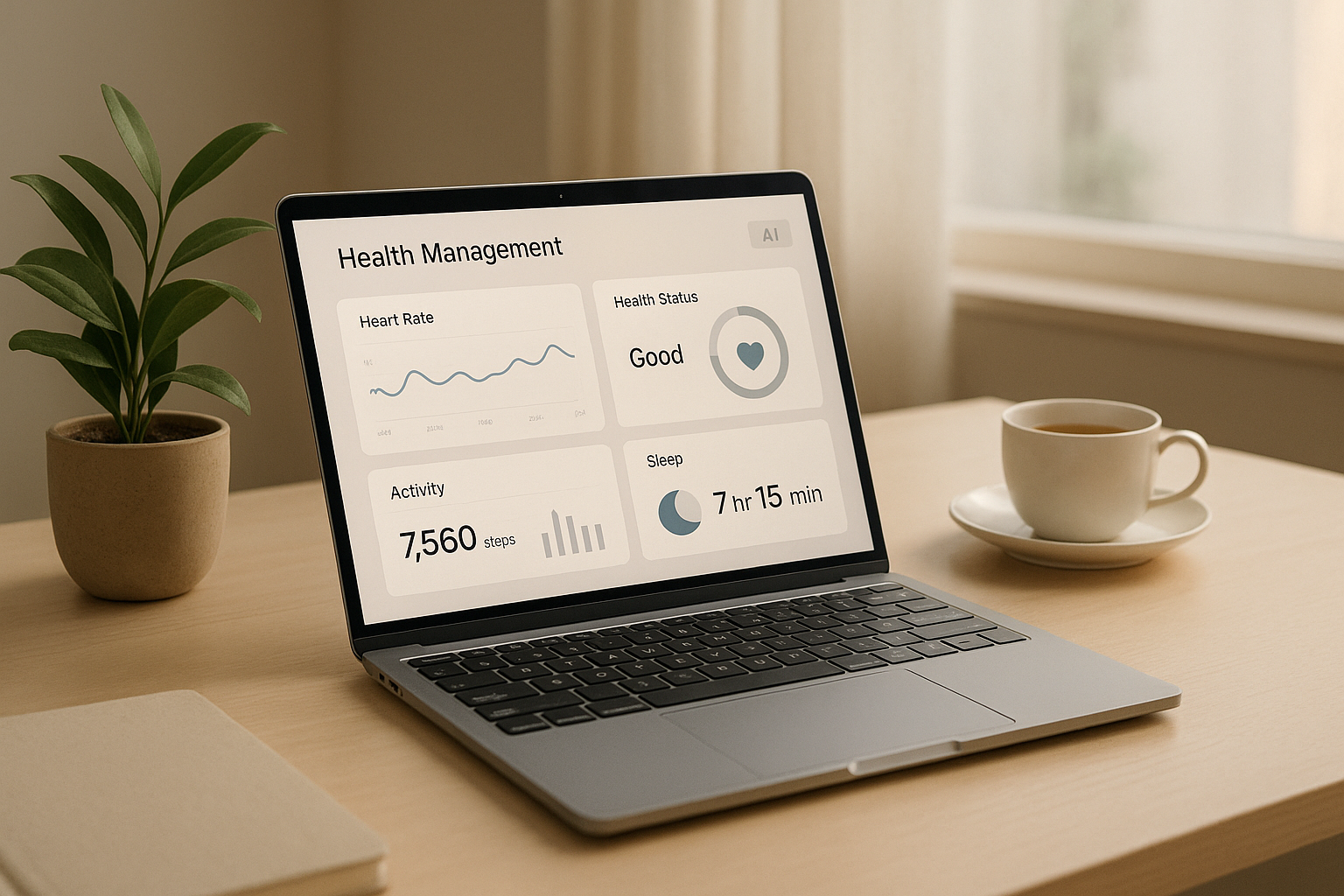
AI is reshaping personal health management, giving developers powerful tools to create apps that track, predict, and improve wellness. Here's a quick overview of the top 8 AI tools covered in this article:
- BondMCP: A protocol for seamless integration of health data from wearables, medical imaging, and clinical guidelines. Supports smaller models for cost efficiency.
- Google Health AI: Offers APIs like MedLM and Cloud Healthcare API for analyzing medical text, managing healthcare data, and building health apps.
- IBM Watson Health (watsonx): Provides virtual agents, patient engagement platforms, and analytics for care tracking.
- Microsoft Azure Health Bot: HIPAA-compliant virtual health assistant with built-in medical knowledge and FHIR integration.
- Apple HealthKit with Core ML: Combines health data collection with on-device machine learning for personalized insights.
- Fitbit Web API with AI Insights: Integrates wearable data with AI-driven health recommendations and real-time analysis.
- Infermedica API: Enables symptom assessment and triage with clinical-grade accuracy.
- HealthifyMe AI SDK: Offers nutrition tracking, AI assistant, and personalized health plans.
Quick Comparison
| Tool | Key Features | Best For | Pricing Highlights |
|---|---|---|---|
| BondMCP | Real-time data integration, cost-efficient models | Developers needing data standardization | Lower costs with smaller models |
| Google Health AI | APIs for data management, NLP, and health apps | Medical text analysis and app development | Tiered pricing, free usage tiers |
| IBM Watson Health | Virtual agents, care tracking analytics | Patient engagement and care coordination | Custom enterprise pricing |
| Microsoft Azure Health Bot | HIPAA-compliant health assistant | Building conversational health tools | Free tier with 3,000 messages |
| Apple HealthKit + Core ML | Health data + on-device AI | Personalized health apps | Free for developers |
| Fitbit Web API | Wearable data + AI insights | Fitness and wellness apps | Subscription-based features |
| Infermedica API | Symptom checker and triage | Clinical-grade symptom assessment | Flexible API pricing |
| HealthifyMe AI SDK | Nutrition tracking, AI assistant | Food and fitness management apps | $3.99/month for premium plans |
These tools simplify the creation of health apps that are secure, scalable, and user-friendly. Dive into the full article to explore their features, pricing, and real-world applications.
Developer Webinar: How to develop your own AI assistant in healthcare
Key Requirements for AI Health Tools
Several technical and operational factors are critical for the success of AI-driven health management platforms.
Compliance and Security Standards
Healthcare AI tools must follow HIPAA regulations to safeguard patient data. Key measures include:
- End-to-end encryption for secure data transmission
- Protocols for anonymizing sensitive information
- Role-based access controls to limit data access
- Automated audit trails to track data usage
- Ongoing system monitoring to identify and address vulnerabilities
Data Exchange and Interoperability
AI health tools need to support standardized data formats like HL7® FHIR® Release 4.0.1. These formats enable interoperability and allow smooth integration with existing healthcare systems, making the deployment of AI solutions more efficient.
Scalability Features
AI systems have the potential to save the U.S. healthcare system $150 billion annually by 2026 [4]. To achieve this, scalable features are essential:
- Cloud integration supports system-wide AI implementation
- Reliable data access improves AI outcomes, such as cutting hospital readmission rates by 20%
- Governance frameworks protect sensitive data, ensuring compliance and trust
- Partnerships with experts help accelerate AI advancements
Budget Considerations
About 60% of healthcare organizations anticipate a 10% increase in their annual budgets due to AI integration [1].
Performance Metrics
Clear performance measures are vital for successful AI adoption. For example, AI-powered voice tools have boosted physician productivity by 46% and delivered a 21X return on investment in large hospital networks [3].
Certification Requirements
AI health tools must comply with the ONC Health IT Certification Program [2]. This includes pre-certification testing, ongoing monitoring after certification, and robust user authentication to maintain compliance.
Addressing these requirements not only ensures that AI health tools meet current standards but also positions them to keep pace with the fast-changing healthcare technology landscape.
1. BondMCP - Health Model Context Protocol
BondMCP is a tool designed to address the challenge of fragmented health data. Acting as a universal adapter for AI applications, it standardizes how these models access and utilize data from various health sources and tools [5].
Core Architecture and Integration
BondMCP operates on a client-server model where MCP Hosts, Clients, and Servers communicate through JSON-RPC 2.0 messages [5]. This setup allows smooth integration with:
- Electronic Health Records (EHR)
- Wearable device data
- Laboratory results
- Clinical guidelines
- Patient monitoring systems
Key Features for Health Development
BondMCP offers dynamic discovery, enabling AI applications to adjust in real time. Here's how its features support healthcare and developers:
| Feature | Healthcare Application | Developer Benefit |
|---|---|---|
| Dynamic Context Access | Real-time patient data integration | Simplifies integration efforts |
| Standardized Protocols | Secure, uniform data exchange | Eases development processes |
| Tool Discovery | Automated resource allocation | Makes deployment more efficient |
| Context Management | Unified access to health data | Speeds up application development |
Practical Use in Healthcare
In real-world scenarios, BondMCP has been used to improve intracranial hemorrhage detection. It achieves this by connecting patient data, medical imaging repositories, and clinical guidelines under a single protocol [5].
Cost Efficiency
BondMCP supports Smaller Language Models (SLMs), offering up to 17x lower operational costs compared to larger models like GPT-4 [6]. This makes it an attractive option for healthcare organizations aiming to balance cost and performance.
Security and Compliance
Security is a cornerstone of BondMCP, with measures such as:
- Strict server access controls
- Thorough input validation
- Authentication and authorization protocols
- Secure file access management
These measures ensure safe and reliable integration of health data.
Integration Tips
For successful implementation, developers should focus on:
- Verifying MCP server authenticity
- Setting detailed permissions for health data access
- Monitoring system performance metrics
- Auditing data handling practices
BondMCP's plug-and-play design and health-specific ontology simplify the management of complex health data, making it a valuable tool for building advanced health solutions.
2. Google Health AI
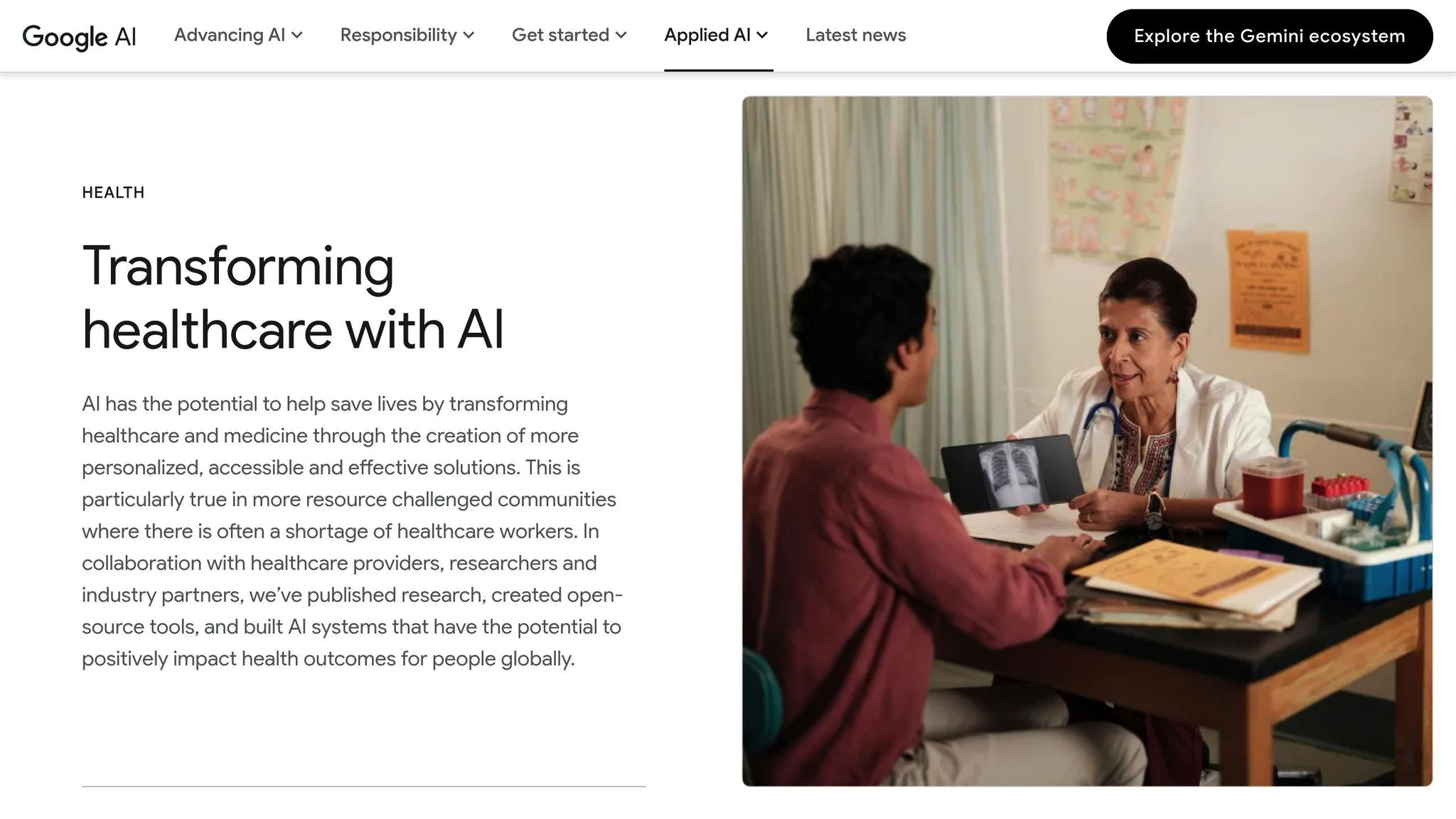
Google Health AI offers a suite of tools and APIs designed to facilitate advanced personal health management. By combining AI technology with healthcare-focused features, it enables developers to create sophisticated health applications.
Key Components
The platform includes several essential tools:
| Component | Function | Developer Advantage |
|---|---|---|
| MedLM | AI models for the medical field | Improved processing and understanding of medical text |
| Cloud Healthcare API | Manages healthcare data | Supports standard formats like FHIR, HL7v2, and DICOM |
| Healthcare Natural Language API | Analyzes medical text | Automatically extracts key medical concepts |
| Open Health Stack | Builds mobile health apps | Optimized for areas with limited connectivity |
Pricing Structure
Google Health AI uses a tiered pricing model, offering free usage tiers to help developers manage costs:
- Structured Storage: $0.19–$0.39 per GB/month (first GB free)
- Standard API Requests: $0.39 per 100,000 requests (first 25,000 free)
- Complex API Requests: $0.69 per 100,000 requests (first 25,000 free)
- Natural Language Processing: $0.03–$0.10 per 1,000 characters (first 2,500 text records free) [9]
This pricing approach provides affordable scalability for projects of various sizes.
AI Performance in Healthcare
A specialized version of Google's Gemini model achieved a 91.1% accuracy rate on U.S. Medical Licensing Exam–style questions [8]. This level of performance highlights its potential for practical use in healthcare.
Applications in Practice
Dr. Karen DeSalvo, Google's chief health officer, highlights the platform's impact:
"Our goal is to make AI helpful so people can lead healthier lives. We do this by building health into the products and services that people already use every day and by enabling our partners to succeed and our communities to thrive." [8]
Notable Features
- Data Compatibility: Supports healthcare data standards for seamless integration
- AI-Driven Insights: Pre-trained models for analyzing medical text and images
- Scalable Cloud Infrastructure: Designed to grow alongside application needs
Real-World Use
The platform’s tools have already demonstrated their effectiveness. For instance, IntelliSOFT used Open Health Stack to create Mama's Hub, a maternal health app in Kenya [7].
Looking Ahead
The platform is also exploring personalized health coaching. Florence Thng, Fitbit's director of product management, shares her vision:
"Imagine a future where you have access to an on-demand personal coach that can provide you with daily guidance. For example, it can analyze variation in your sleep patterns and sleep quality and make recommendations on how you might change the intensity or the time of your workout based on these insights." [8]
This focus on AI-driven, personalized health solutions marks the next step in advancing healthcare technology.
3. IBM Watson Health
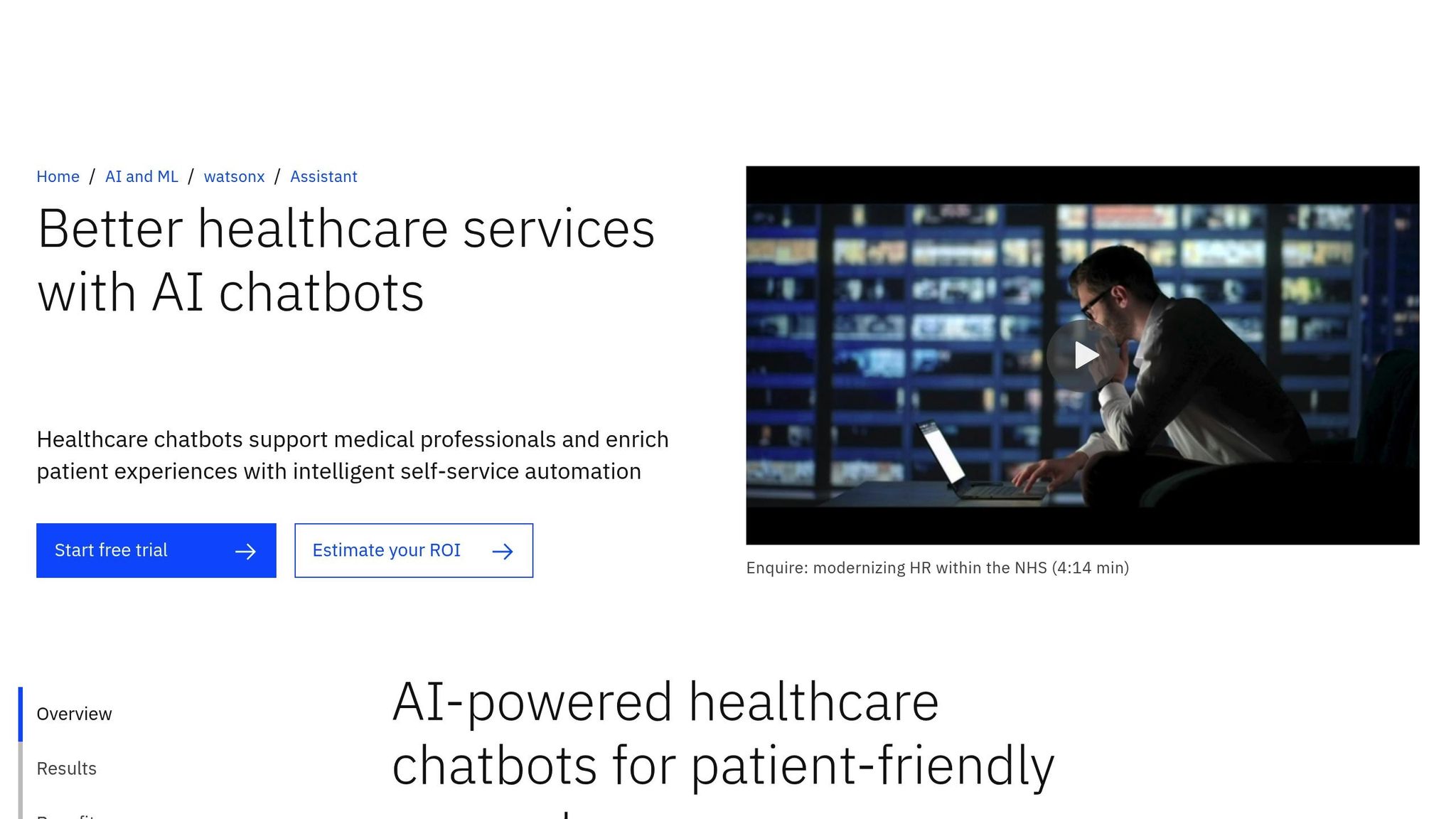
IBM Watson Health, now rebranded as watsonx, delivers advanced AI tools designed to improve personal health management. This platform merges cutting-edge AI technology with healthcare-focused features, making it easier to develop intelligent health applications.
Core Components
| Component | Purpose | Developer Benefits |
|---|---|---|
| watsonx Assistant | AI-powered virtual agents | No-code conversation builder with healthcare templates |
| My Lifescape | Patient engagement platform | White-label solution for iOS, Android, and web |
| Virtual Health Record (VHR) | Unified patient information dashboard | Simplified data management |
| Care Coordinator (CC) | Analytics engine for care tracking | Tracks care quality and outcomes |
Integration Capabilities
watsonx supports multi-channel integration, ensuring a seamless user experience across:
- Web and mobile apps
- SMS and email
- Messaging platforms like WhatsApp and Facebook Messenger
- Voice-enabled systems
- Contact center platforms
These integrations have been shown to improve healthcare delivery and efficiency.
Performance Metrics
Data shows that AI-powered tools can reduce average handling time by 20%. Additionally, 82% of healthcare consumers use pricing information when making decisions, and 60% request out-of-pocket cost details before treatment [10].
Real-World Applications
The Sugar.IQ app uses watsonx to help users better manage glucose levels. It adds an average of 36 minutes per day in the target glucose range, which translates to 9 additional days per year of optimal glucose control. Kyu Rhee, MD, MPP, IBM Watson Health’s vice president and chief health officer, highlighted the importance of this technology:
"Data-driven technologies like AI, machine learning, and analytics are changing the way people manage their health today, and the launch of the Sugar.IQ app with Watson is an indication of where the future of disease management is headed." [11]
Enterprise Implementation Success
Healthcare giants like Humana, Cardinal Health, and GSK have successfully adopted watsonx solutions, handling thousands of interactions daily and scaling effortlessly across operations [10]. These examples underline the platform’s ability to support large-scale health management needs.
Development Features
Developers can take advantage of:
- Pre-built healthcare conversation templates
- Intelligent routing with automated handoff
- Easy integration with existing systems
- White-label options for customization
Healthcare Impact
watsonx tackles pressing issues like medication adherence. For instance, studies reveal that 31% of type 2 diabetes patients stop taking their medication within three months, a number that rises to 44% by six months and 58% by one year [11]. These insights enable developers to create solutions that address adherence challenges effectively.
4. Microsoft Azure Health Bot
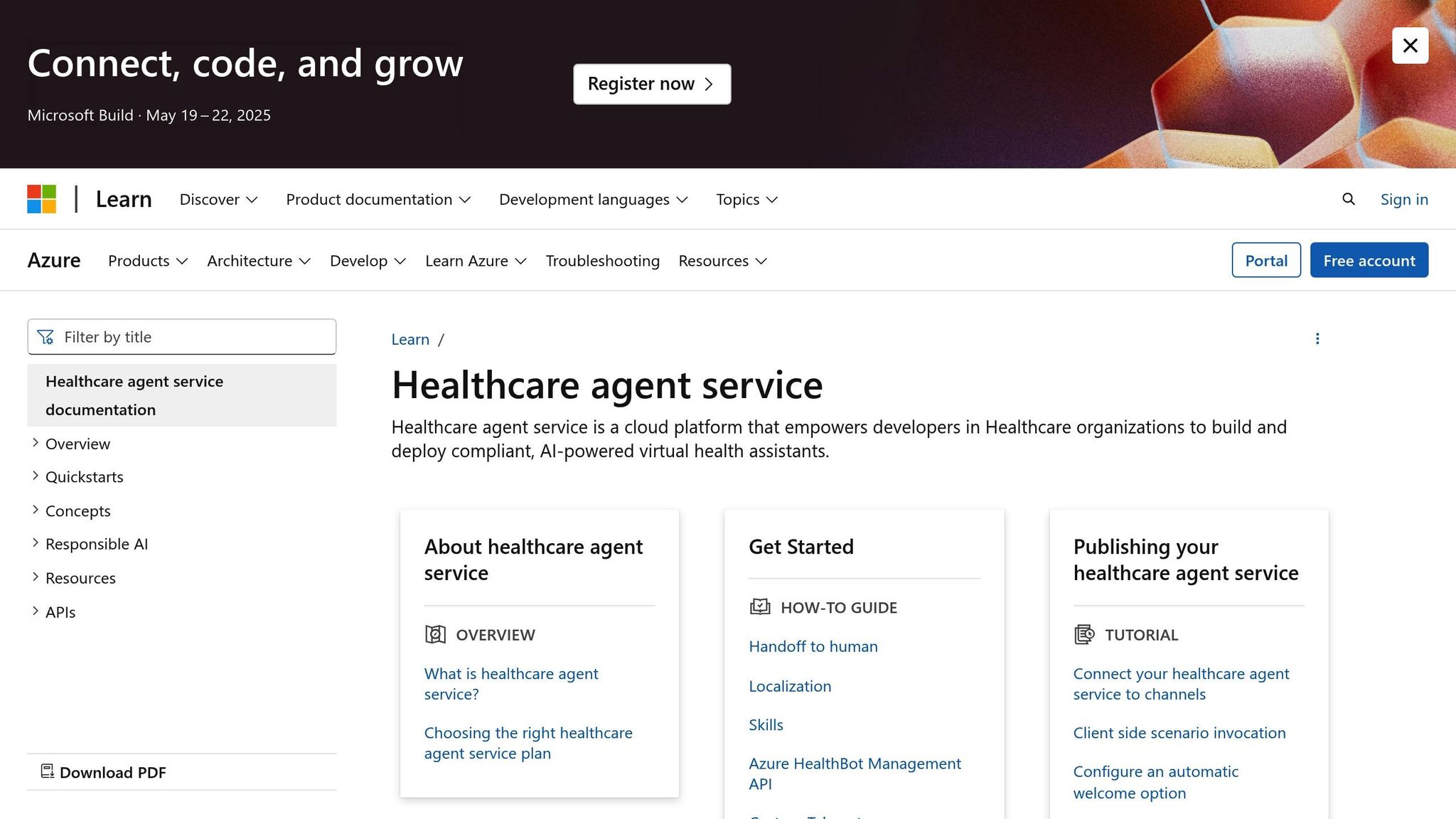
Microsoft Azure Health Bot offers a powerful tool for creating virtual healthcare assistants. This managed service combines natural language processing with a medical database to understand clinical terms, making it a key player in AI-driven healthcare solutions. Its customizable interaction models align with the growing demand for personalized healthcare experiences.
Core Capabilities
| Feature | Description | Developer Benefits |
|---|---|---|
| Medical Database | Built-in understanding of clinical terminology | Enables accurate health-related conversations |
| Compliance | HIPAA, HITRUST, and GDPR certified | Meets strict healthcare industry requirements |
| FHIR Integration | Supports EMR data connectivity via FHIR | Allows personalized patient interactions |
| Deployment | Multiple deployment channel options | Offers flexibility in implementation |
| Visual Tools | Scenario builder and logic validation tools | Streamlines development workflows |
Enterprise Use Cases
Major organizations like Premera Blue Cross, Quest Diagnostics, Aurora Health Care, and the CDC leverage Azure Health Bot for tasks such as claims processing, lab inquiries, symptom triage, and COVID-19 assessments. These use cases highlight its ability to simplify complex healthcare operations.
Developer Features
Azure Health Bot provides developers with:
- Pre-configured health-specific settings
- Integrated triage protocols
- Comprehensive medical knowledge base
- Visual tools for scenario creation
- Support for custom scripts
- Compatibility with third-party APIs
Security and Infrastructure
Microsoft emphasizes security and reliability:
"Azure Health Bot empowers developers in healthcare organizations to build and deploy AI-powered, compliant, conversational healthcare experiences at scale." [12]
The platform is backed by extensive cybersecurity investments, a team of 3,500 experts, and a 99.9% uptime SLA. It operates in key regions such as East US and West EU [12].
Real-World Applications
Azure Health Bot is already making an impact. Roche Pharmaceuticals uses it to assist with navigating medical documentation, while Ramsay Santé integrates generative AI to improve healthcare content delivery. These examples show how the platform is transforming personal health management.
Dr. Patrick Stafler and Dr. Shai Yitzhaki highlight its potential:
"One of the ultimate goals is to empower physicians in their decision-making to not only reduce workload and accelerate processes, but also to enhance compliance with established diagnostic and treatment protocols, thereby elevating patient safety." [13]
Getting Started
The free tier includes:
- 3,000 monthly messages
- Built-in triage protocols
- Access to a medical knowledge base
- Tools for scenario creation
This entry-level offering provides a solid foundation for exploring how AI can enhance and personalize healthcare management.
5. Apple HealthKit with Core ML
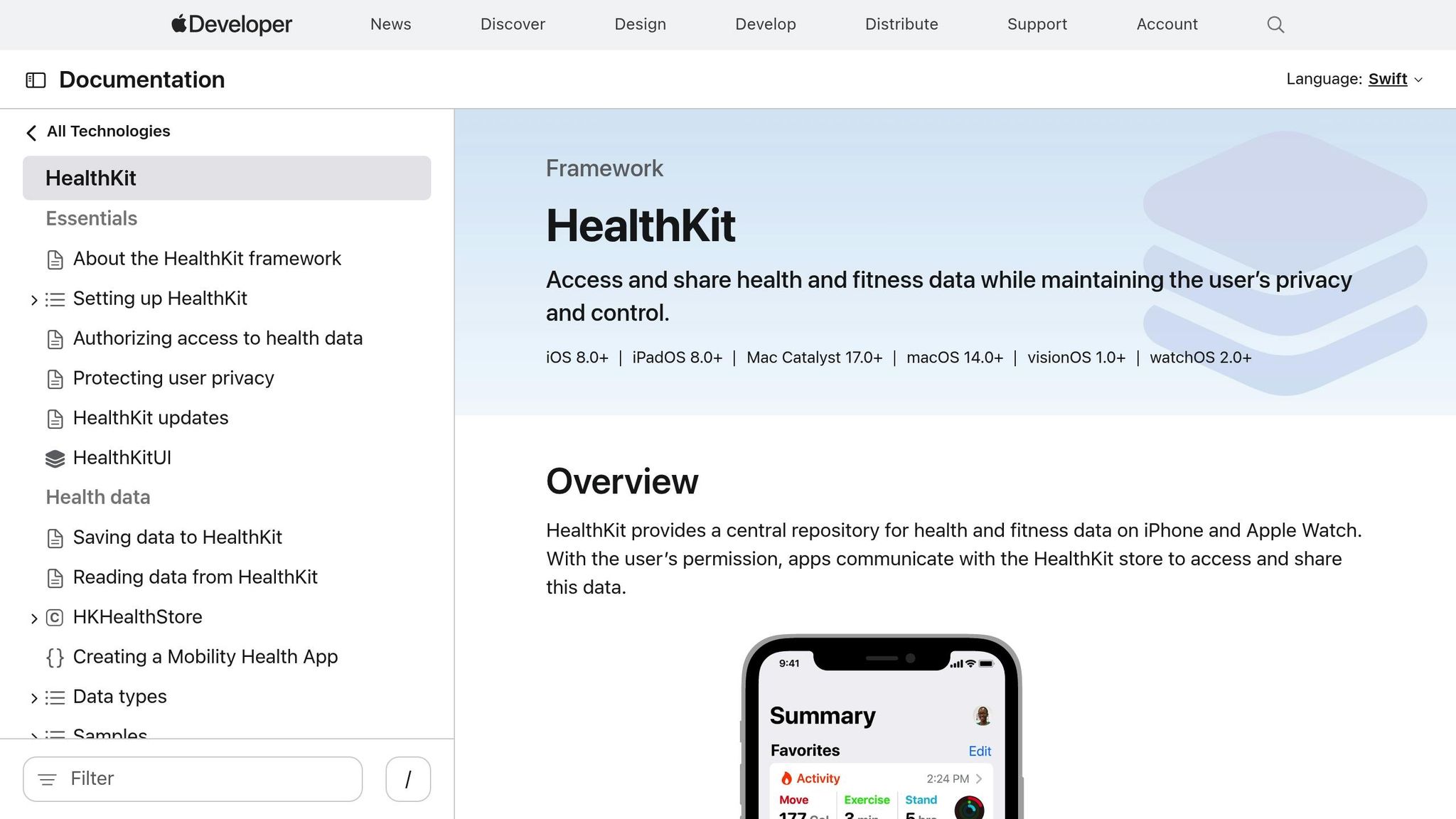
Apple HealthKit combined with Core ML offers developers a powerful toolkit for building health-focused applications. HealthKit acts as a hub for collecting health data, while Core ML enables the use of machine learning models to provide tailored health insights.
Core Features and Integration
| Feature Category | HealthKit Capabilities | Core ML Integration |
|---|---|---|
| Data Access | Health metrics, vitals, nutrition | Machine learning model processing |
| APIs | Mental health tracking, emotion monitoring | Vision, Natural Language, Speech analysis |
| Security | Data encryption, privacy controls | On-device processing |
| Performance | Real-time data collection | Fast model execution |
| Integration | Health app synchronization | Pre-trained model support |
Developer Benefits
Developers gain several advantages, including:
- Seamless integration of pre-trained ML models
- Quick on-device processing
- Compatibility with various ML frameworks
- Simplified health prediction capabilities
Real-World Applications
Apps like LifePal highlight how these technologies can work together. By leveraging HealthKit for data collection and Core ML for processing, LifePal delivers personalized recommendations, such as:
- Customized meal plans
- Calculations for ideal water intake
- Bedtime suggestions tailored to wake-up routines
- Activity level tracking [16]
Similarly, the BrainFit app from the Women's Brain Health Initiative uses these tools to monitor and analyze metrics like steps, sleep quality, and physical activity [15].
Technical Implementation
To get started, developers must secure explicit user consent through HealthKit's APIs. Machine learning models - built with tools like TensorFlow, PyTorch, or Create ML - should be optimized to ensure they run efficiently on devices without draining resources.
"Core ML delivers blazingly fast performance on Apple devices with easy integration of machine learning and AI models into your apps." - Apple Developer [14]
Advanced Features
Apple HealthKit also includes specialized features such as:
- Tracking emotional and mental health
- Identifying risk factors for depression and anxiety
- Storing vaccination records (available from iOS 15.1 onward)
- Managing digital health cards
Development Best Practices
To ensure smooth integration, developers should:
- Request access to only the necessary health data
- Optimize machine learning models for efficient processing
- Prioritize strong data privacy measures
- Use the latest Swift features to enhance app performance
Following these practices will help developers create cutting-edge health management apps that are both efficient and secure.
sbb-itb-f5765c6
6. Fitbit Web API with AI Insights
The Fitbit Web API takes health tracking to another level by combining data from Fitbit devices with AI-driven insights. This integration allows developers to build personalized health management tools that leverage advanced analytics.
Data Access and Categories
The API provides access to a wide range of health metrics, covering the following categories:
| Data Category | Available Metrics |
|---|---|
| Physical Activity | Steps, distance, calories, Active Zone Minutes |
| Biometrics | Heart rate, ECG, SpO2, Breathing Rate |
| Sleep | Duration, sleep stages, sleep quality |
| Body Metrics | Weight, BMI, Temperature |
| Nutrition | Food logs, water intake |
These metrics serve as the building blocks for creating detailed AI-powered analyses.
AI-Powered Features
Fitbit’s AI capabilities, built on Google's Gemini models, bring several advanced features to the table:
- Conversational health data interpretation: Users can interact with their health data more intuitively.
- Automated health trend visualizations: Key patterns and trends are presented in an easy-to-understand format.
- Personalized coaching: Tailored recommendations based on individual health data.
- Real-time biometric analysis: Instant feedback on metrics like heart rate and breathing rate.
Developer Integration Benefits
-
Webhook Integration
Developers can receive real-time updates on user health data through webhook notifications, ensuring applications stay up-to-date. -
Advanced Data Analysis
By analyzing multiple parameters - like the relationship between exercise intensity and sleep quality - developers can uncover actionable insights. -
Security and Compliance
The API supports secure access protocols, including the Authorization Code Grant Flow with PKCE, ensuring compliance with data privacy standards.
These features allow developers to create applications that deliver meaningful, actionable health insights.
"We've always talked about being able to help people connect different pieces of their health data together and get insights from it, so I think that's the first step."
- James Park, vice president, general manager and cofounder of Fitbit [18]
Implementation Guidelines
To get started, developers should:
- Use the Authorization Code Grant Flow with PKCE for secure user authentication.
- Subscribe to webhook notifications for real-time data updates.
- Take advantage of enhanced data types for more in-depth analysis.
- Explore premium features to unlock advanced AI functionalities.
Experimental Features
Fitbit Labs offers early access to experimental AI tools, including:
- Conversational Q&A: Users can ask questions about their health data and get clear, AI-driven answers.
- AI-Generated Charts: Automatically created visuals that simplify complex data.
"So I think what we're going to see is an era of really personalized fitness, wellness and health coaching that's powered by generative AI."
- James Park [18]
These tools can help explain intricate relationships, such as how pace, incline, and sleep quality affect workout performance [17].
7. Infermedica API
Infermedica API powers clinical symptom assessment and triage for health management apps. Since 2012, it has allowed developers to create tools with a high level of clinical accuracy. By combining standard integration options with precision-driven symptom analysis, it enhances healthcare solutions.
Core Features
Infermedica API provides two integration options:
| Feature | Platform API | Engine API |
|---|---|---|
| Implementation | Pre-designed medical interviews | Custom symptom checkers |
| State Management | Stateful | Stateless |
| Integration Speed | Fast deployment | Flexible development |
| Data Storage | Handles personal data | No personal data storage |
| Use Case | Standard healthcare workflows | Custom health solutions |
Technical Highlights
The API delivers these capabilities:
- 95% diagnostic accuracy
- A knowledge base with over 3,000 medical concepts
- 140,000+ hours of validation by clinicians
- Pediatric-specific versions for tailored care
Key Developer Tools
The API equips developers with tools to build advanced health management applications:
-
Symptom Analysis
Uses advanced algorithms to evaluate symptoms and provide clinical suggestions. -
Triage Automation
Offers 5-level triage recommendations to guide patients to the right care. -
Clinical Documentation
Automates pre-visit data collection and symptom summaries, simplifying physician workflows.
"Thanks to the simplicity of the integration process, clear documentation, and readily available support from Infermedica, we were able to integrate the Infermedica API into our existing Directional Care flow in 30 days." - Marco Morales, Former Senior Product Owner, Directional Care, Global Excel [19]
Case Study: Diagnostikare
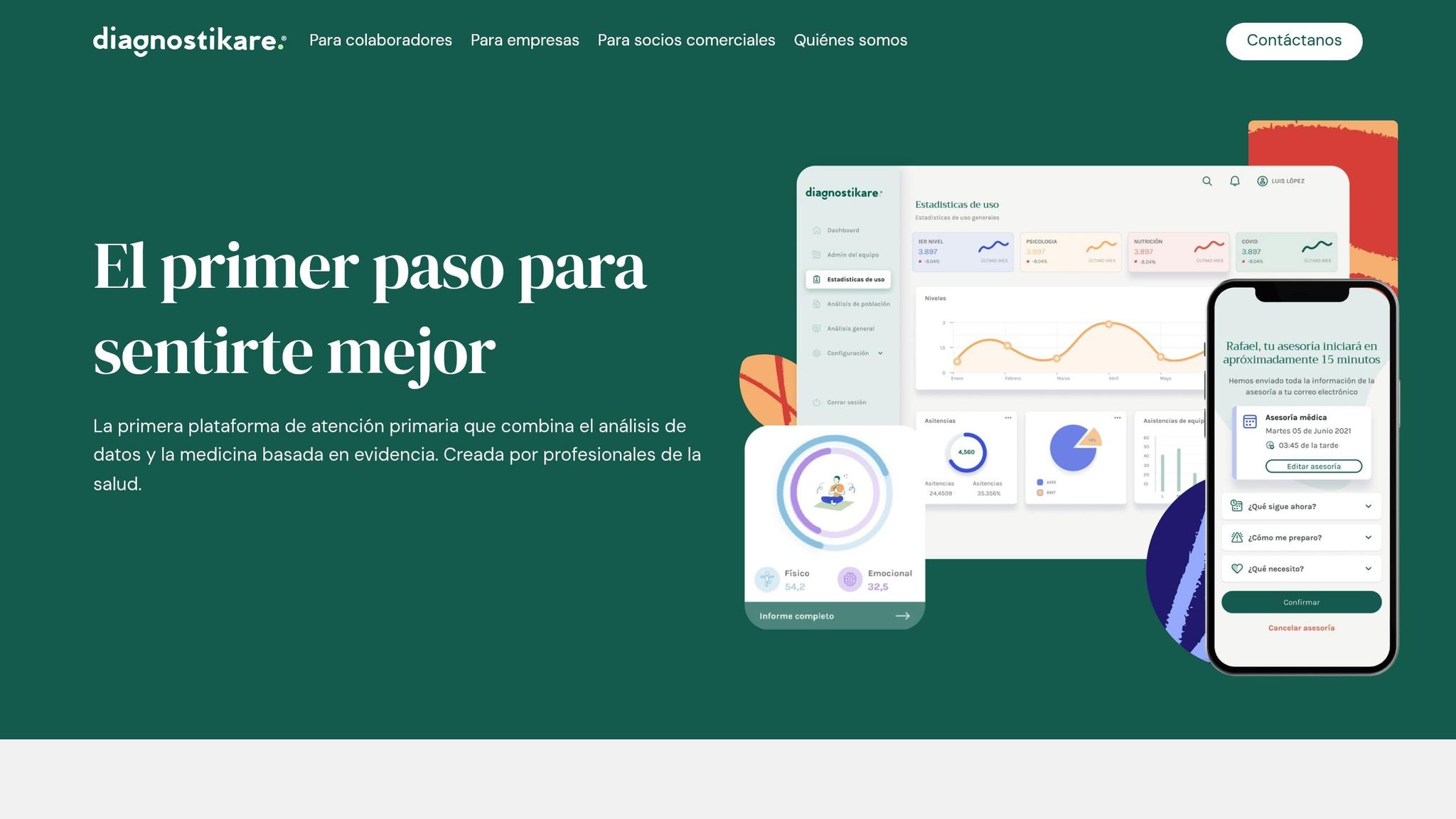
Diagnostikare's use of Infermedica API led to measurable improvements:
- 85% condition assessment accuracy
- A 37.5% decrease in average visit time, from 20 minutes to 12.5 minutes
Implementation Steps
To set up the Infermedica API, follow these steps:
- Register for developer credentials (App-Id and App-Key).
- Decide between the Platform API or Engine API based on your project needs.
- Implement the
/diagnosisendpoint for symptom evaluation. - Configure the
/conditionsendpoint for detailed condition insights. - Handle various question formats, including single, group_single, and group_multiple.
"Taking into account the short time of this project, Infermedica API helped us to set up a brand new and innovative medical service rapidly. The flexibility of the services and product were the key that enabled us to create a user-friendly solution." - Rafael López, Co-Founder & Managing Director, Diagnostikare [19]
The API includes comprehensive documentation, such as Swagger and Postman collections, to ensure smooth integration while maintaining high security and privacy standards. Python client libraries are also available to simplify the process. This integration highlights how targeted AI tools can improve personal health management.
8. HealthifyMe AI SDK
The HealthifyMe AI SDK combines advanced nutrition tracking with AI-driven health insights, supporting over 40 million users in managing their personal health.
Key AI Features
The SDK includes three main AI-powered components:
| Feature | Capabilities | Integration Options |
|---|---|---|
| Nutrition AI | Food recognition, calorie tracking, meal analysis | REST API, Native SDK |
| Ria AI Assistant | Real-time health advice, meal suggestions, workout planning | Chat API, Voice API |
| Health Overview | Comprehensive health tracking, progress monitoring, actionable insights | Data SDK, Webhook API |
Technical Highlights
The SDK processes health data with features like:
-
Smart Food Recognition
Uses photo detection to analyze nutrition details from a database of over 10,000 local foods. -
Personalized Health Logic
Syncs with platforms like Apple Health to provide tailored recommendations for conditions such as diabetes, PCOS, and hypertension.
Achievements and User Impact
- In 2018, Ria handled 51% of all platform messages.
- Users have collectively lost 20 million pounds [21].
- Over 66 billion calories logged through workouts [21].
- More than 1 billion food items analyzed by the AI system [21].
Development Steps
-
Authentication Setup
Secure API key configuration and user authentication protocols. -
Data Integration
Implement endpoints for food logging and nutrition analysis. -
AI Assistant Integration
Enable Ria AI chatbot for real-time health advice. -
Health Sync
Configure synchronization with third-party health platforms.
These steps lay the groundwork for integrating the SDK's advanced features.
"When you understand your food & lifestyle, you can change your habits for good. Our AI makes it easy for you to track, measure & get healthy." - Healthify [20]
Advanced Features
-
Auto Snap Technology
Automatically identifies and analyzes food photos from device galleries. -
Smart Plans Engine
Provides personalized diet recommendations to help users achieve health goals ($3.99/month). -
Voice Integration
A future feature allowing users to interact with Ria AI through voice-enabled virtual assistants.
Market Performance
- Over 20 million downloads worldwide
- Database of more than 10,000 localized food items
- Real-time nutritional data processing
- Comprehensive tracking across multiple health parameters
With its scalable architecture and proven reliability, the HealthifyMe AI SDK is a strong choice for developers creating health management apps that require advanced AI and detailed nutrition tracking.
Feature Comparison of AI Health Tools
This section outlines how AI health tools differ across their main features, building on the technical and operational factors discussed earlier.
Core Integration Capabilities
AI health tools enable efficient data flow across systems using standardized REST APIs. These APIs support both real-time and batch data updates, ensuring systems within healthcare networks can communicate effectively.
Performance Metrics
AI tools have shown measurable workflow improvements in real-world use. For example, one implementation reduced documentation time by 41%, saving about 66 minutes per provider daily. For a 100-provider hospital, this translates to potential annual savings of $6 million [22]. While performance is a key benefit, data security remains a critical focus.
Data Security Features
To meet regulatory standards, these platforms incorporate multi-factor authentication, data encryption, role-based access controls, and audit trails. These measures are essential for maintaining data integrity and privacy.
Cost Structure Analysis
Pricing varies widely, from free tiers to subscription-based models and custom pricing options. Alongside cost considerations, ease of use plays a major role in determining adoption rates.
Implementation Complexity
Implementation complexity depends on the existing system architecture and the level of customization required. Platforms with built-in integrations are generally easier to deploy compared to those that require extensive customization.
Customization Options
Developers can modify these tools to fit specific needs. Customization options include tailoring workflow integrations, extending data models, and adjusting user interfaces to align with clinical and operational goals.
Market Growth Impact
The global AI healthcare market is expanding rapidly. Valued at $20.9 billion in 2024, it is expected to grow to $148.4 billion by 2029, with an annual growth rate of 48.1% [24].
Implementation Guide and Tips
Setting up AI tools for health management involves careful planning, strong security measures, and precise technical execution. Here's a guide tailored for U.S. developers to ensure successful deployment while adhering to HIPAA regulations.
Security and Compliance Setup
Start by implementing strong security protocols like AES-256 encryption for data at rest and TLS for data in transit. Use a dedicated PHI (Protected Health Information) database to keep sensitive data separate from other application data.
For HIPAA compliance, focus on these areas:
- User Authentication Framework: Use multi-factor authentication (MFA), role-based access controls, automatic session timeouts, and enforce strict password rules.
- Data Protection Infrastructure: Encrypt PHI databases, secure API endpoints with TLS, regularly back up data, and set clear data retention policies.
- Monitoring and Audit Systems: Track user access, data changes, security alerts, and compliance events continuously.
Testing and Validation
Once security measures are in place, validate the system's accuracy and reliability. Modern AI validation tools allow for detailed accuracy checks across various patient groups.
"It will pull in downstream outcomes and interventions. You can analyze the data across different patient cohorts. When you're thinking about AI equity, you could filter to certain protected classes, like age, sex, race or ethnicity, to ensure that your AI model is working appropriately across all the different patient cohorts. Looking at these downstream workflows is going to be critical to ensure fairness and equity." [26]
Set clear benchmarks for data accuracy, system performance, and security. Use open-source tools and conduct regular risk assessments to ensure ongoing compliance.
Integration Best Practices
After validation, align integration processes with compliance standards. The HIPAA Journal highlights:
"It is the responsibility of each Covered Entity and Business Associate to conduct due diligence on any AI technologies...to make sure that they are compliant with the HIPAA Rules, especially with respect to disclosures of PHI." [25]
Key integration steps include:
- Minimizing data collection to only what's necessary
- Securing API endpoints
- Maintaining detailed audit logs
- Implementing automated monitoring systems
Maintenance and Updates
Post-integration, maintain system efficiency through regular audits and updates. Periodically review security measures to ensure AI models stay up-to-date with the latest training data and protection protocols.
The healthcare AI market is projected to reach $148.4 billion by 2029 [25], emphasizing the importance of building secure, scalable systems from the outset. By prioritizing these steps, developers can ensure compliance and reliability while meeting industry demands.
Conclusion
AI tools are transforming personal health management, providing developers with opportunities to create advanced solutions. With the healthcare AI market expected to hit $148.4 billion by 2029 [25], selecting the right tools is crucial.
To succeed, integration must align with existing systems, ensure compliance with regulations like AES-256 encryption and HIPAA, and focus on user-friendly features. Notably, about 44% of people are open to using AI in healthcare [25].
For developers, the Model Context Protocol (MCP) is a game-changer. MCP allows AI systems to communicate efficiently with external applications while maintaining strong security and scalability. By using MCP, developers can build health management platforms that not only improve efficiency but also cut down on administrative costs - an area that consumes nearly 25% of U.S. healthcare spending [23].
This technology sets the stage for future advancements in health management. These tools provide better efficiency, strong security, and an improved user experience.
The future of personal health management lies in creating intelligent, integrated systems that balance technological progress with user privacy, ensuring real improvements in health outcomes.
FAQs
How do AI tools protect personal health data and comply with regulations like HIPAA?
AI tools safeguard personal health data and ensure compliance with regulations like HIPAA through several key practices. They use data de-identification techniques to remove or mask identifiable information, minimizing the risk of exposing sensitive data. Additionally, robust encryption methods and secure environments, such as FedRAMP-certified cloud platforms, help protect data from unauthorized access.
To further enhance security, AI tools implement role-based access controls, ensuring only authorized personnel can view protected health information (PHI). They also follow the principle of data minimization, using only the necessary amount of PHI for specific tasks. Regular system monitoring and updated policies ensure compliance and maintain trust in AI-driven health solutions.
What should developers keep in mind when integrating AI tools into healthcare systems?
When incorporating AI tools into healthcare systems, developers should prioritize a few key considerations:
- Data security and privacy: Protecting sensitive patient information is critical. Ensure compliance with regulations like HIPAA, use encryption, and implement strict access controls.
- Data quality: AI systems require accurate, high-quality data to perform well. Focus on collecting, storing, and maintaining reliable datasets.
- Interoperability: AI tools must integrate seamlessly with existing systems. Opt for platforms that support standardized data formats and protocols.
Additionally, addressing ethical concerns, managing costs, and ensuring staff training can help smooth the adoption process. Thoughtful planning and collaboration are essential for successful integration.
How do AI tools enhance personal health management and help lower healthcare costs?
AI tools play a crucial role in improving personal health management by enabling early disease detection, creating personalized treatment plans, and supporting remote patient monitoring. By analyzing large datasets, AI helps identify health risks early, leading to timely interventions and better patient outcomes. Personalized medicine powered by AI ensures treatments are tailored to individual needs, improving effectiveness and reducing side effects.
Additionally, AI-driven tools can lower healthcare costs by optimizing resource allocation and preventing diseases before they require expensive treatments. For example, AI can predict which patients are at higher risk for certain conditions, allowing for proactive care. These tools also streamline administrative tasks and reduce errors, making healthcare delivery more efficient and cost-effective.