
Wearable health devices like fitness trackers and smartwatches collect sensitive data, including heart rate, sleep patterns, and even location. While they offer valuable insights into personal health, they also introduce serious privacy and security risks. From data interception on public Wi-Fi to weak device pairing and malware threats, these vulnerabilities can lead to identity theft, tracking, and data misuse.
To protect your data:
- Enable encryption on devices and apps.
- Use strong passwords and multi-factor authentication.
- Keep devices and apps updated with the latest firmware.
- Avoid syncing over public Wi-Fi.
- Regularly check and limit app permissions.
Organizations must implement stricter security protocols, centralized monitoring, and adopt privacy-first designs to minimize risks. Platforms like BondMCP help secure wearable data by integrating and encrypting health information while maintaining compliance with regulatory standards. However, gaps in U.S. regulations, like HIPAA’s limited scope, leave many wearable users exposed.
With the wearable market projected to grow significantly, ensuring data security requires a joint effort from users, companies, and policymakers.
What Are The Data Privacy Risks Of Wearable Health Tech? - Talking Tech Trends
Main Threats to Wearable Health Data Security
Understanding the risks to your wearable health data is the first step in protecting it. Unlike traditional healthcare systems, wearable devices come with unique vulnerabilities that existing security measures often fail to address. Below, we’ll dive into some of the biggest threats and how gaps in regulations leave users exposed.
Common Threats and Vulnerabilities
One of the most concerning risks is data interception. If your fitness tracker or smartwatch sends information over public Wi-Fi without encryption, hackers can easily intercept sensitive details like your heart rate, location, or other biometric data. This lack of protection allows attackers to build detailed profiles for identity theft or even track your movements without permission.
Another issue is physical device theft. Wearables are small and portable, making them easy targets for theft in public spaces. If the stolen device doesn’t have strong authentication - like a PIN or biometric lock - hackers can access locally stored data or even accounts synced to the device. This could expose private information such as your sleep patterns or location history.
Malware infections are also a serious concern. Wearables often connect to smartphones, and malicious apps that request excessive permissions can give hackers access to your health data. Worse, they can take control of your device or deploy ransomware. Once malware infects a smartphone, it can spread to connected wearables, putting your entire data ecosystem at risk.
Then there’s insecure device pairing, which occurs when Bluetooth connections lack proper safeguards. Many users stick with default passcodes or leave their devices in discoverable mode, making it easier for attackers to connect unauthorized devices. Security experts have shown how easily fitness tracker data can be accessed using basic hacking tools, proving that weak pairing protocols are a real problem.
| Threat Type | Risk Level | Primary Impact | Common Attack Method |
|---|---|---|---|
| Data Interception | High | Identity theft, tracking | Exploiting public Wi-Fi, unencrypted data |
| Physical Device Theft | Medium | Account compromise, data exposure | Opportunistic theft, weak locks |
| Malware Infection | High | Data theft, device control | Malicious apps, infected smartphones |
| Insecure Pairing | Medium | Unauthorized access, data tampering | Default passwords, unsecured Bluetooth |
These vulnerabilities are only made worse by gaps in regulations designed to protect wearable health data.
Regulatory Gaps in the United States
Beyond technical flaws, the lack of robust regulations leaves wearable health data vulnerable. The Health Insurance Portability and Accountability Act (HIPAA) is the cornerstone of healthcare data protection in the U.S., but it doesn’t generally apply to wearables unless the data is shared with a doctor, hospital, or other covered entity. This means most fitness trackers and health monitoring devices fall outside HIPAA’s scope.
California’s Consumer Privacy Act (CCPA) offers some protections for residents, but it doesn’t include stringent security standards for health data. It also fails to address the constant data collection and third-party sharing that are common with wearables. This patchwork of laws leaves many users unprotected. For example, 76% of wearable device companies have been rated as high risk for transparency, 59% for inadequate breach notification practices, and 41% for failing to implement privacy-by-default settings [2]. As a result, users often share sensitive data without realizing it because privacy isn’t prioritized in default settings.
Real Examples of Security Breaches
Unfortunately, these risks aren’t just theoretical. Security researchers have repeatedly shown how easy it is to exploit vulnerabilities in wearable devices. In controlled experiments, they’ve intercepted unencrypted data transmissions from popular fitness trackers, capturing health metrics and location details - all without the user’s knowledge.
Bluetooth vulnerabilities are another weak point. In some cases, attackers have exploited weak pairing protocols to gain unauthorized access to devices, extracting sensitive information like GPS locations and biometric data. Malware infections on smartphones have also been documented, with hackers using infected phones to compromise connected wearables. These examples show how interconnected systems can multiply security risks.
To combat these threats, platforms like BondMCP have stepped in, offering centralized data management and stricter security protocols to address these vulnerabilities head-on. While solutions like this are a step in the right direction, they underscore the need for a broader, more unified approach to wearable data security.
How to Secure Wearable Health Data
Protecting data from wearable health devices requires a mix of user diligence and organizational strategies that emphasize privacy from the ground up. Let’s start with steps you can take as an individual before diving into what organizations can do.
Security Steps for Users
Start by enabling end-to-end encryption on your wearable devices and apps[1]. This feature ensures your data - like heart rate, sleep patterns, or location - stays secure whether it's stored locally or being transmitted. While many fitness trackers and smartwatches offer encryption, the option is often buried in settings. Taking a few minutes to activate it can make a world of difference.
Next, use strong, unique passwords and enable multi-factor authentication (MFA) to safeguard your accounts[3]. For example, turning on MFA for your Fitbit account can block unauthorized access, even if someone steals your password. Avoid reusing the same password across multiple apps or devices to minimize potential risks.
Keeping your devices updated is equally important. Regular firmware and software updates fix vulnerabilities and protect against new threats[3]. For instance, in 2023, a popular fitness tracker patched a security flaw through a firmware update, preventing potential data leaks for users who updated promptly. To stay ahead, enable automatic updates so you don’t have to rely on memory to check for them.
Other smart practices include avoiding public Wi-Fi when syncing your devices and periodically reviewing app permissions to ensure they only access the data they truly need.
Data Protection Strategies for Organizations
While individual actions are crucial, organizations play a significant role in securing wearable health data. One key step is maintaining an up-to-date inventory of wearable devices to quickly identify and address lost, stolen, or compromised units[3].
Organizations should also implement centralized monitoring to catch suspicious activity in real time[1]. For example, a hospital using such a system once detected unusual data traffic from a staff member’s wearable, allowing them to intervene before a breach occurred.
Regular training for employees on secure device usage and data handling is another critical layer of defense[1]. Simulated phishing attacks and periodic security workshops help staff recognize threats and use strong authentication practices, reducing the likelihood of human errors.
Adopting data loss prevention (DLP) strategies is essential to control how sensitive information is accessed and shared. For instance, disabling copy-and-paste functions or blocking screen sharing within wearable apps can prevent accidental or malicious data leaks. Regular audits to monitor for unusual data exports further strengthen these efforts.
Privacy by Design and Limited Data Collection
Security starts at the design phase. The concept of privacy by design focuses on integrating security features into devices and software from the beginning, rather than treating them as an afterthought[2]. This includes setting default privacy-friendly settings, limiting data collection to only what’s necessary, and giving users clear options to manage their data.
Take, for example, a wearable device that only tracks step counts by default unless the user opts in for more detailed monitoring. This approach provides functionality while respecting user control over sensitive information. However, only 24% of wearable device companies score well on data deletion policies, highlighting the need for better practices in this area[2].
Organizations should also prioritize collecting only essential data, anonymizing it whenever possible, and giving users control over features like location tracking. A device that allows users to toggle location tracking on or off based on specific needs is a solid example of this principle in action.
Platforms like BondMCP exemplify privacy by design by limiting data collection and tightly controlling data flows. By minimizing exposure and aligning with regulatory standards, platforms like these enhance overall security.
It’s worth noting that 76% of wearable device companies are rated as high risk for transparency, and 59% face similar risks for inadequate breach notification practices[2]. These statistics highlight why prioritizing privacy by design is critical - not just for individual users, but for organizations committed to safeguarding sensitive health data.
sbb-itb-f5765c6
How Advanced Platforms Improve Wearable Data Security
Advanced platforms are transforming how wearable health devices handle data integration and security. Instead of juggling multiple disconnected apps, these platforms consolidate data into a single, secure framework, addressing both usability and protection challenges.
Combining Data for Better Security and Optimization
Traditional wearables often operate in silos, each with its own security measures. This fragmented approach not only requires managing multiple credentials but also increases the risk of breaches and limits the potential for comprehensive health optimization. Advanced platforms tackle these problems by creating a unified system that securely integrates data from various sources - such as wearables, lab results, fitness trackers, supplements, and sleep monitors.
For example, by combining heart rate data, sleep patterns, and lab results into one secure framework, these platforms enable smarter, context-aware security decisions. If there’s an unusual access attempt in one part of your health data while other metrics remain stable, the system can flag it as suspicious. This not only strengthens security but also enhances health data analysis by providing a holistic view of your information.
How BondMCP Improves Security
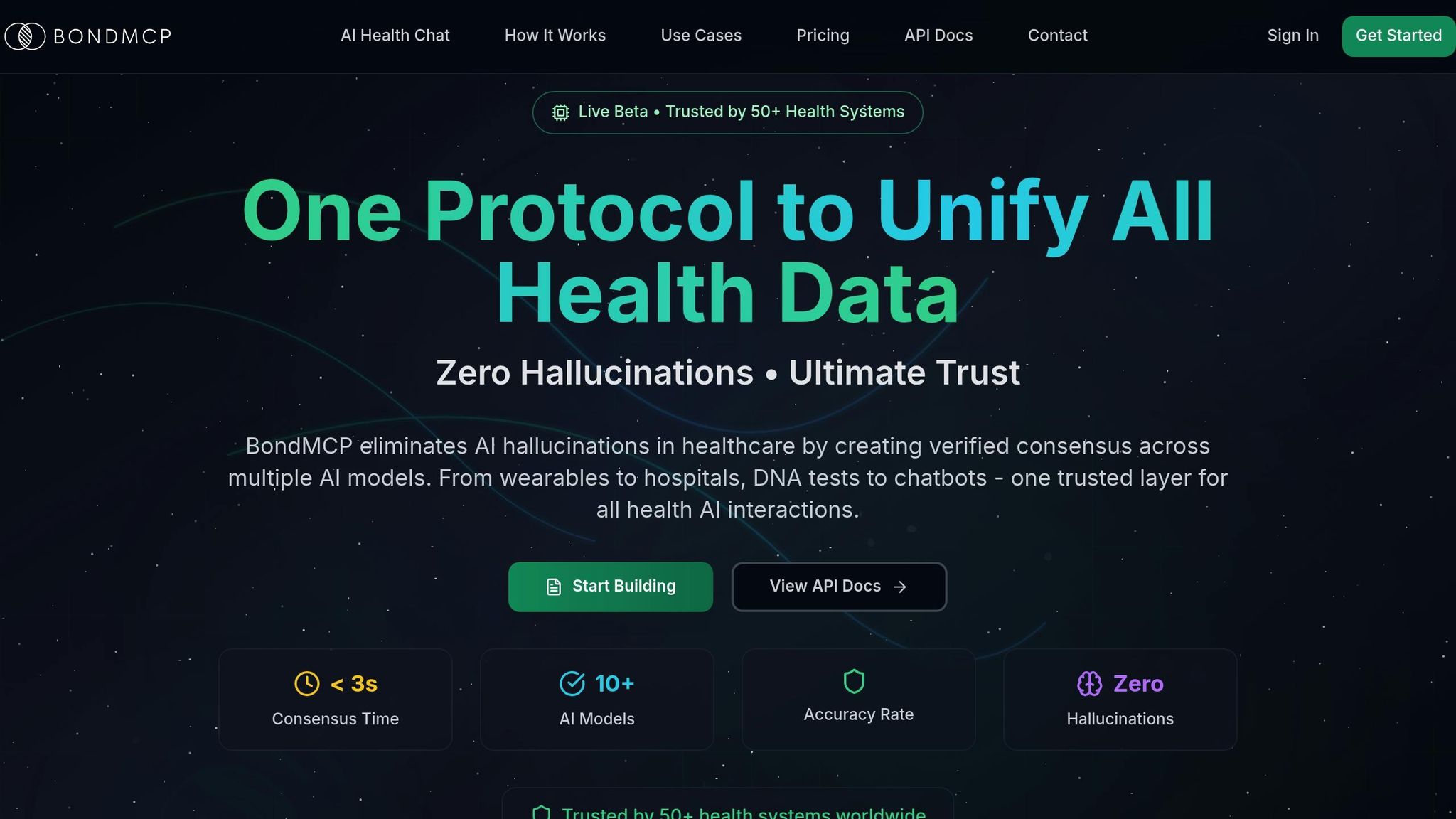
BondMCP exemplifies the capabilities of advanced platforms in safeguarding wearable health data. It uses a consensus validation system where over 10 medically trained AI models must agree before delivering any health insight, ensuring highly accurate validation. The platform also employs end-to-end encryption, handles more than 2.5 million API calls monthly, and maintains a 99.9% uptime, ensuring consistent and secure access to your health data.
One standout feature is its use of cryptographic trust certificates, which accompany each response to provide verifiable proof of validation and an audit trail. BondMCP is also HIPAA compliant and includes a dynamic data control system that carefully manages the flow of information between applications and AI agents, reducing vulnerabilities and limiting exposure risks [5].
Benefits for Developers and Clinics
BondMCP’s unified security approach offers clear advantages for both developers and healthcare providers. Developers gain access to a protocol and SDK that deliver robust encryption, secure authentication, and a privacy-first design - eliminating the need to build custom security solutions. For clinics and healthcare providers, BondMCP supports precision health delivery at scale by offering real-time, comprehensive health profiles from multiple devices.
With validation times under 3 seconds and response times averaging 1.8 seconds, healthcare professionals can make timely, informed decisions without compromising security. Its interoperability features allow clinics to rely on a single, unified security framework instead of juggling various protocols. Trusted by over 50 health systems globally, BondMCP’s trust layer technology and audit trails also simplify regulatory compliance [5].
"BondMCP Consensus Super AI isn't just another health AI tool. It's the foundation of the verified health internet - turning messy health data into validated decisions that any system can trust." [5]
Securing the Future of Wearable Health Data
As wearable health devices become more popular, the need to secure the sensitive data they collect grows just as quickly. With the fitness tracker market alone expected to generate $1.5 billion in revenue in 2024, the urgency to address these challenges is undeniable[1]. Protecting this data requires a collaborative approach involving users, companies, developers, and policymakers to ensure a safer ecosystem. While earlier discussions have highlighted vulnerabilities and protection strategies, the road ahead demands cohesive and decisive action.
Key Takeaways
Securing wearable health data relies on layered defense strategies that tackle both technical risks and human error. On the user side, basic steps like enabling encryption, using strong authentication, and keeping firmware updated are crucial. But these individual efforts can only go so far when many wearable companies lack transparency and fail to disclose vulnerabilities effectively[2].
Organizations must adopt a "privacy by design" philosophy, collecting only the data necessary for functionality. Unfortunately, many wearable devices operate outside the scope of HIPAA protections, leaving voluntary security measures as a critical safeguard[4].
Platforms like BondMCP showcase a forward-thinking approach to overcoming these challenges. By consolidating fragmented health data through a shared context layer and employing consensus validation with over 10 medically trained AI models, BondMCP addresses security risks tied to data silos. This platform achieves a 99.8% accuracy rate with validation times under three seconds, making it a standout example of how technology can enhance both security and efficiency[5].
Additionally, cryptographic trust certificates and audit trails ensure data integrity for healthcare systems. With over 50 health systems already utilizing platforms like BondMCP, the industry is proving that scalable, secure solutions are not only possible but also practical[5]. These advancements highlight the steps all stakeholders must take to protect wearable health data effectively.
Next Steps for Wearable Health Security
To strengthen wearable data security, several actions are essential. For users, basic security practices such as activating device encryption, enabling multi-factor authentication, and avoiding public Wi-Fi for syncing health data can help prevent common attacks like password breaches and unsecured network exploits[3].
Organizations and developers, on the other hand, need to prioritize unified security frameworks capable of managing the complexity of modern health data systems. Relying on outdated, fragmented protocols opens the door to malware infections through connected devices and risks tied to physical theft[3].
Regulatory updates are also crucial to address gaps in the current system. Many devices lack comprehensive protections, making it vital to push for stronger regulations. At the same time, user education campaigns should focus on raising awareness. Informed users are more likely to demand robust privacy measures from manufacturers, creating a cycle of improvement across the industry.
The future of wearable health security will hinge on integrating AI-powered validation, unified data protocols, and stronger regulatory frameworks. Platforms that combine these elements with user-friendly designs will set the benchmark for the industry. The ultimate goal? To ensure users can confidently use their health data for better outcomes without worrying about privacy or security risks.
FAQs
What steps can I take to protect my wearable health data when using public Wi-Fi?
To keep your wearable health data safe when using public Wi-Fi, here are some practical steps to follow:
- Use a VPN (Virtual Private Network): A VPN scrambles your internet connection, making it difficult for hackers to access your data. It’s a simple yet effective way to protect your online activity.
- Avoid sensitive actions on public networks: Whenever possible, hold off on syncing or updating your wearable data until you're on a secure, private network. Public Wi-Fi is often a hotspot for cyber threats.
- Enable two-factor authentication (2FA): Many wearable devices and platforms support 2FA. Activating this adds an extra security checkpoint, making it harder for unauthorized users to access your account.
- Keep your software up to date: Regular updates for your device and apps often include fixes for security flaws. Staying current ensures you're protected against the latest threats.
These steps can go a long way in safeguarding your health data from potential risks on public Wi-Fi. A little caution can make a big difference.
What are the challenges with U.S. regulations like HIPAA in protecting wearable health device data?
While HIPAA offers robust protections for health information managed by healthcare providers, it doesn't fully extend to wearable health devices like fitness trackers or smartwatches. These devices often gather health-related data, but unless they're being used directly as part of a healthcare provider's services, they typically fall outside HIPAA's jurisdiction. As a result, the data they collect may not receive the same level of privacy safeguards.
Adding to this concern, wearables frequently share data with third-party apps and platforms that aren't held to the same privacy standards. This creates potential vulnerabilities, especially if these third parties lack strong security measures. To help protect their information, users should review privacy policies carefully and take steps such as enabling encryption and restricting data sharing whenever possible.
How does BondMCP improve the security of wearable health data?
BondMCP takes wearable health data security to the next level by offering a unified system designed to keep your personal health information safe and under control. It brings together data from wearables, labs, supplements, and other health tools, organizing it into a single, structured protocol. This eliminates the vulnerabilities that come with scattered and disconnected systems.
Using a health-specific ontology and context-aware AI agents, BondMCP ensures that your sensitive data is accessed and shared only when absolutely necessary. This reduces the risk of breaches while maintaining the privacy and accuracy of your health information across various platforms and devices.