

Genomic data breaches are more than just technical failures - they're personal, long-lasting, and can impact families for generations. Unlike passwords or credit cards, DNA is permanent and irreplaceable. Recent breaches like the 2023 23andMe incident, which exposed data from 6.9 million users, highlight the risks tied to weak security measures and poor data governance.
Key Takeaways:
- Why It Matters: DNA reveals deeply personal details about health, ethnicity, and family connections, making breaches especially harmful.
- Major Breaches: Notable cases include:
- 23andMe (2023): Credential stuffing attack affecting 7 million users.
- Veritas Genetics: Limited breach due to strong data segregation.
- 1Health.io/Vitagene: Fined $75,000 for exposing sensitive health data.
- Consequences: Breaches lead to emotional distress, genetic discrimination, reduced trust in healthcare, and steep financial/legal penalties.
- Prevention Strategies:
- Strengthen authentication (e.g., multi-factor authentication).
- Encrypt data and use network segmentation.
- Conduct regular risk assessments and train employees.
- Implement advanced, context-aware security systems like BondMCP using the Model Context Protocol.
Effective genomic data protection requires robust security systems, clear communication, and collaboration across the healthcare ecosystem. Without these, breaches will continue to erode trust and hinder advancements in precision medicine.
Hacking Your DNA: The Big Business - And Risk - Of Home Tests | Think | NBC News
Major Genomic Data Breach Cases
To grasp how genomic data breaches occur, it's helpful to look at real-world incidents that have impacted the industry. These cases reveal common weaknesses and demonstrate how even well-established companies can fall victim to cyberattacks. Below are three notable breaches that reshaped how genomic data security is approached. Each case highlights different vulnerabilities and responses, offering key insights into safeguarding sensitive genetic information.
Case Study: 23andMe (2023)
In October 2023, 23andMe experienced a credential stuffing attack that exploited weak multi-factor authentication and the reuse of passwords. Initially, about 14,000 accounts were affected, but the breach ultimately exposed data from around 7 million customers [3]. The fallout included approximately 40 lawsuits in the U.S. and one in Canada, leading to a $30 million settlement. By November 2024, the company announced plans to reduce its workforce by 40% [6].
Case Study: Veritas Genetics
Veritas Genetics, known for sequencing the entire 6.4 billion letters of a human genome, faced a breach that put its data segregation practices to the test. An unauthorized user accessed a customer-facing portal, but the company’s security measures prevented a larger disaster. Sensitive data - such as genetic information, DNA test results, and health records - was stored on separate, more secure systems, ensuring it remained protected [2]. As of July 2019, Veritas had sequenced about 5,000 genomes [4].
"The security and privacy of customer information is a top priority, and we have security processes and procedures in place as part of this commitment, including segregating and securing genomic data on separate systems." - Veritas Genetics [5]
This case demonstrated the critical importance of system segregation, which limited the breach's impact. Veritas's approach has since been regarded as a benchmark for securing genetic data in the industry.
Case Study: 1Health.io/Vitagene
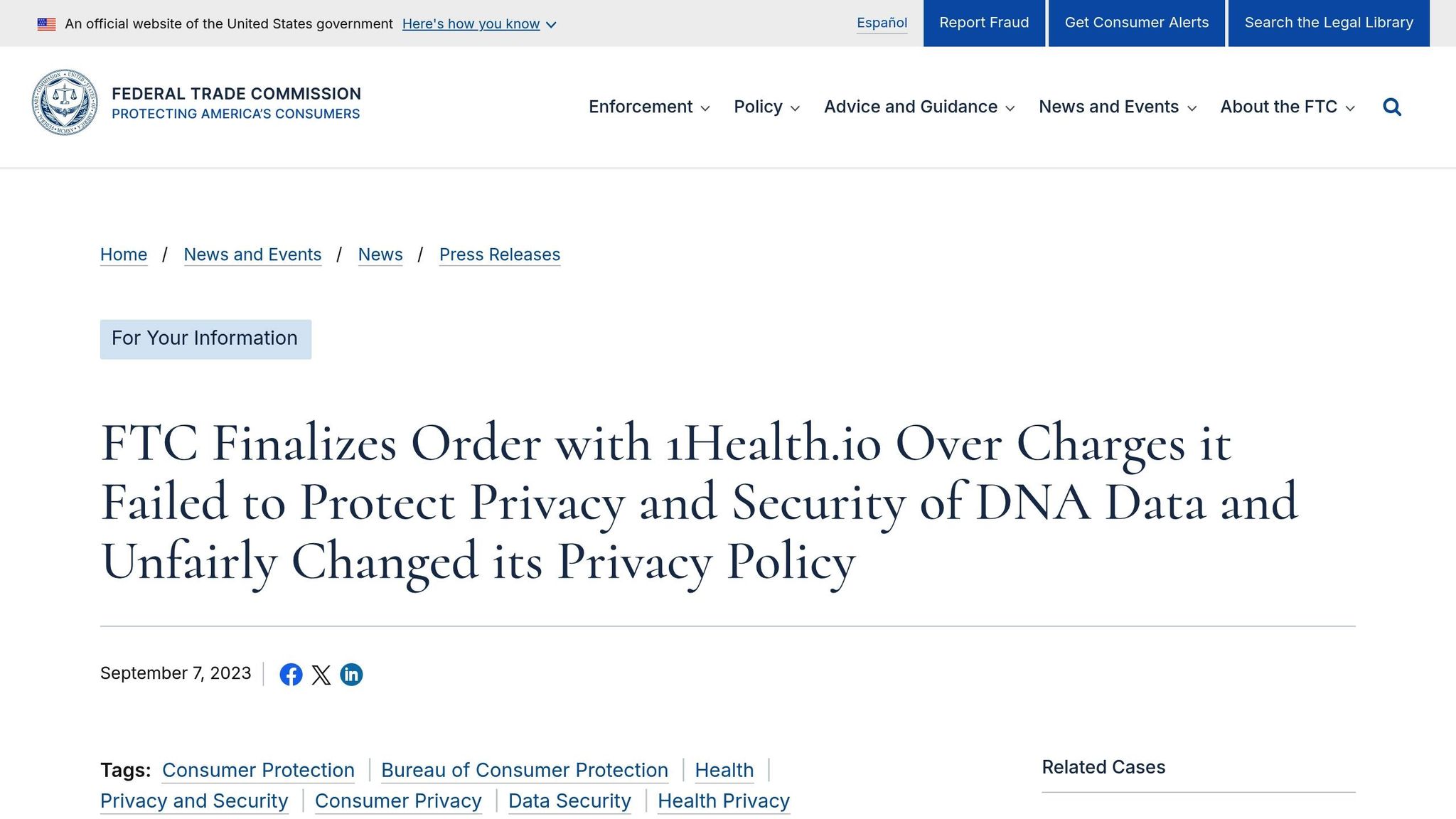
The 1Health.io/Vitagene breach stemmed from poor regulatory compliance and lax data-handling practices. The Federal Trade Commission (FTC) fined the company $75,000 for exposing sensitive genetic health data and information about medical conditions [6]. While the fine was modest compared to the $30 million settlement in the 23andMe case, it set a significant precedent for regulatory enforcement in the genomic testing sector. This breach serves as a cautionary tale about the consequences of insufficient privacy policies and improper data governance.
These cases highlight different routes to genomic data exposure: attacks exploiting weak authentication, breaches mitigated by strong data segregation, and regulatory penalties due to poor governance. Each incident underscores the critical need for effective security measures and auditing systems, which will be further discussed in upcoming sections on risk management and recovery strategies.
Consequences of Genomic Data Breaches
Genomic data breaches carry consequences that go far beyond the typical fallout of traditional security incidents. Unlike stolen credit card numbers or email addresses, compromised genomic data reveals deeply personal and unchangeable information that can affect entire families for generations. Here's a closer look at the personal, societal, and financial repercussions of such breaches.
Personal and Social Impact
The exposure of genomic data can have lasting and deeply personal consequences. Genetic information isn’t just about who you are - it can reveal intimate details about your current health, future medical risks, and even predispositions to diseases. When this data falls into the wrong hands, individuals may face discrimination in areas like employment, insurance, and even legal matters [8].
On a personal level, learning about potential health risks through exposed genomic data can cause significant emotional distress. This is particularly true when individuals discover genetic predispositions to serious illnesses, often without proper context or guidance. Misinterpreting genetic results can lead to unnecessary anxiety or even unwarranted medical procedures [8][9].
The impact doesn’t stop with individuals. Families and entire communities can feel the ripple effects. For example, genetic research on a small group can be used to generalize about larger populations, potentially leading to the stigmatization of ethnic or genetic groups [8]. A recent study revealed that 67% of direct-to-consumer genetic testing companies fail to adequately inform consumers about how their data will be used [1], leaving families exposed to unexpected risks.
The growing capabilities of next-generation sequencing and databases like GEDMatch add another layer of concern. Experts estimate that within a few years, nearly anyone in the U.S. could be identified from a DNA sample - even if they never voluntarily shared their genetic information [8]. This shifts genomic data breaches from being an individual privacy issue to a much larger societal challenge.
Trust in healthcare systems also takes a significant hit. Mishandling genomic data undermines the doctor-patient relationship and raises fears of genetic discrimination, which can deepen existing inequalities and erode personal dignity [9]. As trust declines, people may avoid genetic testing and research altogether, potentially slowing advancements in medicine.
Legal and Financial Costs
The fallout from genomic data breaches isn’t limited to personal harm - it also carries steep legal and financial consequences for organizations. Unlike breaches involving modifiable data, the permanent nature of genomic information makes these incidents particularly costly. The healthcare sector already faces the highest average costs for data breaches [10], and genomic breaches are among the most expensive due to the sensitive and irreplaceable nature of the data.
Regulatory penalties can be crushing. Under GDPR, organizations can face fines as high as 4% of their annual global revenue or €20 million, whichever is greater [11]. Additionally, affected individuals often pursue class-action lawsuits, leading to drawn-out legal battles that drain resources and distract from core operations [11].
Operational expenses also skyrocket. Organizations must cover the costs of notifying affected individuals, conducting investigations, and upgrading security systems. For example, the 2013 Target breach resulted in $18.5 million in settlements and caused lasting reputational harm [11].
"Data breaches can have devastating financial, legal, and reputational impacts on businesses. Understanding these risks and implementing robust cybersecurity measures is essential to protect your business." - Athreon [11]
For genomic testing companies, the stakes are even higher. A breach can irreparably damage consumer trust, which is critical to their survival. Beyond lost trust, breached contracts with partners and clients can lead to penalties, loss of research funding, and exclusion from collaborative projects - jeopardizing progress in personalized medicine.
The financial strain doesn’t end with immediate costs. Organizations face long-term disruptions, higher insurance premiums, and the substantial investment required to rebuild both their security infrastructure and their reputation. These challenges highlight the urgent need for strong preventive measures and effective recovery plans to mitigate the risks of genomic data breaches.
Key Lessons: How to Prevent and Reduce Risks
Looking at past genomic data breaches offers valuable insights into reducing risks. By analyzing these incidents, experts have pinpointed strategies that can help organizations minimize the chances and impact of future breaches.
Security and Management Best Practices
Strengthen Authentication and Access Controls. Organizations need to adopt role-based access control (RBAC), ensuring only authorized personnel can access, analyze, or modify genetic data. This approach limits access based on job roles and specific research needs [15]. Additionally, multi-factor authentication (MFA) is now a must-have. Even if passwords are compromised, MFA adds an extra layer of protection [15].
Encrypt Everything. Encryption is critical for safeguarding genomic data, whether it's being stored or transmitted. Using end-to-end encryption with secure key management ensures that intercepted data remains unreadable without the proper decryption keys [7].
Conduct Regular Risk Assessments. Keeping up with emerging threats requires routine evaluations of current security measures. These assessments help identify vulnerabilities and guide updates to defense strategies [7]. For instance, the NIH now requires adherence to updated security standards as part of their Security Best Practices for Users of Controlled-Access Data, effective January 25, 2025 [12]. These evaluations can lead to enhanced monitoring systems and better staff training.
Focus on Network Security. Techniques like network segmentation, access control lists (ACLs), and identity and access management (IAM) solutions limit access to sensitive data [13]. Real-time monitoring tools can detect unusual activity, helping to prevent breaches. A great example is the Australian Zero Childhood Cancer Program, which uses cloud-connected NetApp StorageGRID with dedicated partitions. This setup allows secure data sharing while maintaining strict access controls [17].
Train Employees. Security is only as strong as its weakest link, and employees play a crucial role. Regular training helps staff recognize phishing attempts, follow security policies, and stay alert to evolving threats [13].
Prepare for Incidents. Having a solid incident response plan in place is essential. This includes using segmentation, continuous monitoring, and structured response strategies to minimize the impact of any breach [13].
"Simplifying where possible can lead to small victories that can be built upon over time, and improve the overall security posture little by little until one day it is unrecognizably capable." - JJ Cranford, Senior Product Marketing Manager, Cybereason [14]
Stay Compliant with Regulations. Compliance with laws like HIPAA and GDPR is not just about avoiding fines; it's about protecting patient privacy. In the European Union alone, GDPR violations in 2024 resulted in 2,086 fines totaling €4.48 billion [19]. Organizations must also follow guidelines from groups like GA4GH and NIH [7].
While these traditional measures are essential, integrating more advanced systems can take genomic data security to the next level.
Using Context-Aware Security Systems
As health data becomes increasingly interconnected, traditional security measures often fall short. Modern genomic data protection requires context-aware security systems that adapt based on the relationships between different data types.
These systems analyze combined datasets - like genomic information paired with wearable device data or lab results - and automatically apply stricter security measures when needed. For example, if genomic data is being used alongside sleep tracking and fitness data, the system recognizes the increased sensitivity and adjusts access controls accordingly.
BondMCP - Health Model Context Protocol is a standout example of this approach. It creates a unified intelligence layer that connects fragmented health data sources while maintaining strong security. Instead of applying generic rules to all data, BondMCP tailors protections based on the specific context. For instance, when genomic data is analyzed alongside supplement protocols, the system strengthens security for the most sensitive combinations.
Automated Security Orchestration is another key feature. These systems detect unusual access patterns or threats and can automatically implement protective actions across all connected data sources. This reduces human error and ensures consistent protection.
Anomaly Detection improves with context-aware systems. By analyzing combined datasets, these systems can spot suspicious patterns that might go unnoticed when data types are examined separately [15].
Scalable Privacy Protection is crucial as health data ecosystems grow. Traditional methods require separate security measures for each new data source, but context-aware systems like BondMCP offer a standardized framework that adapts seamlessly to increasing complexity.
These systems also support proactive compliance monitoring by tracking how genomic data is used across platforms. They can flag potential violations and suggest fixes before they escalate into breaches [18].
"Protecting the privacy of your genomic data is a foundational principle." - Illumina [16]
The real strength of context-aware security lies in its ability to balance security with usability. Traditional methods often create barriers to legitimate research and health optimization. In contrast, these advanced systems maintain high security while enabling the practical use of genomic data within integrated health platforms.
Organizations adopting context-aware security should also evaluate supply chain risks. Tracking the use of genetic services provided by external entities helps ensure that protections extend beyond internal systems [18]. This comprehensive approach is vital for safeguarding genomic data in the broader precision health landscape.
sbb-itb-f5765c6
After a Breach: Recovery and Damage Control
When a genomic data breach occurs, the aftermath can be as critical as the breach itself. A well-thought-out recovery strategy is essential - not just to secure the data but also to rebuild trust with those affected. The way an organization responds can shape its ability to recover and move forward.
Immediate Response and Communication
Act Fast, But Verify Information.
The first 24–48 hours after discovering a breach are critical. During this window, organizations must act quickly, but they also need to ensure that the information they share is accurate. Rushing to release unverified details can create confusion and further damage trust.
Secure the Systems First.
Before making any public announcements, focus on containing the breach. This includes isolating affected servers, updating credentials, and deploying emergency protocols to stop further data exposure.
Pause Non-Essential Messaging.
Put a temporary hold on scheduled posts or marketing campaigns. This ensures that all public communications during the crisis are deliberate, sensitive, and aligned with the response strategy.
Notify Affected Individuals Clearly and Personally.
Reach out to those impacted with clear, straightforward notifications. Avoid technical jargon and explain the situation, the steps being taken, and what individuals can do to protect themselves.
Set Up Dedicated Support Channels.
Provide specific channels for those affected to ask questions or seek help. This could include hotlines or online support for both technical issues and emotional concerns.
Show Empathy and Be Transparent.
Acknowledging the seriousness of a genomic data breach is key. It’s not just a technical failure - it’s a personal violation. Communicate with empathy and transparency to demonstrate that the organization understands the gravity of the situation.
Offer Specialized Support.
Since genomic data breaches raise unique concerns, provide tailored support. This might include genetic counseling, identity monitoring to address fears of genetic discrimination, and clear advice on how to mitigate risks.
Work Closely with Regulators.
Compliance with laws like HIPAA, GDPR, and emerging genetic privacy regulations is non-negotiable. Notify the necessary authorities within the required timeframes and cooperate fully with any investigations.
Once these immediate steps are taken, the focus should shift to long-term improvements and monitoring to fully restore trust and security.
Long-Term Recovery and Monitoring
Recovering from a breach isn’t just about fixing what went wrong. It’s about creating a stronger foundation for the future.
Overhaul Security and Conduct Regular Audits.
Addressing the breach means more than just patching vulnerabilities. Organizations should perform thorough security audits, upgrade to homomorphic encryption for genomic data, tighten access controls, and schedule regular reviews. With the number of sequenced genomes expected to hit 1 billion by 2025 [21], genomic databases are becoming increasingly attractive targets.
Adopt Advanced Monitoring Systems.
Traditional security measures may not be enough. Advanced systems capable of detecting unusual access patterns across interconnected health data sources are crucial for identifying and addressing threats quickly.
Rebuild Trust Through Transparency.
Being open about security improvements is essential for regaining trust. For instance, in the aftermath of its October 2023 ransomware attack, the British Library emphasized the importance of transparency in its "lessons learned" report: “Transparency helps build trust and credibility with stakeholders. Commit to transparent communication with your stakeholders, and provide timely updates on the incident, its impact and your response” [20].
Use Context-Aware Recovery Systems.
Genomic data doesn’t exist in isolation - it’s often linked to wearable devices, lab results, and lifestyle data. Recovery systems like BondMCP - Health Model Context Protocol can help secure interconnected data across multiple platforms, ensuring a more comprehensive response.
Monitor Public Trust and Research Participation.
A breach can lead to reduced participation in genomic research. Organizations need to track these trends and be transparent about changes to security practices, actively working to rebuild trust within the community.
Provide Long-Term Support for Affected Individuals.
The effects of a genomic data breach can linger for years. Long-term support programs - such as ongoing access to genetic counseling and assistance with issues like genetic discrimination - can help individuals navigate the lasting consequences.
Recovering from a genomic data breach is not a quick fix. It requires a commitment to transparency, continuous improvement, and a deep understanding of the responsibility that comes with protecting sensitive genetic information. The goal isn’t just to restore security - it’s to safeguard the trust and well-being of individuals and their families for years to come.
Conclusion: Protecting Genomic Data Going Forward
Recent genomic data breaches, like the 23andMe credential stuffing attack, have made it clear that traditional security measures aren't enough to safeguard sensitive genetic information. Protecting this irreplaceable data demands a proactive and multi-faceted approach.
Laying the Groundwork: Multi-Layered Security
Effective protection begins with a multi-layered security strategy. Basic measures such as multi-factor authentication, end-to-end encryption, and strict access controls are essential. But genomic data calls for more advanced tools, like anomaly detection systems that can flag unusual access patterns and provide enhanced monitoring capabilities.
Equally important are regular audits, penetration testing, and adopting a "data minimization" mindset - only collecting and storing what's absolutely necessary. With over 26 million people having shared their DNA with major databases by early 2019 [21], the scale of potential exposure is enormous, making these precautions critical.
The Integration Puzzle
Genomic data doesn't exist in isolation. It increasingly intersects with wearable devices, lab results, and lifestyle metrics, creating both opportunities and vulnerabilities. The healthcare data integration market, valued at $1.34 billion in 2023 and projected to grow at a 14.5% annual rate through 2032 [23], highlights the pressing need for secure and unified health data systems.
Context-aware security solutions, like BondMCP - Health Model Context Protocol, address these challenges by offering a shared context layer that secures interconnected health data. These systems analyze the relationships between genetic data, lifestyle metrics, and medical interventions, enabling more dynamic and comprehensive security monitoring.
A Shared Responsibility
Protecting genomic data isn’t just about technology; it’s also about collaboration. Sequencing labs, device manufacturers, and other stakeholders must work together to ensure genetic information is secure. Data controllers need to rethink how they handle and process genetic data, especially given its ability to uniquely identify individuals. Meanwhile, device vendors should prioritize security during product design, and laboratories must establish strong policies and invest in both physical and cyber infrastructure [22].
Rebuilding Trust Through Transparency
Transparency plays a key role in safeguarding genomic data and regaining public trust. Alarmingly, 67% of direct-to-consumer companies fail to adequately explain how they use collected genetic information [21]. This lack of clarity erodes confidence in the entire genomic ecosystem.
Organizations must go beyond meeting compliance requirements by clearly communicating their data practices, security measures, and breach response plans. Building trust through transparency ensures that individuals feel safe participating in genomic research and testing.
The future of genomic data protection doesn’t rest on a single solution. It requires a coordinated effort from all stakeholders to implement adaptable, context-aware security measures that can keep pace with evolving threats. Only through such collective action can we truly safeguard this sensitive and invaluable data.
FAQs
What are the long-term effects of a genomic data breach on individuals and their families?
A breach involving genomic data can lead to profound and long-lasting effects for both individuals and their families. These risks include privacy violations, such as identity theft or unauthorized monitoring, as well as discrimination in areas like health insurance or employment. Unlike other personal data, once genetic information is leaked, it’s nearly impossible to take back control, leaving people exposed indefinitely.
Beyond personal impacts, such breaches can deter individuals from participating in genomic research due to fears about their privacy. This hesitancy could slow progress in medical science. The challenge doesn’t stop there - storing genomic data over the long term creates persistent security risks. That’s why implementing strong protections and forward-thinking strategies to secure this sensitive information is more important than ever.
What steps can companies take to strengthen genomic data security and prevent breaches like those at 23andMe and Veritas Genetics?
To keep genomic data safe and minimize the chances of breaches, companies need to focus on multi-factor authentication (MFA). This extra layer of security helps shield user accounts from unauthorized access. On top of that, regularly updating passwords, keeping an eye out for suspicious activity, and using advanced threat detection tools are critical steps to strengthen security.
Organizations should also establish strong internal security policies, perform regular security audits, and ensure employees receive ongoing training to spot and handle potential risks. These efforts not only protect sensitive genetic data but also help maintain the trust of users who rely on the organization to safeguard their information.
How do context-aware security systems help safeguard genomic and health data?
The Role of Context-Aware Security in Protecting Genomic Data
Protecting sensitive genomic and health data requires more than just static security measures - this is where context-aware security systems come into play. These systems adapt in real time, adjusting security protocols based on factors like user behavior, the type of device being used, and even the user’s location. By dynamically responding to these factors, they can significantly reduce vulnerabilities and block unauthorized access.
What sets these systems apart is their ability to continuously assess the situation and apply customized safeguards. This proactive approach is especially critical given the increasing threat of cyberattacks targeting sensitive genomic information. With such data being highly personal and valuable, context-aware security offers an extra layer of protection, helping to maintain privacy and minimize the risk of breaches.