
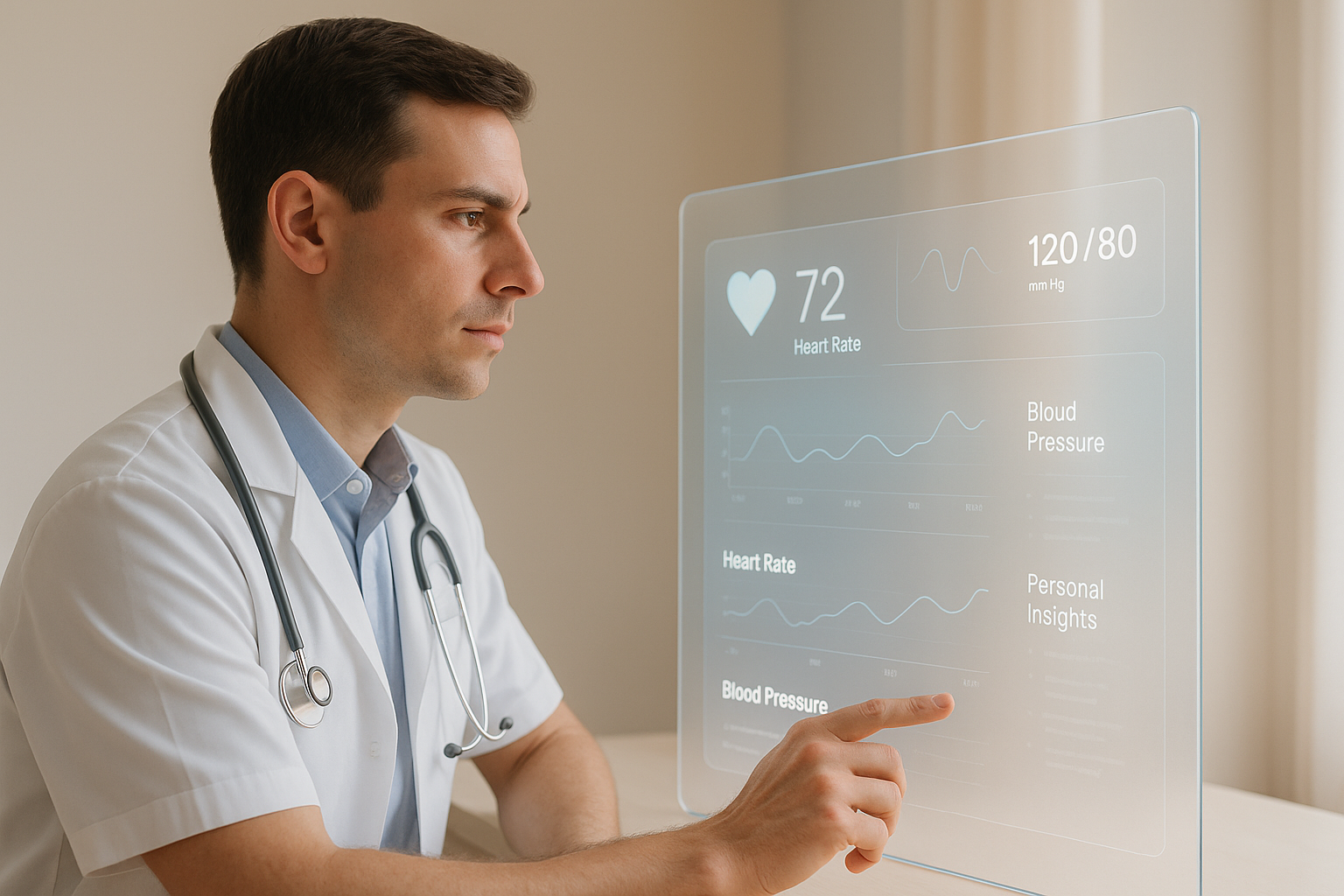
Context-aware health agents are AI systems designed to analyze both current and historical data to make smarter decisions. Unlike traditional systems that only respond to isolated inputs, these agents connect the dots between various data sources to provide real-time, personalized insights. For example, they can analyze your sleep, heart rate, and recent activities to recommend actionable steps for better health.
Key Takeaways:
- Real-Time Analysis: These agents process data from wearables, sensors, and user inputs to identify patterns and respond quickly.
- Health Optimization: They combine factors like sleep, stress, and exercise to provide tailored advice, such as adjusting workout intensity based on recovery.
- Data Integration: By merging data from multiple sources (e.g., fitness trackers, lab results), they create a unified health profile for better decision-making.
- AI Memory: They use short-term and long-term memory to learn from past interactions, improving recommendations over time.
- Efficiency: Techniques like task prioritization and model routing ensure fast, accurate responses without wasting resources.
The BondMCP platform simplifies this process by acting as a central hub for health data, enabling seamless communication between devices and systems. It helps developers build smarter health tools that continuously adapt to individual needs, making health management more efficient and precise.
MCP Explained: The Future of Context-Aware AI | Sid, AI Engineer, Composio
Core Methods for Real-Time Context Processing
Real-time context processing takes raw data and turns it into meaningful insights. To achieve this, context-aware agents use three main techniques: gathering and analyzing signals from various sources, merging diverse data streams into one cohesive model, and utilizing AI memory systems to make informed decisions. Together, these methods allow for intelligent and responsive actions.
Data Collection and Signal Processing
The first step for context-aware agents is collecting data from a mix of sources like wearable devices, environmental sensors, user inputs, and external feeds. The real challenge isn't just gathering this data but processing it quickly enough to maintain real-time functionality while filtering out irrelevant noise.
Take wearable devices, for example. A fitness tracker might constantly monitor heart rate variability every few seconds, measure accelerometer data at 50Hz, and continuously track skin temperature. The sheer volume of data requires efficient processing to identify meaningful patterns and anomalies. Signal processing algorithms play a critical role in filtering out false readings caused by factors like movement, temperature shifts, or the device's position.
These agents don't just rely on sensor data - they also factor in environmental and user behaviors for a more accurate picture. For instance, weather conditions, air quality, UV index, and pollen levels can all affect health metrics. On top of that, user-specific data like meal schedules, stress levels, medication adherence, and sleep quality provide essential context that sensors alone can't capture.
To make sense of all this, adaptive filters are used. These filters adjust to each individual's baseline, rather than applying generic thresholds, to flag deviations that matter. This personalized approach minimizes false alarms and ensures genuine health concerns are highlighted. Once the data is processed, it's aligned and prepared for deeper analysis.
Data Integration and Continuity
After collecting and processing the data, the next challenge is integrating all these different streams into a unified picture. This step involves merging data from sources with varying sampling rates, measurement units, and quality levels while keeping everything in sync.
For example, sleep data, often recorded in 30-second intervals, needs to align with heart rate measurements taken every few seconds and step counts aggregated over minutes. Techniques like interpolation and synchronization help bring these varying data points together.
Continuity is another hurdle. Devices can go offline, batteries can die, or sensors can malfunction. To address this, context-aware agents use gap-filling strategies that rely on historical patterns and correlations to estimate missing data. For instance, if a heart rate monitor stops working during a workout, the agent might use accelerometer data and past workout trends to fill in the gaps until the monitor is back online.
Cross-referencing data from multiple sources ensures accuracy. If a smartphone's step counter differs from a fitness tracker, the agent can use additional inputs like GPS data, calendar events, or heart rate trends to decide which reading is more reliable.
Integration also requires semantic mapping to standardize terminology and measurement scales across devices. For example, one device might track "active minutes" while another measures "moderate activity zones." Context-aware agents translate these into consistent metrics, making it easier to analyze the data collectively.
BondMCP's health-specific ontology helps streamline this process by providing a standardized framework. This ensures different systems and devices can "speak the same language", simplifying integration across multiple platforms.
Using AI Memory for Real-Time Decisions
Once the data is integrated, AI memory systems step in to support real-time decision-making. These systems help agents maintain continuity and offer personalized responses.
Short-term memory is used for immediate context. For instance, when a sudden change in heart rate variability occurs, the agent considers recent activities, current stress levels, and environmental factors. This type of memory focuses on information relevant to decisions being made in the moment, typically spanning minutes to hours.
Meanwhile, associative memory networks identify patterns across different data types and timeframes. For example, the system might notice that poor sleep often leads to stress eating or that certain weather conditions trigger joint pain. These associations allow agents to make proactive recommendations and intervene early.
Memory systems also evolve over time. Through a process called memory consolidation, agents refine stored information based on outcomes. Effective recommendations are reinforced, while less useful ones are deprioritized. This continuous learning ensures that the agent's advice becomes more accurate and helpful with each interaction.
To maintain privacy, secure memory systems are essential. Techniques like federated learning allow agents to benefit from broader insights while keeping individual data protected.
Resource Allocation for Real-Time Agents
Effectively managing resources becomes a top priority when context-aware agents need to handle large volumes of health data from various sources. Without proper strategies, even the most advanced systems can falter, resulting in delayed responses or missed insights - especially when users rely on timely health updates.
Dynamic Resource Allocation and Task Management
Context-aware agents juggle demands for processing power, memory, and bandwidth. To keep things running smoothly, they rely on dynamic allocation systems that adjust resources based on real-time priorities and the urgency of incoming data.
At the core of this system is priority-based task queuing, which categorizes health-related tasks by urgency. For instance, detecting irregular heart rhythms or sudden spikes in blood pressure takes precedence over routine updates like daily step counts. By assigning priorities based on medical importance and time sensitivity, smart agents ensure critical data gets processed first.
Load balancing plays a key role, enabling agents to handle tasks like sleep analysis, nutrition tracking, and sensor monitoring simultaneously. During peak hours, resource pooling ensures additional capacity is available to meet demand.
Agents also use adaptive scheduling to anticipate user behavior. For example, they might allocate more resources during predictable high-demand times, like morning workouts. This proactive approach ensures steady performance, even during busy periods.
These strategies create the foundation for more advanced systems, such as specialized model routing, to further optimize efficiency.
Model Routing for Better Efficiency
Routing health data to specialized models enhances both speed and accuracy. Instead of relying on one general-purpose model, intelligent systems direct each type of data to the processing engine best suited for the task.
Specialized model clusters are designed for specific health data categories. For example, sleep analysis models focus on overnight biometric patterns, while activity recognition models handle movement and exercise data. Other clusters might specialize in analyzing nutrition or stress levels, ensuring each task is processed with maximum precision.
A hybrid approach blends edge computing with cloud processing to minimize latency. Basic tasks, like step counting or simple heart rate monitoring, can be handled locally on devices like smartwatches. More complex analyses - requiring historical data or advanced algorithms - are sent to cloud-based systems. This reduces bandwidth usage while keeping response times fast.
Model switching ensures resources are used wisely. Routine health metrics are processed by lightweight models for quick results, but when anomalies or complex patterns emerge, data is routed to more advanced models capable of deeper analysis. This tiered system avoids overloading resources with simple tasks while ensuring complex issues get the attention they deserve.
To further streamline operations, caching is used to store frequently accessed model outputs. If multiple users share similar health profiles or conditions, cached results can be reused, cutting down on redundant processing. This not only saves computational power but also speeds up personalized recommendations.
Efficient routing like this becomes essential as systems grow to handle larger data volumes and user bases.
Scaling Real-Time Context Processing
As more users adopt health technologies and data volumes increase, context-aware agents need to scale effectively while maintaining both performance and accuracy. This involves strategies that focus on expanding capacity horizontally and optimizing existing resources.
A microservices architecture allows individual services, such as sleep tracking or symptom monitoring, to scale independently. For example, during flu season, symptom tracking services can expand to meet increased demand without affecting other functions.
By leveraging frameworks like BondMCP, agents can integrate new data sources seamlessly. Instead of building separate infrastructures for each agent, BondMCP provides a shared system for resource allocation. This reduces redundancy and allows agents to focus on their specific health domains while benefiting from enterprise-grade scalability.
Distributed processing networks spread workloads across multiple data centers and edge locations. Processing data closer to users reduces latency and ensures resilience. If one data center gets overwhelmed, traffic is automatically rerouted to others, preventing service interruptions.
Auto-scaling mechanisms monitor performance in real time, adjusting resources as needed. For example, during New Year fitness surges or major health events, the system can quickly add processing capacity. When demand drops, resources are scaled down to control costs without sacrificing service quality.
Finally, data partitioning helps organize health information for optimal processing. By grouping data geographically, by health condition, or by activity level, systems can tailor their processing to specific user segments. This targeted approach improves both efficiency and the relevance of the insights provided.
sbb-itb-f5765c6
Building Context-Aware Agents with BondMCP
Developing intelligent health agents capable of processing real-time data effectively requires more than just cutting-edge algorithms - it needs a system that ensures smooth communication across various health platforms. BondMCP steps in to provide this foundation, equipping developers and health systems with tools to create agents that are both context-aware and seamlessly interoperable.
The Power of BondMCP's Shared Context Layer
BondMCP's shared context layer breaks down the barriers that often isolate health data, enabling smoother collaboration across systems. Instead of designing separate memory systems and pathways for each agent, developers can rely on a unified context system that ensures continuity across all health touchpoints.
This shared layer acts as a central hub for health data, integrating inputs from sleep trackers, lab results, fitness apps, and nutrition logs into a single, cohesive view of an individual's health. Updates to this data are instantly propagated across all relevant agents, allowing for real-time adjustments where needed.
One of the standout features is the real-time standardization of data, such as blood pressure and stress levels, ensuring that devices and agents can communicate effectively without manual reconciliation. This means agents can make informed decisions quickly, enhancing their responsiveness.
Memory persistence is another game-changer. Agents no longer need to start fresh with every interaction. Instead, they retain knowledge of past health patterns, successful interventions, and user preferences, enabling more personalized and effective recommendations over time. This continuity also helps agents spot long-term trends that might otherwise go unnoticed in isolated interactions.
BondMCP also prioritizes data security and privacy at the protocol level, safeguarding sensitive health information while still enabling the collaboration necessary for meaningful health insights. With this unified context in place, the BondMCP SDK empowers developers to turn integration into actionable, health-focused solutions.
Building Health Agents with BondMCP SDK
The BondMCP SDK equips developers with pre-built components and standardized APIs, simplifying the creation of context-aware health agents. These tools are designed with a deep understanding of medical terminology, biomarker ranges, and the relationships between various health metrics.
The SDK streamlines development by providing standardized APIs for integrating with wearables and lab services. This not only saves time but also ensures compatibility across the broader health tech ecosystem.
Template agents included in the SDK offer a head start for common use cases like medication adherence, fitness coaching, or managing chronic conditions. Developers can use these templates as a foundation, customizing them to meet specific needs.
To further support development, the SDK includes testing environments that mimic real-world health scenarios. Developers can test their agents against diverse conditions, data patterns, and edge cases without accessing actual patient data, speeding up development while maintaining strict privacy standards.
Comprehensive documentation and support guide developers through the complexities of working with medical data. From regulatory considerations to best practices for delivering health insights without crossing into diagnostic territory, these resources help developers create impactful health agents efficiently.
Real-World Applications of BondMCP in Health Optimization
BondMCP's robust framework transforms isolated health data into actionable insights, benefiting both personal and clinical health settings. Its ability to connect data sources enables a proactive approach to health management.
One application is in personalized supplement protocols. When lab results reveal nutrient deficiencies, BondMCP agents can cross-reference this data with a user’s current supplement regimen, dietary habits, and gut health markers. The result? Supplement recommendations that dynamically adjust based on real-time biomarker changes and lifestyle shifts.
Fitness and recovery optimization is another area where BondMCP shines. Sleep data can inform workout intensity, while heart rate variability guides recovery strategies. Nutrition timing aligns with training schedules, and stress management techniques activate when elevated cortisol levels are detected.
In clinical care coordination, BondMCP integrates patient-generated data from wearables and home monitoring devices with electronic health records. This comprehensive view allows clinicians to make more informed decisions and intervene earlier when health metrics indicate potential concerns.
For chronic condition management, BondMCP enables a more nuanced approach. Take diabetes, for example: agents can analyze blood glucose trends alongside sleep quality, stress levels, meal timing, and activity patterns to create personalized strategies that go beyond basic carbohydrate tracking.
BondMCP also supports preventive health screening by analyzing patterns across multiple biomarkers and lifestyle factors. Instead of relying on annual check-ups, agents can detect subtle health changes and recommend interventions or consultations before issues escalate.
These examples illustrate how BondMCP transforms fragmented health tools into an integrated system, delivering actionable insights based on a comprehensive understanding of health data. By bridging the gaps between different health domains, BondMCP enables smarter, more effective health optimization.
Conclusion: The Future of Context-Aware Health Optimization
The way we approach personal health is evolving, moving from reactive treatments to proactive optimization driven by real-time data. At the heart of this transformation are context-aware systems that adapt to the ever-changing needs of individuals. This marks a new chapter in precision health, where care is continuous and tailored, rather than episodic and generalized.
Key Takeaways
The advancements in real-time data processing and resource management are setting the stage for a future of highly personalized health interventions. When tools like sleep trackers, lab tests, and fitness apps are seamlessly integrated, they generate insights that isolated systems simply can't provide.
A critical element of this shift is resource optimization. By dynamically allocating computational power to urgent health needs and efficiently routing data models, these systems remain responsive without compromising on performance. This ensures scalability, allowing health platforms to handle large user bases while delivering personalized care.
Unified systems are another cornerstone of this transformation. They enable data synchronization across various health metrics, leading to timely adjustments. For example, your supplement plan could be fine-tuned based on recent lab results, while your workout routine adapts to your latest sleep and stress data.
Persistent memory is what gives these systems their edge, functioning like a trusted health professional who remembers your history. By tracking what works - whether it’s a specific intervention or a lifestyle change - agents can make smarter recommendations over time, building on accumulated knowledge to improve long-term outcomes.
Looking Ahead: Scalable, Intelligent Health Systems
The future of health optimization lies in ecosystems that seamlessly link personal health tracking with professional medical care. As context-aware agents grow more advanced, they will create a continuous support system that adapts to your evolving health needs.
Preventive health care will move beyond annual check-ups, shifting toward continuous monitoring that detects subtle changes in your biomarkers. This approach not only enables earlier interventions but also makes prevention more precise, potentially reducing costs while improving overall health outcomes.
Real-time health intelligence will work quietly in the background, making small but impactful adjustments. Whether it’s tweaking your supplement schedule, adjusting your workout intensity, or managing stress, these systems will optimize your health using constant data streams from wearables and lab updates.
As healthcare providers begin to see the value of patient-generated data processed through intelligent systems, clinical applications will expand. This integration will lead to more informed decisions and personalized treatment plans that take into account the full range of factors influencing your health.
Platforms like BondMCP are paving the way for interoperable health agents that solve the problem of disconnected health data. By creating systems that unify and automate health optimization, they make it possible to scale precision care without losing the individual focus.
The shift from fragmented tools to cohesive, intelligent systems is redefining how we think about health optimization. As these technologies continue to advance, the gap between what’s possible for our health and what we actually achieve will shrink, bringing us closer to a future where precision health is accessible to all.
FAQs
How do context-aware agents protect privacy and ensure security when processing real-time health data?
Context-aware agents play a key role in protecting privacy and security by using advanced encryption techniques to safeguard sensitive health data. This ensures that information remains secure whether it’s being transmitted or stored.
These agents also use adaptive access controls that dynamically adjust permissions. Factors like a user’s identity, location, and current activity are taken into account to prevent unauthorized access, adding an extra layer of protection.
To comply with strict regulations like HIPAA, these systems are designed to maintain confidentiality while still enabling real-time data processing. By combining strong encryption with intelligent, context-based security measures, they create a secure and dependable framework for managing personal health information.
What challenges do context-aware agents face in integrating and synchronizing data from multiple health devices and sources?
Context-aware agents encounter several hurdles when trying to integrate and synchronize data from a range of health devices and sources. A significant challenge lies in ensuring real-time data flow and communication. Any delays or interruptions can compromise both the accuracy and the practical value of the insights these systems provide.
Another pressing issue is maintaining data consistency and security. With sensitive health information in play, managing these aspects across a variety of devices becomes a delicate task. The situation is further complicated by the use of different formats and protocols across sensors and platforms, making interoperability a tough nut to crack. Advanced systems are often needed to unify and interpret this data in a meaningful way.
On top of all this, these agents must dynamically adjust to changing health scenarios while keeping privacy and user trust at the forefront. This balancing act adds an extra layer of complexity to an already intricate process.
How does BondMCP improve communication between health devices and platforms?
BondMCP enhances communication by introducing a shared context layer that standardizes the exchange of health data, routines, and interventions across various devices and platforms. This shared framework ensures smooth integration and mutual understanding between systems, enabling AI agents to collaborate seamlessly.
By addressing fragmentation and establishing a unified protocol, BondMCP connects your wearables, lab results, fitness trackers, and other health tools in real time. This creates a more tailored, automated, and efficient way to manage your health, driven by AI agents that work together effortlessly.