

Predictive models in public health are tools that use data to anticipate health outcomes and improve resource allocation. Historically focused on clinical data, these models are now incorporating Social Determinants of Health (SDOH) - non-medical factors like income, housing, education, and community conditions - to better address health disparities. Why does this matter? Because SDOH often outweigh clinical care in determining health outcomes.
Key takeaways:
- SDOH improves predictions: Including factors like housing and transportation enhances the accuracy of models, helping identify at-risk populations earlier.
- Health equity focus: Models that account for SDOH can better serve marginalized groups by addressing root causes of disparities.
- Challenges exist: Data quality, privacy concerns, and technical barriers, like integrating fragmented data, complicate SDOH usage.
- Solutions: Tools like BondMCP streamline SDOH integration, combining clinical and social data to create actionable insights.
To make SDOH-driven models effective, healthcare systems must balance technology, ethics, and community partnerships to improve health outcomes and reduce disparities.
How SDOH Improve Predictive Model Performance
Evidence of Better Predictive Accuracy
When it comes to capturing non-clinical risks, adding social determinants of health (SDOH) to predictive models makes a noticeable difference. By combining social factors like housing stability, access to transportation, and neighborhood poverty with clinical data, these models become much better at forecasting outcomes like hospital readmissions. This enhanced accuracy allows for smarter resource allocation and more focused public health interventions.
For instance, factoring in education, employment, and social support offers early warnings about vulnerable populations. This helps public health officials prioritize preventive strategies, especially in mortality prediction models. Similarly, incorporating SDOH into cost prediction models identifies patients likely to face higher healthcare expenses, enabling proactive steps to address the root social causes driving those costs.
On a larger scale, using neighborhood-level SDOH data sharpens population-level predictions. These models can anticipate disease outbreaks, pinpoint areas prone to health disparities, and estimate future resource needs more effectively than traditional epidemiological methods. Beyond just improving accuracy, integrating SDOH helps create more equitable health strategies.
Addressing Health Equity Through SDOH Integration
Adding SDOH to predictive models doesn’t just refine numbers - it uncovers critical patterns that clinical data alone often misses. For marginalized and vulnerable groups - such as minorities, low-income families, rural communities, and older adults - factors like discrimination, geographic isolation, caregiver availability, and local resources become key to understanding their unique health risks. These insights enable the development of culturally sensitive and tailored public health initiatives.
For example, models that include data on social isolation, healthcare provider shortages, and local economic challenges can flag individuals at higher risk for poor health outcomes. This information helps guide preventive measures that promote independence and reduce emergency care reliance. Additionally, by highlighting intersectional vulnerabilities - where multiple social factors overlap to amplify health risks - these models provide a foundation for more targeted and effective interventions.
However, integrating these complex social dimensions into predictive models comes with its own set of challenges.
Challenges in Measuring SDOH Impact
Incorporating SDOH into predictive models isn’t always straightforward. One major hurdle is data quality. SDOH information often comes from a variety of sources, each with varying levels of accuracy, completeness, and consistency. Unlike standardized clinical data, this variability can introduce noise into the models, potentially affecting their reliability.
Geographic and temporal differences add another layer of complexity. Social factors that drive outcomes in one area may have little impact in another, and their influence can shift over time as communities evolve. This context-dependency makes it tricky to generalize findings across different populations.
The type of prediction also matters. For example, models designed to predict acute care needs might respond differently to SDOH data than those focused on chronic disease progression. And some social factors, like community support or experiences of discrimination, are hard to quantify. Simplifying these elements for computational purposes can dilute their impact, reducing the model’s overall effectiveness.
There’s also the risk of overloading models with too many variables. Adding numerous SDOH factors doesn’t always lead to proportional improvements in performance. In fact, it can cause overfitting, where a model excels with historical data but struggles to adapt to new scenarios.
Lastly, the time lag between social changes and their effects on health outcomes complicates short-term predictions. Establishing clear cause-and-effect relationships becomes challenging, especially for models designed to address immediate healthcare needs. Despite these obstacles, tackling these challenges is essential to fully unlock the potential of SDOH in predictive modeling.
Data Integration: Sources, Standards, and Challenges
Key Data Sources for SDOH
Creating effective predictive models for social determinants of health (SDOH) relies on pulling data from a variety of sources, each offering unique insights. Electronic health records (EHRs) are a primary source, capturing patient-reported social needs during clinical visits. Many healthcare systems now use standardized SDOH screening tools to document issues like housing stability, food security, and access to transportation.
Census data provides neighborhood-level insights, forming the foundation for understanding broader social factors. For example, the American Community Survey delivers detailed information on income levels, education, employment, and housing conditions at the census tract level. This data helps identify community-wide risks and contextualize individual health outcomes.
Community surveys and public health assessments fill in gaps left by clinical and census data. Local health departments often conduct surveys on topics like social cohesion, perceived safety, and access to nutritious food, offering a glimpse into residents’ lived experiences that influence health.
Claims data from insurers can reveal patterns in healthcare usage, such as frequent emergency visits or missed appointments, which may point to underlying social challenges like transportation or housing barriers. Additionally, social services databases - though often aggregated due to privacy concerns - provide key insights into community needs and resource utilization.
These diverse data sources highlight the importance of having standardized methods to effectively harness and integrate SDOH data.
Standards for SDOH Data Interoperability
Standardized frameworks are crucial for ensuring seamless exchange and use of SDOH data across systems. The Gravity Project has been instrumental in developing nationally recognized, consensus-driven standards for multiple social risk domains, including food insecurity, housing instability, and material hardship. These standards aim to support the collection, sharing, and application of SDOH data in areas like screening, diagnosis, and intervention activities [1][2][3].
LOINC (Logical Observation Identifiers Names and Codes) provides a unified vocabulary for documenting SDOH assessments, ensuring that questions and responses from screening tools are consistently interpreted across systems [1][2]. Similarly, SNOMED CT (Systematized Nomenclature of Medicine - Clinical Terms) offers a broad terminology system to record observations from SDOH assessments and link them with structured data [1][2].
HL7 FHIR (Fast Healthcare Interoperability Resources) acts as the technical backbone for SDOH data exchange. The Gravity Project has developed FHIR implementation guides to streamline the exchange of SDOH data through APIs, enhancing interoperability [1][3]. Additionally, the United States Core Data for Interoperability (USCDI) has incorporated SDOH data elements in version 2, creating a standardized framework for structured data sharing [1][3]. The ONC Interoperability Standards Advisory (ISA) further supports this effort by offering recommendations for expressing SDOH data within the Social, Psychological, and Behavioral Data category [1][3].
However, even with these frameworks, technical hurdles remain.
Technical Barriers to SDOH Data Integration
Despite advances in standardization, integrating SDOH data faces several technical challenges. One major issue is data completeness. Unlike clinical metrics like vital signs, SDOH data depends on patients voluntarily sharing sensitive details about their living conditions, finances, and social networks. This often results in inconsistent and incomplete data collection.
Privacy concerns and varying data quality across sources add further complexity. Healthcare organizations must comply with HIPAA regulations when accessing external data sources like census records, social services databases, and community surveys. This often requires robust data governance frameworks and secure sharing agreements. While clinical data typically adheres to strict quality standards, other sources may have limitations - census data can become outdated, community surveys may suffer from sampling biases, and social services databases often use incompatible coding systems.
Another challenge is temporal misalignment. Clinical data provides snapshots of a patient’s current condition, whereas metrics like neighborhood poverty rates or educational attainment reflect long-term trends. This disconnect can create gaps between the available data and the real-time needs of predictive models.
Technical challenges also arise with geocoding patient addresses, tracking address changes, and reconciling care locations. Managing these datasets requires advanced preprocessing and validation to retain their predictive value.
Platforms like BondMCP offer a structured approach to tackle these issues. By using a health-specific ontology and context-aware orchestration, BondMCP helps link fragmented data sources while maintaining high data quality and privacy standards. This bridges the gap between diverse SDOH datasets and the predictive models that rely on them for accurate health forecasts.
Finally, many healthcare systems still operate on outdated legacy systems that weren’t designed to handle the variety of data required for comprehensive SDOH analysis. Upgrading these systems or integrating them with modern platforms demands significant technical investment, which can be a barrier for some organizations.
Scalable Protocols and AI-Driven Solutions
Scalable Approaches for SDOH Integration
Incorporating social determinants of health (SDOH) into predictive healthcare models requires a shift from traditional methods to more efficient, scalable systems. Automated data pipelines are a game changer here. These systems seamlessly pull and integrate data from various sources - like electronic health records (EHRs), census data, community surveys, and social service records - without manual intervention.
Another critical tool is real-time analytics platforms, which update risk scores and care recommendations as soon as new data becomes available. This is especially useful for managing population health, where social conditions can change rapidly due to events like economic shifts, natural disasters, or new policies.
To handle the complexity of SDOH data, machine learning algorithms are tuned to process information that varies in format and quality. These algorithms can identify patterns in incomplete datasets, assign appropriate importance to different social factors, and adapt to local contexts.
Meanwhile, cloud-based architectures provide the computing power needed to process large-scale SDOH data efficiently. These systems integrate with existing healthcare IT setups without requiring a complete overhaul, making them practical for widespread adoption.
The backbone of these scalable solutions is standardized data preprocessing workflows. These workflows ensure that data from diverse sources is cleaned, validated, and harmonized before being fed into predictive models. By maintaining consistent data quality, platforms like BondMCP can integrate SDOH data seamlessly into healthcare systems.
How BondMCP Enables SDOH-Driven Precision Health
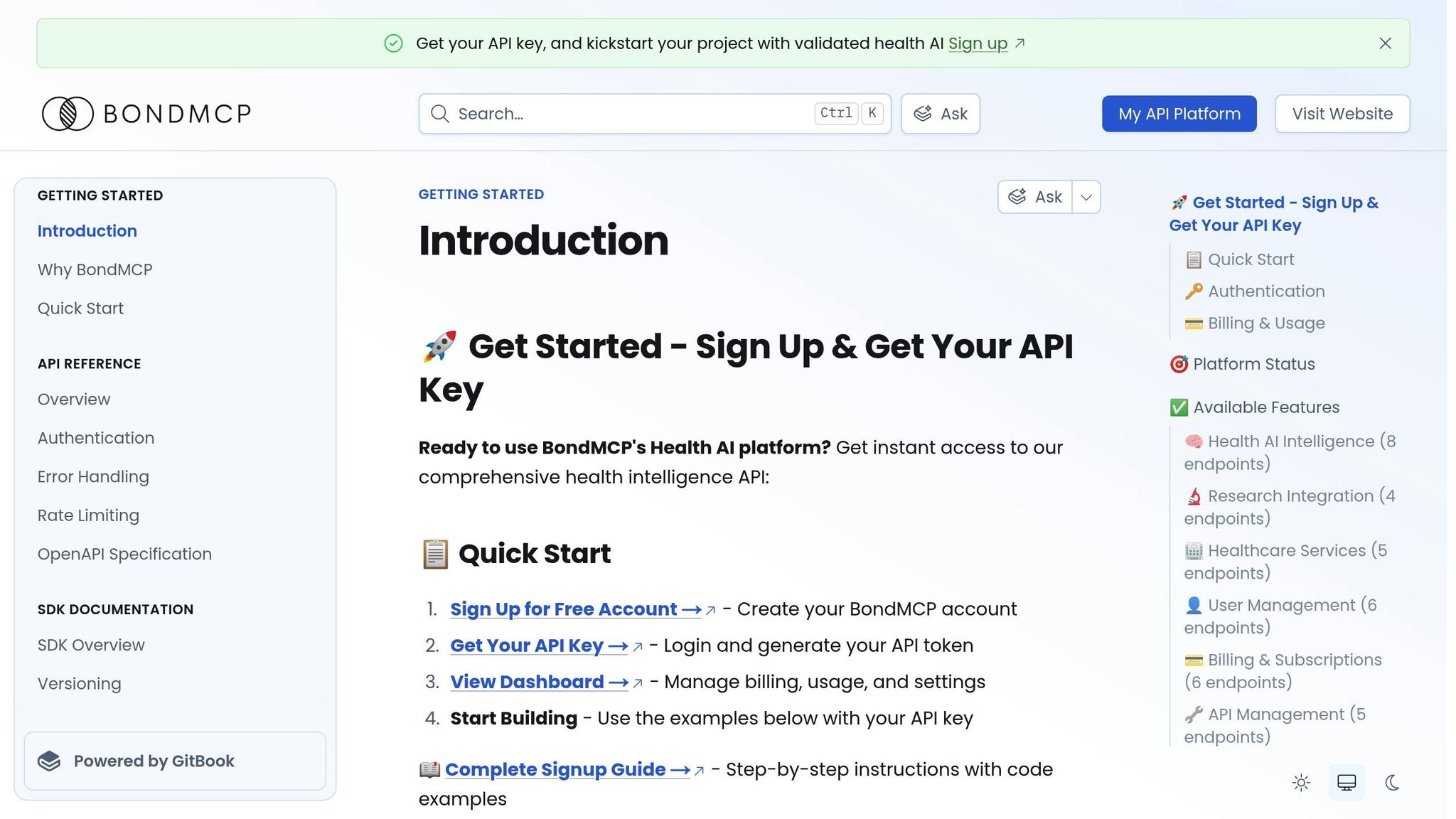
BondMCP addresses one of the biggest challenges in SDOH integration: fragmented data. Its unified intelligence layer connects disparate health data sources, creating a comprehensive view of both clinical and social factors. By bridging these gaps, the platform enables more informed and holistic care.
The platform's health-specific ontology provides a structured framework to understand the relationships between social conditions and health outcomes. For instance, when a patient is identified as prediabetic, BondMCP considers additional factors like food security, transportation access, and neighborhood walkability to recommend personalized interventions.
BondMCP’s context-aware orchestration takes this integration a step further. It builds detailed patient profiles by combining clinical markers with SDOH data. For example, if lab results flag a potential health risk, the system factors in the patient’s social environment to propose actionable care strategies.
Within this ecosystem, AI agents work collaboratively to analyze different aspects of SDOH data. One agent might focus on housing stability, while another evaluates employment trends. Together, they contribute to a comprehensive risk assessment, eliminating data silos and enabling a more complete understanding of patient needs.
For healthcare organizations, BondMCP simplifies technical challenges with plug-and-play orchestration. Instead of creating custom interfaces for each data source, the platform uses standardized protocols to connect with resources like census data, social service databases, and community health assessments.
Finally, the shared context layer ensures that SDOH insights influence every stage of patient care - from initial risk assessments to ongoing care management. This holistic approach allows providers to address not just symptoms but the deeper social factors that impact health outcomes.
Benefits of AI-Driven Context-Aware Solutions
AI-driven solutions, like those supported by BondMCP, bring transformative benefits to healthcare by enhancing both patient care and resource management.
With proactive care delivery, AI systems monitor clinical and social indicators continuously, identifying potential health risks before they escalate. Providers receive timely alerts when a patient’s social circumstances change, allowing for early intervention.
By reducing data fragmentation, these solutions create unified patient profiles that combine clinical and social information. This eliminates the need for providers to manually gather data from multiple sources, saving time and effort.
Dynamic health management ensures care plans evolve in real-time. For instance, if a patient moves to an area with limited access to healthy food, the system adjusts nutritional recommendations and connects them with local resources.
At the community level, population-level insights emerge when AI analyzes SDOH patterns across neighborhoods. Healthcare organizations can identify areas with high social risks and implement targeted preventive measures, shifting focus from reactive care to proactive strategies.
On an individual level, personalized resource allocation ensures patients receive tailored support. Instead of generic recommendations, AI suggests specific services - like nearby food banks or transportation programs - based on the patient’s unique needs and eligibility.
Finally, automation capabilities streamline administrative tasks, such as SDOH screening and intervention planning. This reduces the workload for healthcare providers, allowing them to focus more on patient interactions and less on paperwork, ultimately improving the quality of care delivered.
Ethical, Policy, and Implementation Considerations
Ethical Issues in Using SDOH Data
Incorporating social determinants of health (SDOH) data into predictive healthcare models introduces several ethical challenges that demand thoughtful attention. One of the primary concerns is privacy and consent. Since SDOH data often includes sensitive personal details, it extends beyond the boundaries of traditional healthcare consents, raising questions about how this information is collected and used.
Another pressing issue is algorithmic bias. For example, if a predictive model associates certain zip codes with higher hospital readmission rates, it might unfairly label all residents of those areas, leading to potential discrimination. This highlights the need for careful oversight to ensure models don't reinforce existing inequities.
Data ownership also becomes a complex issue. While clinical data clearly belongs within the patient-provider relationship, SDOH data often comes from third-party sources, such as census data, school records, or community surveys. This raises questions about who has the authority to use this information and for what purposes.
The concept of informed consent takes on new dimensions with SDOH data. Patients may not fully grasp how their social and economic circumstances are being factored into their care decisions. To address this, healthcare organizations must develop clear, easy-to-understand consent processes that explain how this data influences treatment planning.
Stigmatization is another major concern. When patients are flagged based on their social risk factors, it can lead to negative labeling. This, in turn, might result in unconscious bias from healthcare providers or even reduced quality of care for vulnerable populations.
Lastly, the ethical principle of beneficence requires that SDOH data be used to genuinely improve patient outcomes, not just to cut costs for healthcare systems. Identifying social risks should lead to meaningful interventions and support, rather than remaining a tool for categorization without actionable resources.
These ethical complexities underscore the need for careful planning and thoughtful implementation strategies.
Implementation Priorities for Health Systems
For health systems, integrating SDOH data requires balancing technical capabilities with meaningful patient care improvements. A top priority is workforce training. Clinical staff must be equipped to interpret social risk scores and translate them into effective interventions.
Another critical step is resource allocation, which involves investing in technology and building partnerships with community organizations like food banks, housing programs, and transportation services. These collaborations are essential for addressing the non-medical factors that impact health outcomes.
Care team restructuring is often necessary as SDOH integration broadens the scope of healthcare delivery. Many successful models include roles such as social workers, community health workers, and care coordinators who focus on addressing social challenges. These team members need access to the same data and predictive tools as clinical staff to ensure cohesive care.
To measure the success of SDOH initiatives, organizations should evolve quality metrics. This means going beyond traditional measures like hospital readmissions to include outcomes such as housing stability and access to nutritious food.
Interoperability standards are another key consideration. SDOH data must integrate seamlessly with existing electronic health record systems without adding unnecessary burdens to healthcare providers' workflows.
Equally important is community engagement. Building trust with the communities served - especially those that have faced historical healthcare inequities - requires transparency about how social data will be used. Interventions must also reflect the specific needs and values of the communities they aim to support.
Lastly, financial sustainability must be addressed. While SDOH interventions can reduce long-term healthcare costs, they often require significant upfront investments. Organizations need to explore reimbursement models that support these initiatives, particularly in systems still reliant on fee-for-service payment structures.
Policy Frameworks for SDOH-Driven Models
Policy frameworks play a crucial role in guiding the integration of SDOH data into healthcare. One example is Medicare Advantage programs, which now allow plans to offer supplemental benefits addressing social needs, such as transportation, meal services, and housing modifications. This reflects a growing recognition that addressing social factors can be more cost-effective than traditional medical interventions.
Medicaid waiver programs in some states also allow healthcare organizations to use Medicaid funding for services like housing assistance, nutrition programs, and community health worker support - provided they demonstrate improved health outcomes.
However, data sharing regulations need to evolve to accommodate the complexities of SDOH integration. Current HIPAA rules do not fully address the challenges of sharing data among healthcare providers, social services, and community organizations. New policies must strike a balance between protecting patient privacy and enabling effective collaboration.
Quality reporting requirements are also beginning to include SDOH measures. For example, the Centers for Medicare & Medicaid Services has started encouraging healthcare organizations to incorporate social risk factors into their routine care assessments and reporting.
Funding for SDOH initiatives remains fragmented. Coordinated funding mechanisms that bring together resources from healthcare, housing, transportation, and social services are essential for creating comprehensive approaches to addressing social determinants.
As predictive models powered by SDOH data become more advanced, regulatory guidance must keep pace. Clear standards for algorithm transparency, bias testing, and outcome monitoring are necessary to ensure these tools promote health equity rather than exacerbate disparities.
Finally, cross-sector collaboration policies are emerging to support partnerships between healthcare systems and community organizations. These policies address critical issues like liability, data-sharing agreements, and funding structures, enabling healthcare providers to work effectively with entities such as housing authorities and school districts.
To make SDOH-driven models successful, policy frameworks must support both technological progress and community-focused care. This requires ongoing collaboration between healthcare providers, technology developers, community organizations, and policymakers to build systems that address the root causes of health disparities.
sbb-itb-f5765c6
Social determinants of health (SDoH) and predictive data in healthcare
Conclusion and Key Takeaways
Incorporating social determinants of health (SDOH) into predictive models is transforming the way public health challenges are addressed. Throughout this guide, we've seen how SDOH data enhances predictive accuracy, moving beyond traditional clinical metrics to account for the broader factors that shape health outcomes.
Models that include data on housing stability, food security, access to transportation, and educational attainment consistently outperform those relying solely on medical records. This improved accuracy allows for better resource distribution and more focused interventions, particularly for communities that have historically been underserved. However, reaching this level of precision comes with its own set of challenges.
Data fragmentation remains a significant hurdle. Information from sources like census records and community surveys often exists in silos, making interoperability and real-time synchronization difficult for many health systems.
Solutions like BondMCP tackle this issue head-on. By offering a unified intelligence layer, BondMCP connects fragmented health data sources. Its health-specific ontology and plug-and-play orchestration enable seamless integration of SDOH data into existing clinical workflows. This creates predictive models that are not only more accurate but also context-aware.
Ethical concerns, such as algorithmic bias and the need for informed consent, underscore the importance of thoughtful implementation. Balancing improved health outcomes with patient privacy and fairness requires ongoing collaboration among healthcare providers, technology developers, and community leaders.
The future success of SDOH-driven predictive models depends on three key elements: a strong technical infrastructure capable of handling complex data integration, policy frameworks that encourage collaboration across sectors, and community involvement to ensure interventions are both effective and aligned with local needs.
Ultimately, healthcare systems must prioritize investments in technology and build meaningful partnerships with communities. The goal extends beyond better predictions - it's about addressing the root causes of health disparities and delivering personalized, equitable care on a large scale.
FAQs
How do Social Determinants of Health (SDOH) improve public health predictive models?
Social Determinants of Health (SDOH) in Predictive Models
Social Determinants of Health (SDOH) play a crucial role in improving the accuracy of public health predictive models. Factors such as income level, education, race, housing conditions, and access to healthcare services are powerful indicators of health outcomes. These can include risks for chronic diseases, rates of hospitalization, and overall life expectancy.
Incorporating SDOH into these models allows for a deeper understanding of which populations are most at risk. This, in turn, helps in designing more targeted interventions and strategies aimed at reducing health inequalities. By focusing on these factors, healthcare systems can prioritize proactive care, allocate resources more effectively, and work toward achieving fairer health outcomes across different communities.
What challenges arise when incorporating social determinants of health (SDOH) into predictive healthcare models, and how can they be overcome?
Integrating social determinants of health (SDOH) into predictive healthcare models comes with its fair share of challenges. Fragmented data sources, inconsistent quality, non-standardized formats, and privacy concerns all contribute to the difficulty of building a well-rounded and reliable dataset for effective modeling.
One key step toward overcoming these hurdles is implementing national data standards for SDOH within electronic health records (EHRs). Standardization ensures that data is collected and stored in a uniform way, making it easier to analyze and share. Offering financial incentives or linking quality-based measures to the collection and sharing of SDOH data can also motivate healthcare providers to participate more actively.
On the technical side, natural language processing (NLP) and AI can play a transformative role. These tools can process and structure unstructured data from a variety of sources, making it much easier to integrate SDOH into predictive models. By addressing these challenges, healthcare systems can generate insights that are not only more accurate but also more tailored to individual and community health needs. This paves the way for actionable public health strategies that truly make a difference.
What are the ethical concerns when using social determinants of health (SDOH) data in predictive healthcare models?
When incorporating SDOH (Social Determinants of Health) data into predictive healthcare models, ethical considerations are paramount. First and foremost, patient privacy must be safeguarded, and informed consent obtained to ensure sensitive personal information is not misused. Without these protections, individuals' trust in healthcare systems can erode.
Another critical factor is addressing biases in the data. If left unchecked, these biases can perpetuate or even worsen existing health disparities, undermining the very purpose of using SDOH data in the first place.
By focusing on fairness, transparency, and equity, healthcare organizations can responsibly harness SDOH data to enhance outcomes. This approach not only helps improve care but also reinforces trust and respects the rights of every individual.