
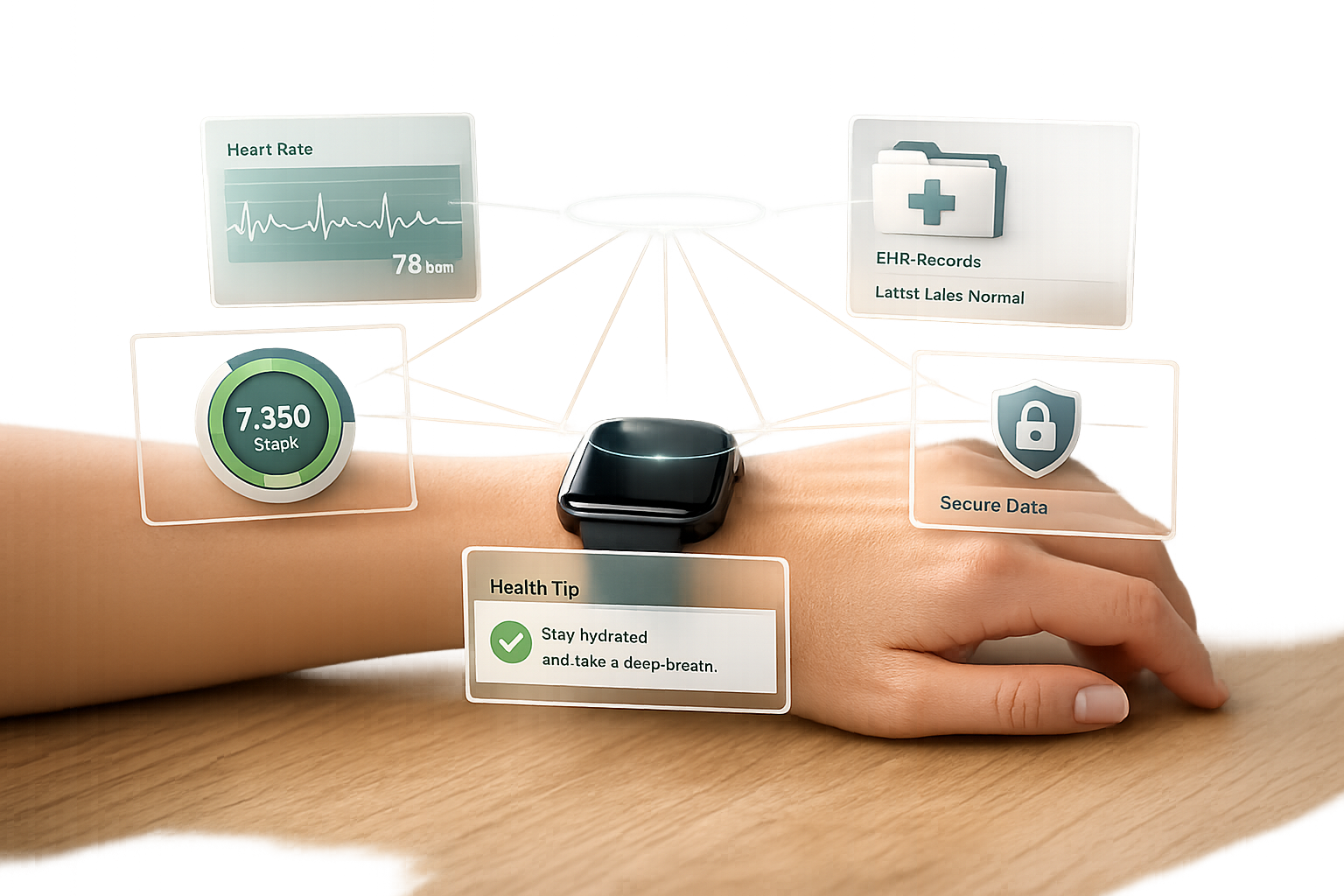
Health apps and devices often work in isolation, leaving you to piece together advice from wearables, lab results, and fitness trackers. Context-aware health agents solve this problem by combining real-time data to deliver personalized recommendations based on your unique health profile.
These systems use AI to integrate data from wearables, medical records, and daily habits, creating a unified health story. Tools like BondMCP enable seamless communication between devices and apps, ensuring your sleep tracker, fitness app, and lab results work together. This approach improves decision-making, optimizes health outcomes, and streamlines care.
Key takeaways:
- How It Works: Sensors collect real-time data (e.g., heart rate, glucose levels) and feed it to AI agents for analysis.
- Core Tech: BondMCP acts as a universal translator, connecting devices and data sources.
- Benefits: Faster insights, personalized health plans, and coordinated interventions.
- Real-World Impact: Systems like HEALTHGURU and BondMCP have shown improved sleep, motivation, and clinical outcomes.
With the healthcare AI market expected to grow 40–45% annually, these agents are transforming how we manage health by connecting fragmented data into actionable insights.
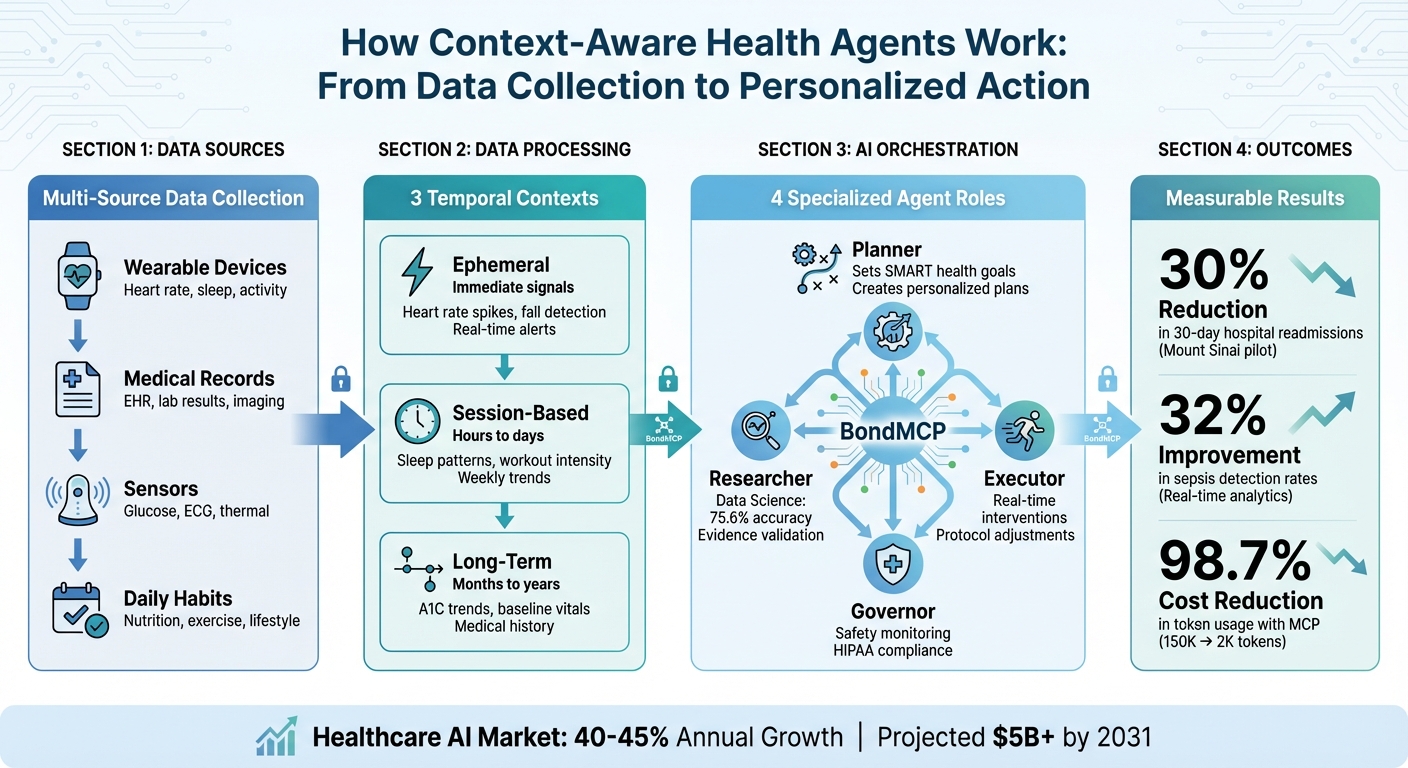
How Context-Aware Health Agents Process and Integrate Multi-Source Health Data
How AI Personalizes Preventive Health in Real Time
sbb-itb-f5765c6
How Sensor-Driven Context Acquisition Works
Sensor-driven context acquisition involves gathering and processing health data from wearables and connected devices. Modern wearables are equipped with various sensors, such as motion sensors (accelerometers, gyroscopes), biometric sensors (ECG, heart rate monitors), and thermal sensors, to track physiological markers in real time [9][11]. This data is transmitted to health agents using Bluetooth Low Energy (BLE), Wi-Fi, or mobile networks, creating a steady stream of health-related information. These continuous data streams are the foundation for context-aware health systems.
The frequency of data collection depends on the specific application. For example, glucose sensors provide minute-by-minute updates, while other devices collect data periodically to conserve battery life [9]. Studies have shown that such programs can lead to improved patient outcomes [9].
Once collected, the raw data undergoes normalization and structuring. Since devices often format data differently, health agents rely on standards like HL7/FHIR and APIs or the Model Context Protocol (MCP) to unify these inputs [8][13]. For instance, Discovery Health introduced Change Data Capture (CDC) technology in 2024, cutting processing times from 24 hours to just seconds. This advancement enables faster, more personalized engagement with members [12].
This standardized data framework supports sophisticated AI-driven operations.
"MCP-AI supports real-time task orchestration, modular reasoning, and physician-in-the-loop decision-making... It operates as a cognitive middleware layer that bridges AI agents with EHR systems." - arXiv:2512.05365v1 [13]
A team of agents, including Data Science, Domain Expert, and Health Coach agents, works together to analyze numerical trends, provide context, and promote behavior changes [14][4]. This collaboration has achieved a 75.6% success rate in creating robust statistical analysis plans, compared to 53.7% for older systems [8][4]. Real-time analytics, combined with AI, have also improved sepsis detection rates by up to 32%, highlighting the value of immediate data availability for better clinical outcomes [12].
3 Types of Health Contexts
After acquiring raw data, health agents interpret it across three temporal contexts:
- Ephemeral contexts: These capture short-lived signals, such as a heart rate spike during a stressful moment, a sudden drop in oxygen saturation, or fall detection alerts [9][10]. These brief data points prompt immediate actions but are not stored long-term.
- Session-based contexts: These track patterns over hours or days, like last night's sleep stages, yesterday's workout intensity, or weekly step counts [5][8]. By focusing on short-term trends, agents can identify emerging patterns without interference from long-term variability. For instance, if sleep quality has declined over the past week, recommendations can be made to correct the issue before it worsens.
- Long-term contexts: These maintain records spanning months or years, such as a three-month resting heart rate baseline, A1C trends for diabetes management, genetic markers, or a complete medical history [13][14]. In December 2025, a simulation of a 58-year-old patient with Type 2 Diabetes used the MCP-AI framework to integrate real-time glucometer data with A1C trends. This process identified glucose variability, suggested care adjustments, and flagged contraindications based on renal function [13].
Data Collection and Processing Methods
Traditionally, the ETL (Extract, Transform, Load) process has been used to collect, standardize, and store data. While effective for batch processing, ETL often involves delays of up to 24 hours, making it less suitable for time-sensitive health interventions [12].
In contrast, CDC (Change Data Capture) offers real-time responsiveness. By capturing data changes as they happen and streaming them immediately to processing systems, CDC reduces latency from hours to seconds, enabling prompt health decisions [12]. This shift toward real-time monitoring is a major factor in the projected growth of the IoT healthcare market, which is expected to reach $289 billion by 2028 [9].
"IoT devices automate the collection of patient data, reducing the need for manual monitoring and data entry. This leads to enhanced efficiency for healthcare providers." - SunTec.AI [9]
For sensor-driven health systems, implementing CDC is crucial for real-time insights, as traditional ETL alone cannot meet the demands of immediate data processing. Additionally, strong data governance measures, such as encryption and multi-factor authentication, are essential to safeguard health data streams and ensure compliance with regulations like HIPAA and GDPR [9].
Core Components of Context Engineering
Context engineering for health agents revolves around three main pillars: data processing, action coordination, and privacy safeguards. At the heart of this system is the Model Context Protocol (MCP), which acts like a universal interface - similar to the USB-C standard - allowing AI agents to securely access and interpret data from various sources, including electronic health records (EHRs), imaging archives, and lab databases [7]. Together, these components create a seamless, sensor-driven platform designed to optimize health management.
Context Fabric Storage
The context fabric serves as the memory hub for health agents. It stores everything from patient states and clinical goals to reasoning history and task logic, all managed with version control [5][13]. By using vector databases, raw clinical data - like EHR entries, vital signs, and diagnostic images - can be translated into a unified vector space. This enables agents to merge and interpret information across different data types [15][17].
To balance immediate needs with historical depth, systems differentiate between short-term memory (e.g., session data and alerts) and long-term memory (e.g., clinical knowledge bases or patient history) [15][17]. Instead of pre-loading all data, agents use a just-in-time (JIT) approach, dynamically pulling in specific data only when required. This prevents "context rot", which can degrade performance in long-running tasks [16]. A notable example is Anthropic's "Claude Code", which in 2025 utilized Bash commands like head and tail to efficiently analyze large databases while keeping the context lean [16]. This ensures that agents work with the most relevant data at all times, maintaining both speed and accuracy.
"Context engineering refers to the set of strategies for curating and maintaining the optimal set of tokens (information) during LLM inference." - Anthropic [16]
The choice of storage depends on the specific use case:
- Vector databases (e.g., Pinecone, FAISS): Ideal for semantic search, retrieval-augmented generation (RAG), and combining multimodal data.
- Graph databases: Useful for mapping relationships, like those between medical codes (e.g., SNOMED CT, ICD-10), and validating clinical logic.
- Relational databases (e.g., PostgreSQL): Best for managing structured clinical data, audit logs, and session IDs.
| Storage Type | Primary Use Case | Scalability | Query Performance | Cost |
|---|---|---|---|---|
| Vector Database (e.g., Pinecone, FAISS) | Semantic search, RAG, multimodal data fusion | High (Horizontal) | Fast for similarity/nearest neighbor | Moderate to High (Managed) |
| Graph Database (e.g., Knowledge Graphs) | Mapping relationships (SNOMED CT, ICD-10), logic validation | Moderate | High for complex relationship traversal | Moderate |
| Relational Database (e.g., PostgreSQL) | Structured clinical data, audit logs, session IDs | High | Fast for structured/SQL queries | Low |
To avoid context degradation, systems use techniques like compaction and summarization. When token limits are reached, agents summarize ongoing conversations and reinitialize with high-fidelity summaries. This maintains coherence while ensuring critical details are preserved [16].
Orchestrator for Agent Coordination
The orchestrator, often referred to as the system's "Brain", plays a key role in interpreting user intent, routing tasks to specialized sub-agents, and ensuring smooth collaboration [5][4]. In healthcare, this involves coordinating various agents, such as:
- Data Science agents: Handle numerical analysis.
- Domain Expert agents: Provide clinical insights.
- Health Coach agents: Offer behavior change recommendations [14][4].
This modular setup has delivered real results. For instance, a specialized Data Science agent scored 75.6% in creating high-quality statistical analysis plans, outperforming standard base models, which scored 53.7% [4].
The orchestrator maintains a shared memory object that tracks the current analysis state, reasoning steps, and pending tasks. For example, if a patient's glucose levels show concerning variability, the orchestrator can assign tasks to various agents: the Data Science agent to analyze the pattern, the Domain Expert agent to assess its clinical relevance, and the Health Coach agent to recommend lifestyle adjustments. All of this happens while maintaining a unified view of the patient’s care plan [13].
"MCP-AI supports real-time task orchestration, modular reasoning, and physician-in-the-loop decision-making... It operates as a cognitive middleware layer that bridges AI agents with EHR systems." - A. Ali Heydari et al., arXiv:2512.05365v1 [13]
This setup also enables agentic search, where the LLM autonomously uses tools to retrieve data layer-by-layer instead of relying solely on preloaded information [16]. By ensuring each agent gets only the context it needs, the orchestrator reduces noise and improves the precision of recommendations.
Data Governance and Privacy
Strong data governance is essential for managing sensitive health information. Health agents must comply with regulations like HIPAA (U.S.), GDPR (Europe), and FDA Software as a Medical Device (SaMD) guidelines [18][19][13]. Key measures include encrypting data at rest and in transit using protocols like TLS 1.2 or 1.3, and implementing Role-Based Access Control (RBAC) and OAuth 2.0 to limit access to Protected Health Information (PHI) [18][19].
A dedicated privacy layer ensures compliance through field-level encryption (e.g., AES-GCM) and tamper-evident audit logging [2]. For instance, in 2024, Mount Sinai Health System piloted an AI agent for heart failure patients' post-discharge follow-ups. The agent captured symptoms via structured questions and escalated high-risk cases to cardiology nurses. This resulted in a 30% reduction in 30-day readmissions and a fourfold increase in follow-up compliance, with all interactions securely documented in the EHR [19].
| Security Layer | Recommended Technology/Standard | Purpose |
|---|---|---|
| Authentication | JWT / OAuth 2.0 | Verifying user and system identity [19] |
| Transport | TLS 1.3 + HTTPS | Securing data during transmission [19] |
| Interoperability | HL7 / FHIR | Standardized, secure medical data exchange [18][13] |
| Secret Management | HashiCorp Vault | Protecting API keys and sensitive credentials [19] |
| Data Integrity | Audit Logging / Traceability | Recording reasoning steps for clinical accountability [17][13] |
When using external LLM APIs, routing data through HIPAA-compliant gateways like Azure OpenAI or Anthropic's HIPAA-aligned SDKs ensures secure transmissions [19]. For secondary analysis or training, methods like "Safe Harbor" or "Expert Determination" can de-identify data in compliance with HIPAA standards [19]. Persistent memory stores used for longitudinal health tracking must adhere to the same security standards as EHRs [17].
"Context engineering can embed policy and access controls into the information pipelines that feed AI agents, ensuring only appropriate data is used and shared." - DeepInfinity AI [20]
Human oversight remains critical. Establishing clear human-in-the-loop (HITL) protocols ensures that agents escalate cases to clinicians when confidence is low or when complex situations arise, balancing automation with accountability.
Building Health-Specific Agent Architectures
When it comes to improving health outcomes, relying on a single, all-encompassing AI model often leads to errors, especially when managing multiple domains like nutrition, sleep, and clinical reasoning simultaneously. A better approach involves creating modular teams of specialized agents, each with a distinct role. This way, tasks are divided, reducing the risk of cross-domain mistakes and improving overall performance [21].
4 Key Agent Roles
To optimize health systems, four specialized agent roles are crucial. Each plays a unique part in the workflow, ensuring that every aspect of health management is covered effectively.
The Planner
This agent sets the strategy. Often likened to a Health Coach, it uses psychological tools like motivational interviewing to craft SMART (Specific, Measurable, Achievable, Relevant, Time-bound) health plans. For example, instead of generic advice like "get more sleep", the Planner might set a goal of achieving seven hours of sleep per night within 30 days, with weekly progress reviews [14][4].
The Researcher
Focused on data and evidence, this role splits into two sub-agents. The Data Science agent handles statistical analysis, such as identifying trends in wearable data, while the Domain Expert agent ensures insights are backed by verified medical literature, like research from NCBI. A notable example is Google Research's Personal Health Agent (PHA) framework, which analyzed data from 1,200 users in September 2025. The Data Science agent scored 75.6% in crafting high-quality statistical plans, significantly outperforming base models that scored 53.7% [4].
The Executor
This agent turns plans into actions. By combining insights from the Researcher and goals from the Planner, it delivers real-time interventions, adjusts protocols based on lab results, and modifies training intensity using recovery data. For instance, it doesn’t just suggest changes - it actively coordinates interventions across various health areas [14][5].
The Governor
Safety and compliance are this agent’s priorities. It monitors all recommendations to ensure they remain within clinical safety limits, using "contraindication gates" to flag potential risks. For example, in September 2025, Artera implemented MCP servers that restricted agents from accessing sensitive data, like social security numbers, by designing tools that excluded such capabilities. This architectural choice reduced the risk of data leaks [6][3].
"A personal health agent shouldn't just chat about sleep; it should compute it, contextualize it, and coach you through changing it."
– Cognaptus Blog [14]
| Agent Role | Core Function | Contribution to Outcomes |
|---|---|---|
| Planner | Goal-setting & strategy | Creates structured, actionable health plans (SMART) [14][4] |
| Researcher | Statistical analysis & validation | Provides data-driven, evidence-backed health insights [14][4] |
| Executor | Intervention & behavior change | Drives adherence through actionable interventions [14][5] |
| Governor | Monitoring & safety | Ensures safety, privacy, and reduces AI errors [6][3] |
These roles work together seamlessly, laying the groundwork for setting up your AI wellness system where tools like BondMCP synchronize their efforts.
Using BondMCP for Agent Communication
Once roles are defined, effective communication between agents becomes critical. That’s where BondMCP comes in. Think of it as the USB-C of health AI - a universal translator that enables agents to share data without the need for custom APIs. With BondMCP, agents can instantly interpret data from wearables, lab results, or electronic health records (EHRs), streamlining collaboration [7][6].
BondMCP operates on three core principles: discrete functions, shared resources, and consistent prompts. This ensures smooth coordination between agents. For example, in January 2026, researcher Mohammed A. Shehab developed the "Agentic-AI Healthcare" prototype using MCP. It orchestrated three agents - a Symptom Checker, a Medication Agent, and an Appointment Agent - while maintaining HIPAA compliance and supporting multilingual interactions in English, French, and Arabic. By using MCP’s standardized interface, the system avoided the need for custom integration code and maintained secure, transparent diagnostic processes [2].
Disconnected systems, like a fitness app that doesn’t talk to your sleep tracker, create unnecessary manual work for users. BondMCP solves this by creating a shared context layer. Agents can dynamically access patient-specific data in real time, such as pulling glucose readings to adjust nutrition plans, while maintaining an auditable compliance trail. This approach is scalable and aligns with predictions of agentic AI in healthcare growing 40–45% annually, potentially surpassing $5 billion by 2031 [6].
"MCP is not just a protocol; it is the information backbone of the next generation of digital health."
– Wolters Kluwer [6]
With BondMCP, you get a unified system where all your health data works together. Longevity goals guide decisions, lab results update supplement plans automatically, and recovery metrics fine-tune your workouts - all seamlessly coordinated by agents with a shared understanding of your health.
How to Build Sensor-Driven Agents
Development Playbook
To create sensor-driven health agents, you need to assemble a team of specialized sub-agents. These typically include:
- A Data Science (DS) agent to process time-series data from wearables.
- A Domain Expert (DE) agent to verify insights against medical research.
- A Health Coach (HC) agent to turn those insights into actionable behavior strategies [1][14].
For example, in August 2025, researchers introduced the Personal Health Agent (PHA) framework, leveraging data from the WEAR-ME study. This study incorporated Fitbit metrics like daily steps and heart rate, along with questionnaires and blood biomarker data. The DS agent utilized a two-stage "plan → code" workflow, which significantly improved unit-test pass rates for time-series analysis compared to standard language models [1][14]. This method also helped avoid errors in data visualization.
To get started, keep your data pipeline simple. Begin by integrating one or two types of sensors - such as those tracking sleep or activity. Normalize this data into a consistent format and test your DS agent's ability to identify meaningful patterns. Once this phase is successful, introduce the DE agent to validate findings against clinical standards. Only after both agents are functioning should the HC agent be activated to provide coaching.
"Separate compute, context, and coaching, then make the handoffs auditable. That's how consumer health AI graduates from vibes to vitals."
- Cognaptus [14]
Scaling these systems requires efficient orchestration, and this is where BondMCP plays a critical role. Instead of building unique APIs for every new sensor or data source, BondMCP acts as a universal translator. It allows agents to seamlessly access and share functions across various tools. For instance, your sleep tracker can inform a training coach, lab results can update supplement recommendations, and longevity goals can guide real-time decisions - all without overhauling your infrastructure.
Once the agent architecture is in place, selecting the right data pipeline method becomes essential for ensuring real-time functionality.
Data Pipeline Method Comparison
The choice of data pipeline method directly impacts whether your agents can operate in real time or lag behind. Here's a breakdown of the most common methods:
| Method | Real-Time Suitability | Pros | Cons |
|---|---|---|---|
| ETL | Low | Ensures high data quality; well-structured for analytics | Slow processing; high engineering effort; lacks flexibility [6] |
| ELT | High | Faster ingestion; agents can process raw data with "plan → code" workflows [14] | Requires significant compute power; risk of data spillage without encryption |
| CDC | Very High | Ideal for continuous vitals; allows low-latency data streaming | Challenging to implement across diverse wearable ecosystems |
| BondMCP | Optimal | Standardized, secure, and scalable for multi-agent workflows [6] | Requires MCP-aware agents [3] |
For dynamic health interventions like continuous glucose monitoring or heart rate variability tracking, CDC (Change Data Capture) is the best option for minimizing latency. However, its implementation can be complex, especially when dealing with a wide range of wearables. BondMCP simplifies this process by providing a standardized, secure platform designed specifically for agent-to-agent communication [3][6].
The healthcare AI market is expected to grow by 40–45% annually and could surpass $5 billion within five years [6]. This growth is largely fueled by systems that can process sensor data in real time and coordinate multiple specialized agents. The data pipeline method you choose today will set the foundation for your system's ability to perform in real time.
Long-Term Health Optimization Strategies
Managing Context Limitations
Real-time sensor data is great for immediate decisions, but long-term health optimization requires a deeper focus on historical context. The challenge? Long-term data tracking can easily lead to information overload. With months or even years of accumulated health metrics, processing everything at once can overwhelm systems and obscure the most important insights.
One way to tackle this is through tiered memory strategies that help prioritize relevant data. For example, session compaction condenses fragmented records into concise summaries. Instead of wading through endless details, an agent could review monthly sleep summaries that highlight key metrics like average duration, trends in sleep quality, and correlations with training load. This approach lightens the cognitive load while keeping the most critical insights intact [7].
Another critical tool is structured note-taking, which creates a clear, verifiable record of decisions. By documenting clinical objectives and reasoning in version-controlled files, you ensure that every adjustment is traceable. For instance, if you tweak your supplement routine in March 2026 due to low vitamin D levels, the change - and the reasoning behind it - remains accessible for future reference. These methods turn AI systems from passive data storage units into active participants in personalized, ongoing care.
Using BondMCP for Continuous Tracking
Efficient data summarization is just the beginning. To truly optimize long-term health, continuous tracking is essential, and BondMCP offers a solution to one of the biggest hurdles: maintaining state persistence across sessions. Unlike systems that treat each interaction as a standalone event, BondMCP retains session-based context, allowing AI agents to build on past interactions [23].
This continuity is crucial because health optimization is an interconnected process. For example, poor sleep quality today might affect your workout tomorrow, and how hard you push in that workout could impact recovery needs for the next week. BondMCP’s shared context layer ensures these relationships are preserved and understood [13]. It also acts as the intelligence layer that unifies data from various sources, creating a seamless flow of information.
Another strength of BondMCP is its ability to maintain reasoning continuity during transitions. Whether you’re moving from a general wellness coach to a strength training specialist, or even switching healthcare providers, BondMCP ensures that the full history and logical context are carried forward. This means new agents or providers inherit all relevant background, saving time and avoiding redundant efforts [13].
In September 2025, Infinitus Systems showcased this capability by deploying an MCP server that automated over 7 million clinical calls - totaling 100 million minutes of healthcare conversations. By integrating BondMCP’s APIs, Infinitus enabled AI agents to handle time-sensitive workflows for 44% of Fortune 50 healthcare companies [26].
"MCP is to AI what FHIR is to healthcare IT. It creates the foundation for interoperability, so AI agents can safely and effectively take action in the real world."
- Ankit Jain, CEO of Infinitus [26]
For developers, BondMCP also delivers significant cost savings. By using MCP to load only essential tool definitions, token usage can drop from 150,000 to just 2,000 - a staggering 98.7% reduction in cost and processing time [24]. This efficiency makes it feasible to scale continuous, long-term tracking without breaking the bank. And with forecasts predicting the agentic AI healthcare market to grow 40–45% annually, potentially surpassing $5 billion in five years, the economic potential is hard to ignore [22].
BondMCP’s ability to streamline and unify data tracking is a cornerstone of a personalized and effective health optimization strategy.
Conclusion: The Future of Context-Aware Health Agents
Context-aware health agents are reshaping personalized healthcare by turning scattered data into a seamless stream of intelligent, ongoing care. Instead of relying on AI tools for personal health or static dashboards, these systems continuously track patient progress, coordinate care teams, and adapt patient-centered treatment plans in real time [27][7]. This transition from reactive to proactive AI is changing healthcare from a series of disconnected actions into an integrated, dynamic process. Protocols like BondMCP are at the forefront of this change, helping unify diverse data sources.
BondMCP acts as a critical "universal interface" for healthcare AI. It provides a standardized framework that enables agents to connect with a variety of systems - such as electronic health records, lab databases, wearable devices, and imaging archives - without the need for custom integrations [25][28][30]. This level of interoperability allows devices and platforms to work together effortlessly, ensuring that health strategies are updated in real time.
The market for agentic AI in healthcare is on track to grow by 40–45% annually, with projections suggesting it could surpass $5 billion in the next five years [22][6]. Organizations leveraging standardized protocols like BondMCP are already seeing integration times reduced from months to just days [29].
"MCP is not just a protocol; it is the information backbone of the next generation of digital health."
- Wolters Kluwer [22]
FAQs
What data sources should I connect first?
To begin, link data sources that deliver real-time and detailed health insights. Wearable devices, such as smartwatches and fitness trackers, are perfect for ongoing monitoring of vital signs and activity levels. On top of that, bringing in electronic health records (EHRs) from established systems is essential, as these provide in-depth clinical information. Merging these data streams early on creates a solid base for tailoring health solutions to individual needs.
How does BondMCP keep my health data private?
BondMCP places a strong emphasis on safeguarding health data privacy through robust security measures like encryption, authentication protocols, and strict access controls. These tools work together to shield sensitive information from risks such as unauthorized access, tampering, or exposure. Built with secure interoperability in mind, BondMCP allows for seamless data sharing and usage while keeping confidentiality intact. By adhering to best practices in digital health security, it tackles modern cybersecurity challenges, including phishing schemes and data breaches.
When should an agent escalate to a clinician?
When an agent identifies signs that call for professional medical evaluation or intervention, it should promptly escalate the case to a clinician. These signs may include critical health risks, abnormal vital signs, or symptoms indicative of serious conditions, such as chest pain or difficulty breathing. Escalation decisions are typically based on pre-defined thresholds, clinical guidelines, or situations where the agent's assessment is uncertain. This process ensures timely medical attention, helps prevent complications, and addresses any conflicts with established medical standards.