

In healthcare, managing data from wearables, fitness apps, lab tests, and more can feel disconnected. Multi-agent systems solve this by coordinating multiple software agents to work together, creating a personalized and automated health management experience. Here's how it works:
- Multi-Agent Systems: Networks of autonomous agents that collaborate to handle complex tasks.
- Task Allocation: Distributes responsibilities among agents based on skills, workload, and task needs.
- Dynamic Allocation: Adapts in real-time, ensuring timely, efficient decisions.
For example, sleep data from a wearable can prompt adjustments in workout intensity or supplement schedules. These systems also prioritize tasks - like handling emergencies or optimizing daily routines - using algorithms (rule-based, probabilistic, machine learning, etc.).
However, challenges like fragmented data and agent coordination require solutions like BondMCP, a framework that unifies health data, standardizes communication, and simplifies integration. This approach ensures agents work together effectively, offering users streamlined, personalized health insights while reducing manual effort.
Multi-agent task allocation is reshaping health platforms, enabling smarter coordination and faster decisions for better care.
Building Cloud Native Agentic Workflows in Healthcare with AutoGen

Core Principles of Dynamic Task Allocation
Dynamic task allocation is reshaping workflows in health platforms by making real-time decisions about task assignments. Unlike traditional systems that follow rigid, pre-set rules, this approach constantly adapts to current conditions, priorities, and available resources. Let’s dive into how agents work together to make this system function seamlessly.
Understanding Dynamic Task Allocation
Dynamic task allocation assigns tasks in real time, responding to the current context and priorities [1][4]. This is a big departure from static systems, where tasks are pre-assigned and remain unchanged, no matter how circumstances evolve.
In health platforms, this adaptability is especially important. Imagine a patient’s wearable device detects an abnormal heart rate. Instead of waiting for a scheduled review, a monitoring agent can instantly alert a scheduling agent to arrange a follow-up [1]. The system acts based on what’s happening now, not on a plan made hours or days earlier.
For dynamic allocation to work well, clear role definitions are essential. Each agent must have specific responsibilities aligned with clinical or administrative workflows [1][3]. For instance, one agent might handle compliance monitoring, another patient intake, and a third medication management. Tasks are then matched to agents based on their expertise and current workload.
This real-time system has transformed administrative processes. Multi-agent systems can automate complex tasks like prior authorization requests, cutting processing times from hours to mere minutes - all without manual input [2]. Unlike traditional approaches, these agents don’t just follow scripts; they adapt to changing priorities and resources.
Agent Coordination and Interoperability
Dynamic task allocation relies heavily on smooth coordination between agents. Standardized communication protocols are key, as they allow agents to communicate effectively, regardless of the systems or vendors they originate from [2][5].
Here’s how it works: when processing an insurance claim, one agent extracts patient data, another verifies eligibility, and a third submits the claim. These steps happen in a synchronized workflow [2]. Each agent knows when to take over and what information to pass along to the next.
The success of this coordination hinges on interoperability - agents need to use common data formats and health-specific ontologies to ensure different systems can work together seamlessly [5]. This standardization eliminates the communication breakdowns that often plague traditional health IT systems.
Another critical aspect is bi-directional communication, which allows agents to both share data and request additional details when needed. This makes the system more resilient, capable of handling exceptions and unusual cases without faltering.
| Traditional Workflow | Multi-Agent System Workflow |
|---|---|
| Manual task assignment | Automated, context-driven assignment |
| Human handoffs between steps | AI agent handoffs |
| Higher error rates | Lower error rates (with validation) |
| Processing time in hours | Processing time in minutes |
| Siloed data systems | Unified, interoperable data |
Context Awareness in Dynamic Allocation
Context awareness is what enables agents to make smart, informed decisions. By analyzing real-time data - like patient health metrics, device readings, user preferences, and external factors - agents can adjust task priorities on the fly [1][4]. Without this, even the most advanced systems would miss critical information.
Agents take into account a wide range of factors, including clinical data, administrative needs, and environmental conditions. For example, lab results, insurance status, or even seasonal trends can influence task urgency [1][4].
Picture an agent managing medication reminders. Instead of sending alerts at fixed times, it considers recent lab results that might indicate a serious condition and adjusts the reminder’s priority. If wearable data shows a patient’s stress levels are spiking, the system might prioritize stress management tasks over routine reminders [1][4]. This flexibility ensures tasks align with real-world needs.
Context awareness also extends to understanding user habits. For instance, if a patient typically exercises in the morning, agents can coordinate to suggest pre-workout supplements at the right time, prepare recovery protocols post-exercise, and tweak evening routines for better sleep. This constant adjustment based on diverse inputs is what makes dynamic task allocation so effective.
Task Prioritization Algorithms for Multi-Agent Systems
In multi-agent health systems, getting task prioritization right is key. These algorithms decide which tasks take priority when multiple health-related activities are vying for attention and resources. The difference between smooth operations and inefficiency often comes down to how well these systems prioritize.
Common Task Prioritization Algorithms
Rule-based algorithms are the backbone of many health task prioritization systems. These rely on fixed decision trees guided by clinical protocols. For instance, if a patient’s blood pressure exceeds 140/90 mmHg, a rule-based system might immediately prioritize medication reminders and schedule follow-up monitoring over routine wellness tasks. The predictability of these systems is their biggest advantage - they align closely with clinical guidelines, making it easy for healthcare providers to understand and trust the decision-making process. However, they can struggle with complex scenarios that don’t fit neatly into predefined categories.
Probabilistic algorithms take a different approach by assigning scores to tasks based on historical data and real-time context. These systems consider factors like patient adherence, seasonal health trends, and the success rates of past interventions. For example, a probabilistic algorithm might prioritize sleep optimization for a stressed-out patient, recognizing that better sleep often helps reduce stress.
Hierarchical priority systems structure tasks into levels, ensuring a clear order of importance. Critical health alerts take the top tier, followed by preventive measures, routine monitoring, and lifestyle tasks. This setup guarantees that emergencies are addressed immediately while still keeping long-term health goals in sight.
Machine learning-based algorithms bring adaptability into the mix. They learn from user interactions and health outcomes to create a personalized experience. For example, if a patient responds better to evening medication reminders instead of morning ones, the system adjusts future schedules accordingly. These algorithms shine in their ability to evolve with individual needs, making them ideal for dynamic health management.
These foundational strategies lay the groundwork for systems that can adapt in real time, recalibrating priorities based on changing health indicators.
Algorithm Adaptation to Changing Health Contexts
Health is dynamic, and task prioritization algorithms need to keep up. They adjust priorities by factoring in user goals, timing, and the availability of resources, ensuring tasks align with the current health context.
User preferences can heavily influence task weighting. For instance, someone aiming to lose weight might see nutrition tracking and exercise reminders take precedence, while a person managing diabetes might have glucose monitoring and medication adherence tasks pushed to the top.
Timing also matters. Mornings might focus on medication reminders and health assessments, while evenings could emphasize recovery routines and preparation for the next day. Seasonal changes add another layer - tasks like hydration reminders or vitamin D supplementation might take higher priority during specific times of the year.
Resource availability is another critical factor. When multiple agents compete for limited resources like user attention or device connectivity, algorithms must find a balance between immediate needs and long-term goals. For example, during an acute health episode, non-urgent tasks may be delayed to focus on critical interventions.
Feedback loops are essential for fine-tuning these systems. If a patient consistently ignores certain reminders or struggles with adherence, the algorithm can tweak its approach by adjusting timing, messaging, or even bundling tasks together. This adaptability ensures the system evolves alongside user behavior, making it more effective over time.
Task Prioritization Algorithm Comparison
Here’s how these algorithms stack up in different scenarios:
| Algorithm Type | Response Time | Adaptability | Clinical Accuracy | Resource Efficiency | Best Use Cases |
|---|---|---|---|---|---|
| Rule-based | Immediate | Low | High | High | Emergency protocols, medication management |
| Probabilistic | Fast | Medium | Medium-High | Medium | Risk assessment, preventive care scheduling |
| Hierarchical | Fast | Medium | High | High | Multi-condition management, care coordination |
| Machine Learning | Variable | High | Variable | Low-Medium | Personalized optimization, behavior change |
| Hybrid Systems | Fast | High | High | Medium | Comprehensive health platforms, complex cases |
- Rule-based algorithms offer fast responses and high clinical accuracy, making them perfect for emergencies but less flexible in complex situations.
- Probabilistic systems strike a balance between speed and adaptability, excelling in risk assessment and preventive care.
- Machine learning algorithms are highly adaptable but resource-intensive, making them best for personalized health management.
- Hybrid systems combine the strengths of multiple approaches - rule-based logic for emergencies, probabilistic methods for routine scheduling, and machine learning for personalization. This combination creates a versatile solution for diverse health needs.
The choice of algorithm can dramatically affect both user experience and health outcomes. By aligning the right algorithm with the right use case, health systems can deliver more responsive, effective care tailored to individual needs.
sbb-itb-f5765c6
Applications and Implementation Challenges
Multi-agent task allocation has the potential to revolutionize personalized care, offering tailored solutions for individual health needs. However, making these systems work in real-world settings requires meticulous planning and overcoming various hurdles.
Personalized Health Optimization Applications
Dynamic task allocation allows multi-agent systems to adapt in real time to changing patient needs. These systems enable seamless coordination between agents - like sleep trackers, fitness advisors, and nutrition planners - to provide holistic care.
Take circadian rhythm as an example. A sleep agent might analyze wearable data and notify a nutrition agent to adjust caffeine intake, while a fitness agent modifies workout intensity to support better recovery. This kind of real-time collaboration ensures that every aspect of a patient’s health is interconnected and optimized.
In chronic disease management, such as diabetes care, these systems shine even brighter. A glucose monitoring agent can trigger immediate actions when blood sugar spikes, while a meal planning agent adjusts dietary recommendations based on individual responses. At the same time, an exercise agent can tailor workout routines to align with current glucose levels, ensuring safe and effective physical activity.
Preventive care is another area where multi-agent systems excel. For instance, a lab analysis agent can evaluate biomarkers and share findings with a supplement recommendation agent, which then fine-tunes dosages and timing. Meanwhile, fitness and sleep agents use this data to adjust training and recovery plans, ensuring a comprehensive approach to health management.
While the benefits of these systems are clear, their implementation is not without challenges.
Implementation Challenges and Solutions
Bringing multi-agent systems into practice involves navigating several technical and operational roadblocks:
- Data Fragmentation: Health data is often scattered across platforms in different formats, making integration complex.
- Coordination Issues: Without a unified framework, agents may struggle to collaborate effectively, especially when managing sensitive health data.
- Real-Time Processing: Balancing immediate responses to urgent health needs with ongoing, long-term optimization is a delicate task.
To address these challenges, several strategies can streamline implementation. Improved interoperability allows seamless data sharing across platforms while maintaining strong security measures. Standardized communication protocols ensure that agents can exchange information effectively. Context-aware orchestration gives agents a shared understanding of user preferences, medical history, and current health conditions, reducing conflicts and enabling consistent recommendations. Finally, scalable system designs ensure that critical health alerts are prioritized without disrupting routine optimization tasks.
A practical example of overcoming these challenges is BondMCP. This system uses a shared context layer, health-specific ontology, and plug-and-play orchestration to simplify development and enable cohesive multi-agent coordination. These features make it easier to deploy, ensuring that the system can adapt quickly to diverse health scenarios while maintaining a high level of efficiency and reliability.
BondMCP's Role in Multi-Agent Task Allocation
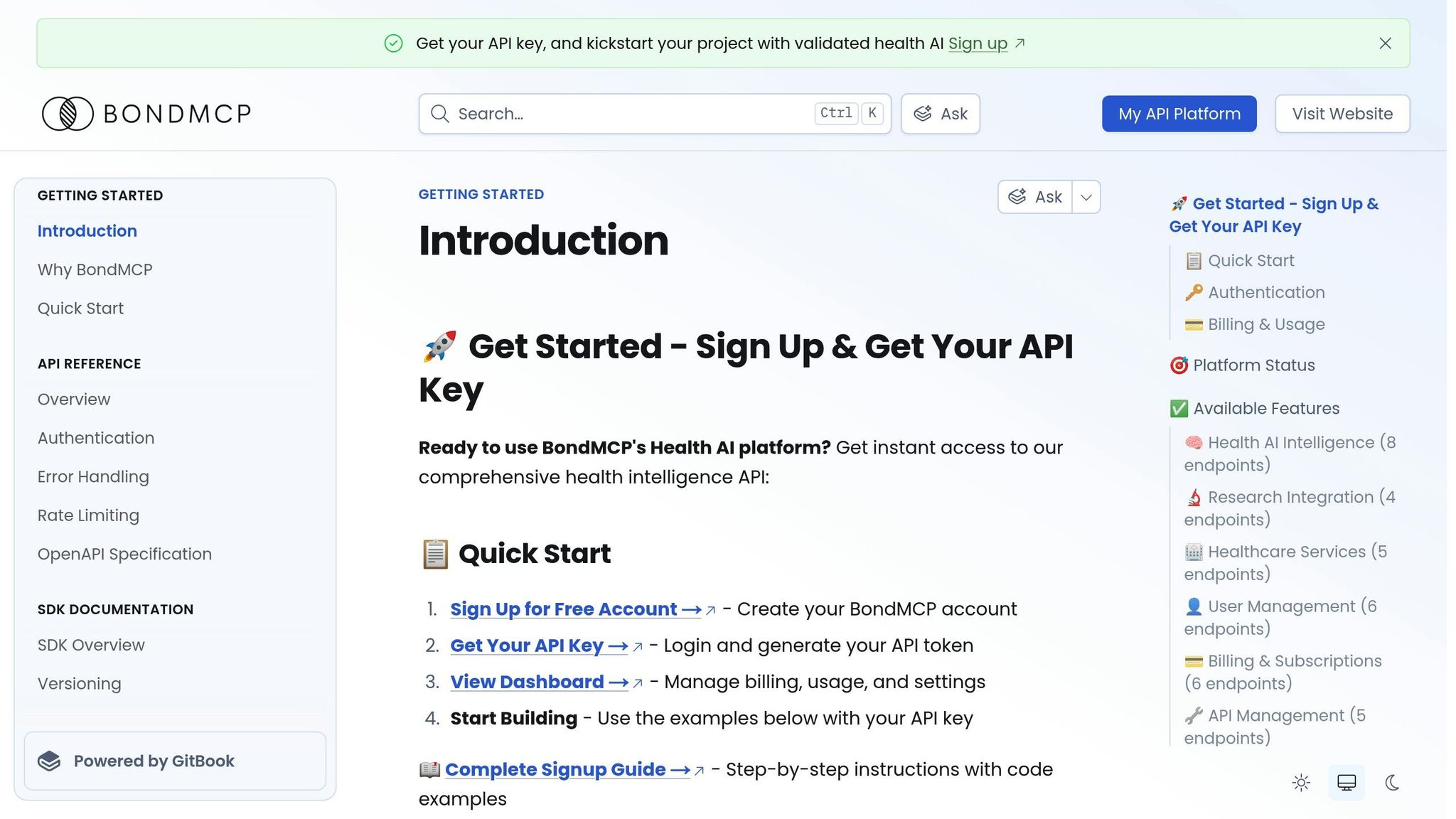
BondMCP steps in to address the challenge of dynamic, context-aware task allocation by offering a structured and integrated solution. Instead of relying on fragmented, custom-built systems, BondMCP provides the infrastructure needed for intelligent and coordinated task allocation. It works seamlessly with existing frameworks, enhancing the dynamic task allocation processes already in place.
Why BondMCP Matters for Health Platforms
Health technology has long been hindered by fragmented data and isolated systems. Traditional platforms often rely on separate apps that don’t communicate well, leaving users and agents to deal with incomplete or outdated information.
BondMCP changes this by introducing a unified context layer that consolidates health data from various sources - wearables, lab results, fitness trackers, supplements, and sleep monitors - into a single, standardized framework. This ensures that agents always have access to accurate and up-to-date information when making decisions about task allocation.
The protocol also incorporates a health-specific ontology, which ensures all agents interpret health data in the same way. Whether analyzing glucose levels, sleep patterns, or exercise performance, agents understand the medical significance and relationships between metrics. This shared understanding eliminates the miscommunication that often leads to conflicting recommendations in traditional systems.
Additionally, BondMCP’s plug-and-play orchestration feature allows new agents to integrate effortlessly into existing workflows. Developers don’t need to spend time on extensive custom development, making it easier to expand and improve multi-agent health systems.
How BondMCP Enables Context-Aware Agent Coordination
At the core of effective multi-agent task allocation is context-aware coordination, and this is where BondMCP excels. Its structured protocol and interoperability framework allow agents to share and interpret context from multiple sources simultaneously. This creates a dynamic and holistic view of each user’s health status and needs.
Here’s an example of how it works: a sleep tracker agent detects poor sleep quality and shares this information through BondMCP’s protocol. A training coach agent picks up on this and adjusts the next day’s workout intensity. At the same time, a supplement protocol agent reviews recent lab results and updates supplement recommendations based on both the sleep data and biomarker trends. Finally, a longevity goal agent ensures all these adjustments align with the user’s long-term health objectives.
All of this happens automatically. Users don’t need to switch between apps or worry about conflicting advice from different tools. BondMCP’s standardized communication framework ensures that agents work together smoothly, avoiding the coordination issues that often plague traditional systems.
BondMCP Benefits for Consumers, Developers, and Clinics
BondMCP offers tailored benefits to three key groups: consumers, developers, and healthcare providers, addressing specific challenges in today’s health technology landscape.
For consumers, BondMCP simplifies health management by unifying data from multiple apps. Sleep trackers, training coaches, lab results, and supplement protocols all work together seamlessly, guided by the user’s long-term health goals. This eliminates the hassle of manually coordinating health interventions, making the process more intuitive and personalized.
Developers gain access to a structured SDK and protocol, removing the need to build foundational components like memory systems, agent routing, and toolchains from scratch. Instead, they can focus on their specific health application while leveraging BondMCP’s infrastructure for context awareness and interoperability. This approach streamlines development and reduces complexity, allowing developers to create applications faster and with fewer resources.
Clinics and health platforms benefit from improved scalability and precision. BondMCP addresses data silos and enables proactive, dynamic care. By moving away from static dashboards, healthcare providers can deliver personalized interventions that adapt in real-time. This not only enhances patient outcomes but also reduces the administrative burden of coordinating between multiple health monitoring systems.
For instance, multi-agent AI systems in healthcare can cut down administrative task times - from hours to minutes - by automating processes like prior authorization requests, insurance checks, and EHR updates [2]. BondMCP takes this a step further by ensuring that all relevant health data is used to inform agent coordination and decision-making.
Conclusion
The principles and applications discussed highlight the transformative impact of multi-agent task allocation on healthcare systems. By moving from fragmented, manual workflows to intelligent, coordinated systems, multi-agent task allocation significantly improves efficiency. These systems can cut processing times from hours to minutes, reduce human error, and allow healthcare professionals to focus more on patient care [2].
The key to success lies in enabling agents to share information seamlessly and understand the broader healthcare context. When agents work in harmony, they can provide real-time, personalized care interventions that adapt to patients' evolving needs. This turns static dashboards into dynamic systems capable of anticipating and addressing health concerns before they escalate.
BondMCP plays a pivotal role in this transformation by unifying health data through a shared context layer, a health-specific ontology, and plug-and-play orchestration. This eliminates the need for complex custom development, leading to faster deployment, lower costs, and more reliable coordination across the healthcare ecosystem. The result is a more integrated system that connects data and processes for smooth, efficient health management.
For health platforms aiming to adopt multi-agent task allocation, the priority should be achieving interoperability that fosters true collaboration among agents. The University of Minho's implementation is a solid example, showcasing how effective coordination can improve patient scheduling, optimize resource management, and reduce wait times [6]. This reinforces the tangible benefits of dynamic, context-aware agent systems.
Throughout this discussion, one thing remains clear: intelligent automation is designed to enhance human care, not replace it. With robust frameworks like BondMCP, multi-agent task allocation is no longer a distant goal but a practical solution available today. The real question is not whether healthcare systems should adopt these technologies, but how quickly they can implement them to deliver more personalized and efficient patient care.
As healthcare in the United States continues to generate enormous volumes of data from wearables, lab tests, and clinical systems, the ability to coordinate intelligent agents effectively is becoming essential - not just for staying competitive, but for ensuring high-quality care delivery.
FAQs
How do multi-agent systems manage task allocation in dynamic health platforms?
Multi-agent systems play a key role in managing task allocation within dynamic health platforms. They use advanced algorithms that allow agents to adjust tasks in response to real-time changes, ensuring tasks are reassigned smoothly and resources are used effectively - even in fast-changing situations.
By incorporating methods like genetic algorithms and reliable allocation frameworks, these systems achieve strong efficiency and collaboration. This means health platforms can adapt to shifting demands while providing users with tailored and seamless experiences.
How does BondMCP improve communication and collaboration between health-focused AI agents?
BondMCP takes the hassle out of communication and teamwork between health-focused AI agents by offering a clear protocol and a developer-friendly toolkit. This setup makes sure that agents stay context-aware, work well together, and share data effortlessly within one unified system. By connecting the dots and encouraging collaboration, BondMCP eliminates unnecessary overlap and makes managing personal health much simpler.
For users, this means your health data - from wearables, lab results, or fitness apps - can seamlessly come together to provide tailored, automated insights. For developers, BondMCP is a straightforward way to create intelligent, health-savvy agents that fit smoothly into a connected ecosystem.
How does dynamic task allocation enhance patient care while reducing administrative workloads in healthcare?
Dynamic task allocation transforms patient care by enabling real-time adjustments that cater to specific needs, ensuring treatments are delivered promptly while making the best use of available resources. This approach enhances the overall care process by simplifying workflows, allowing healthcare professionals to dedicate more energy to patient interaction rather than getting bogged down by administrative duties.
Through the automation of routine tasks like scheduling, documentation, and managing resources, dynamic task allocation also lightens the administrative burden significantly. This not only saves valuable time but also reduces the chances of errors, leading to smoother coordination, increased efficiency, and ultimately, improved patient outcomes.